





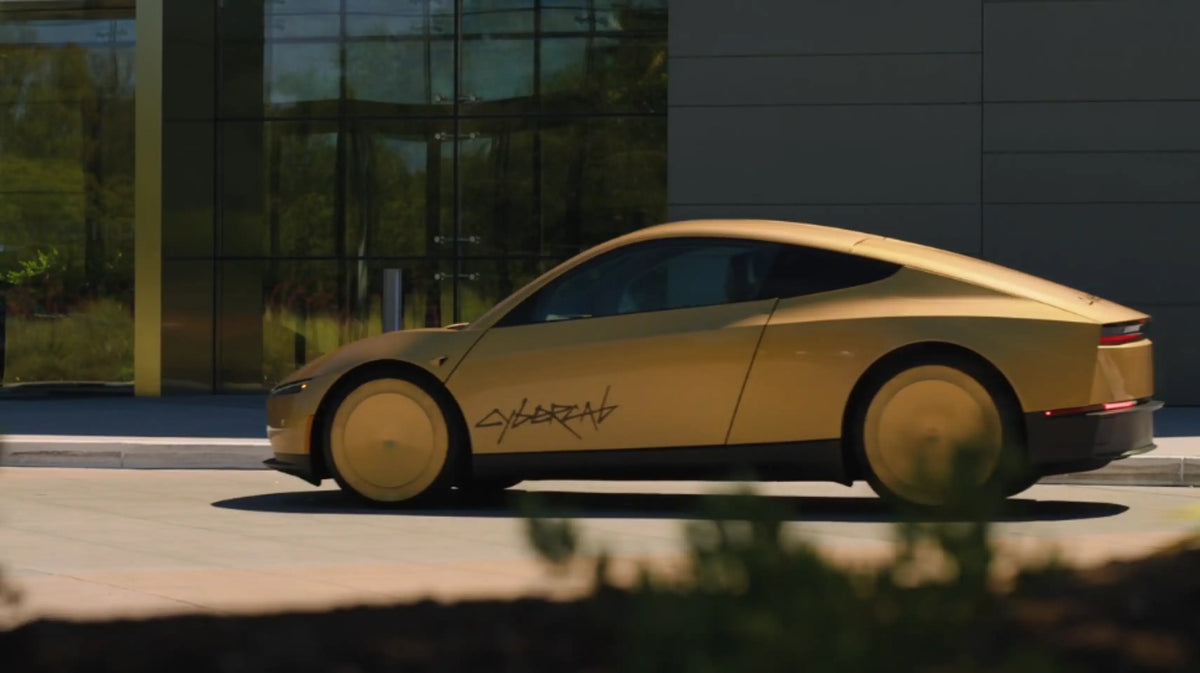
Tesla is bringing the Cybercab to China for its first public showcase in the country, but the company says the vehicle is not being offered for sale and no commercial robotaxi service is being launched. Static displays begin September 17, 2026 in Beijing and Shanghai, giving Chinese visitors a close look at Tesla’s purpose-built autonomous vehicle without signaling a market launch.
Photo by: Tesla
Cybercab Goes on Display in Beijing and Shanghai
Tesla will show the Cybercab at two major locations beginning September 17.
In Beijing, the vehicle will appear at Tesla’s China Central Place experience store through September 27. The Shanghai exhibition will be held in the LG1 north hall of HKRI Taikoo Hui and will remain open through September 21.
The exhibitions mark Cybercab’s first public appearance in China after Tesla began using the production vehicle in its autonomous ride-hailing operations in Austin, Texas, earlier this month.
Tesla has described the China events as opportunities to present the Cybercab’s design and technology rather than the start of commercial activity. The company specifically said the exhibitions do not mean Chinese customers will be able to purchase the vehicle or use it through a Tesla-operated driverless taxi network.
That clarification establishes a clear boundary between the showcase and Tesla’s commercial plans in other markets.
Cybercab Was Designed Without Manual Controls
Cybercab differs substantially from Tesla’s existing consumer vehicles.
The two-seat vehicle was developed specifically for autonomous transportation and does not use a conventional steering wheel or pedals. Its cabin is centered around passenger use rather than providing controls for a human driver.
This design is central to Tesla’s vision for lower-cost autonomous transportation, but it also means Cybercab cannot simply be treated like another Model 3 or Model Y entering a new country.
Commercial deployment depends on the regulatory framework governing autonomous vehicles, vehicle certification and driverless ride services in each market.
China is actively developing policies for automated driving and has set broader goals for expanding autonomous vehicle deployment by 2030. However, market access still depends on regulatory approvals and the specific operating conditions granted to each company.
Tesla has not announced approval to operate Cybercab commercially in China.
Tesla’s China Driving Software Remains Limited
The Cybercab exhibition also comes as Tesla continues working to expand its driver-assistance technology in China.
Tesla introduced a limited version of its advanced driving-assistance software to Chinese customers in 2025, but the rollout has faced regulatory and data-related constraints. The company temporarily paused a free trial that year while waiting for further software approval.
By late 2025, Tesla CEO Elon Musk said the company expected broader approval for Full Self-Driving in China during early 2026. More recent reporting indicates Tesla has continued working toward regulatory clearance, while local competitors have expanded their own advanced driver-assistance systems.
Tesla China also said in August that work related to its assisted-driving technology was continuing, rejecting reports that it had abandoned its local FSD efforts.
A Cybercab robotaxi service would require a substantially different level of operation from supervised driver assistance in privately owned vehicles.
China Showcase Focuses on Technology, Not Sales
For now, the Cybercab’s role in China is primarily promotional and technological.
Showing the vehicle in Beijing and Shanghai gives Tesla an opportunity to present its vision of dedicated autonomous transportation in one of the world’s largest EV markets without committing to a launch schedule.
China already has domestic companies developing and operating autonomous mobility services, making the country an important market for robotaxi technology. Tesla’s display places Cybercab in that broader conversation, but a public exhibition should not be confused with regulatory approval or commercial deployment.
There is also no announced Chinese price, reservation program or delivery timetable for Cybercab.
The key distinction is therefore straightforward: Chinese consumers can see the Cybercab beginning September 17, but Tesla has not announced plans to sell the vehicle or operate it as a commercial robotaxi in China.
Any future launch would require Tesla to move beyond a static showcase and secure the approvals needed for autonomous commercial operation. Photo by: Tesla
FAQ
Is Tesla selling the Cybercab in China?
No. Tesla China says the current Cybercab exhibitions do not involve vehicle sales in the Chinese market. No Chinese pricing or reservation program has been announced.
When can people see the Cybercab in China?
The public displays begin September 17, 2026. The Beijing exhibition runs through September 27, while the Shanghai display ends on September 21.
Is Tesla launching a Cybercab robotaxi service in China?
No commercial Cybercab ride-hailing service has been announced for China. Tesla has explicitly said the exhibitions are not connected to the start of driverless commercial operations.
Does the Tesla Cybercab have a steering wheel?
No. Cybercab is a two-seat purpose-built autonomous vehicle without conventional steering or pedal controls. Its design is intended for automated transportation rather than normal human driving.
Does Tesla have Full Self-Driving approval in China?
Tesla has introduced limited assisted-driving features in China, but its broader rollout has been subject to regulatory approval. The company has continued working toward expanded access to its advanced driving software.
Recommend Reading: Cybertruck Powershare Now Works With Powerwall 3


Share:
2028 Volvo XC60 and XC90 Gain More EV Range