



Rivian expanded its Adventure Network to 1,185 DC fast charging ports across 165 locations in the United States by the third quarter of 2026. According to the company's latest earnings report, the network grew 39% in charging ports and 26% in locations compared with the same period in 2025.
The expansion comes as Rivian continues developing its own charging infrastructure despite its vehicles already having access to other public fast charging networks, including compatible Tesla Superchargers.
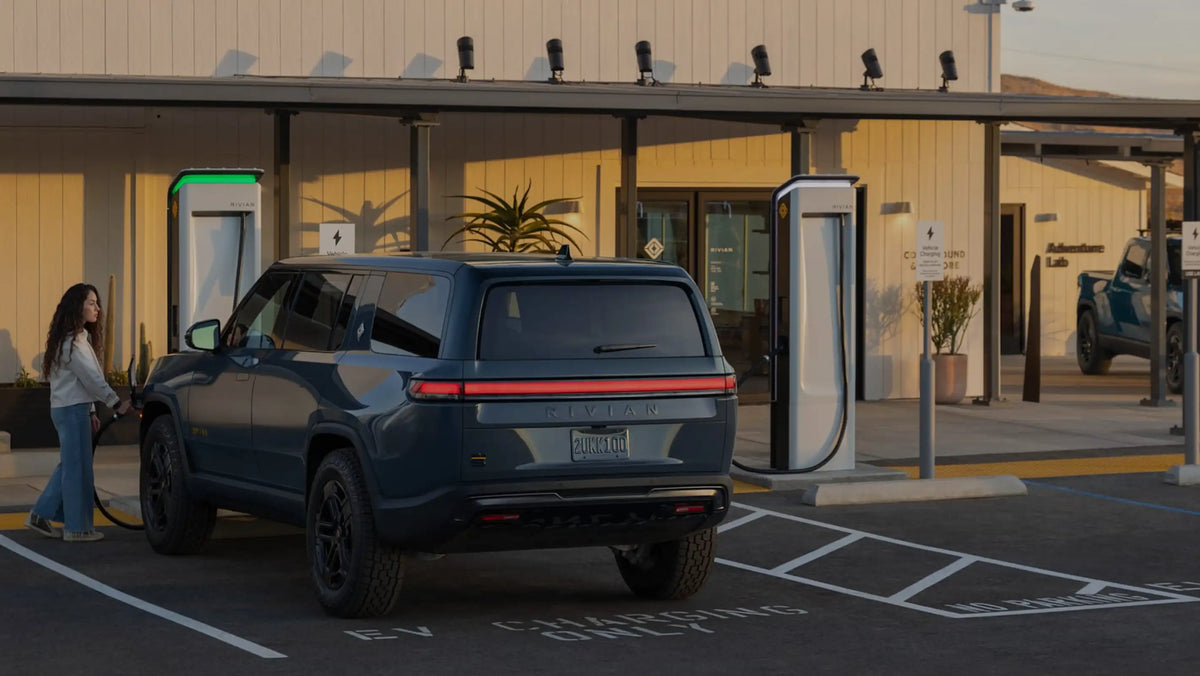
 Photo by: RIVIAN
Rivian Adventure Network Expands Across the US
The Rivian Adventure Network (RAN) is the company's dedicated DC fast charging infrastructure, designed to support electric vehicle travel beyond everyday home charging.
By the end of Q3 2026, the network included 1,185 charging ports at 165 stations nationwide. That represents substantial growth from the previous year, particularly in the number of individual charging connections available to drivers.
Rivian's fast chargers can deliver up to 300 kilowatts (kW), although actual charging speeds depend on vehicle capabilities, battery conditions and other operating factors.
The increase in ports has outpaced the growth in station locations. This indicates that Rivian has expanded the number of available charging connections more quickly than its overall geographic footprint.
Adding more ports can help stations accommodate additional vehicles, particularly during busy travel periods.
However, the total number of charging ports does not establish how many are available at a particular moment or whether every location supports the same maximum charging power.
Why Rivian Is Building Its Own Charging Network
Rivian's investment in proprietary infrastructure continues even though its passenger vehicles can use a wider range of public charging services.
Compatible Tesla Superchargers equipped with NACS connectors are among the additional fast charging options available to Rivian drivers, subject to vehicle compatibility and applicable adapter requirements.
This broader access reduces the need for drivers to depend exclusively on Rivian-operated stations.
Nevertheless, operating its own network allows Rivian to influence charging station design, equipment deployment and the overall charging experience.
The company uses purpose-built charging locations as part of its infrastructure strategy.
A dedicated network can also provide additional charging options in areas where existing public infrastructure may be limited.
For drivers, the practical benefit depends on station placement, reliability, connector compatibility and available charging capacity.
Rivian's continued investment therefore complements access to third-party networks rather than replacing it.
Rivian Reports Renewable Energy Matching for Fast Charging
Rivian states that electricity delivered through its Adventure Network is matched with 100% renewable energy.
This claim requires an important distinction between renewable energy accounting and the electricity physically supplied to a charging station.
Electricity from different generation sources enters the power grid, making it difficult to identify the precise origin of the electricity used during an individual charging session.
Under Rivian's reported approach, the electricity consumed by its charging network is matched with renewable generation.
That renewable electricity may be produced at facilities located elsewhere rather than directly at the charging site.
Consequently, the claim does not necessarily mean that each Rivian charger operates directly from nearby solar panels or wind turbines.
The distinction matters when evaluating how charging providers describe their environmental commitments.
Rivian Waypoints Level 2 Network Grows More Slowly
While Rivian's DC fast charging infrastructure has expanded rapidly, its Waypoint Level 2 charging network has experienced more limited growth.
According to data from the US Department of Energy's Alternative Fuels Data Center (AFDC), Rivian operates approximately 540 Waypoint charging ports across 208 US locations.
The database indicates that only 10 additional 11 kW chargers were installed during 2026, including two that became operational in October.
Unlike DC fast chargers, Level 2 chargers provide AC electricity and generally serve vehicles parked for longer periods.
These chargers are commonly associated with destinations where drivers can leave their vehicles connected while visiting nearby facilities.
The two networks therefore address different charging needs.
Rivian's recent financial materials emphasized Adventure Network expansion without providing a comparable update on Waypoint development.
The available figures suggest that fast charging has received greater expansion attention during 2026.
How Rivian's Charging Network Compares With Tesla
Despite its recent growth, Rivian operates a considerably smaller charging network than Tesla in the United States.
Tesla's Supercharger network includes more than 40,000 fast charging ports across nearly 3,300 locations, according to the figures cited in the report.
Tesla also operates approximately 14,000 Destination Charging connectors at nearly 4,000 sites.
By comparison, Rivian's Adventure Network has 1,185 fast charging ports, while its Waypoint network includes 540 Level 2 charging connections.
The difference illustrates the scale of infrastructure investment required to build a nationwide charging network.
However, charging network size alone does not determine the experience of every EV driver.
Location coverage, charging availability, equipment reliability and vehicle compatibility remain important considerations.
For Rivian owners, access to compatible third-party networks means the company's smaller infrastructure footprint does not represent the full range of available public charging options.
What Rivian's Charging Expansion Means for EV Drivers
Rivian's latest figures show continued investment in fast charging as the company develops its electric vehicle business.
The 39% annual increase in Adventure Network ports provides additional charging capacity, while the slower expansion of Waypoint chargers reflects a different development pattern for Level 2 infrastructure.
For drivers planning longer journeys, the most relevant factors remain charger locations, operating status, connector compatibility and charging speeds.
Rivian has not provided a specific future network expansion target in the reported quarterly figures.
Its growing fast charging infrastructure nevertheless adds another option to the broader US public charging market.
 Photo by: RIVIAN
FAQ
How many Rivian Adventure Network chargers are available in 2026?
By the end of Q3 2026, Rivian reported 1,185 DC fast charging ports at 165 US locations. The number of ports increased 39% compared with the same quarter in 2025.
How fast are Rivian Adventure Network chargers?
Rivian Adventure Network equipment can provide charging power of up to 300 kW. Actual charging performance varies depending on the vehicle, battery state of charge, temperature and charger operating conditions.
Can Rivian vehicles use Tesla Superchargers?
Yes. Compatible Rivian vehicles can access supported Tesla Supercharger locations. Depending on the vehicle and charger connector, an approved adapter may be required.
What is the difference between Rivian Adventure Network and Waypoints?
The Adventure Network uses DC fast chargers intended for relatively short charging stops. Rivian Waypoints provide Level 2 AC charging, which is generally better suited to longer parking periods at destinations.
How many Rivian Waypoint chargers are in the United States?
According to the AFDC figures cited in the report, Rivian operates approximately 540 Waypoint Level 2 chargers at 208 locations. Ten additional 11 kW chargers were recorded during 2026 through October.
Does Rivian use renewable energy for its charging network?
Rivian says electricity delivered through its Adventure Network is matched with renewable energy generation. This does not necessarily mean each charging station receives electricity directly from an on-site renewable energy source.
Recommend Reading: Rivian Leads US Electric Van Sales in Q3 2026


Share:
Toyota's Next Hybrid Engines Target 15% Fuel Savings