





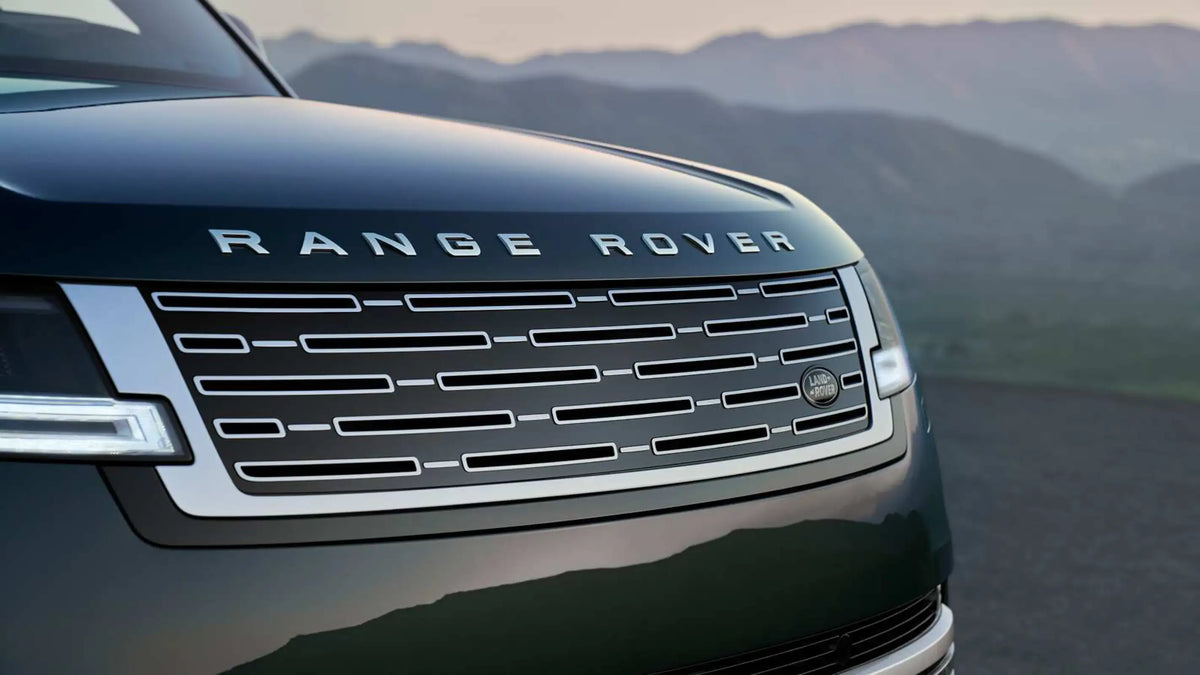
The Range Rover Electric took longer than expected primarily because its original front motor could not consistently meet the brand's performance requirements during demanding tests. Land Rover redesigned the electric drivetrain and conducted additional validation to preserve the off-road capability, comfort and refinement expected of its flagship SUV.
The development process also involved balancing battery packaging, interior space and vehicle efficiency without substantially changing the characteristics of the conventional Range Rover.
Motor Performance Was the Main Cause of the Delay
Land Rover initially planned to use an induction motor on the front axle of its first fully electric Range Rover. The arrangement was intended to improve efficiency by allowing the front drive unit to disengage when additional traction was unnecessary.
During challenging driving conditions, the front motor could then reconnect to provide all-wheel-drive capability.
However, development testing revealed a significant limitation. According to Simon Fairbrother, the vehicle's program chief, the system experienced excessive heat under demanding conditions, particularly during high-temperature evaluations.
As temperatures increased, the drivetrain sometimes required reduced power output to protect its components. That behavior conflicted with Land Rover's requirement for dependable performance across different environments.
The engineering team therefore replaced the proposed front induction motor with a permanent-magnet design based on the system already developed for the rear axle.
Although the revised configuration offered a more suitable performance foundation, the change required further engineering analysis, testing and validation. This additional work contributed to the vehicle's extended development schedule.
Off-Road Capability Remained a Development Priority
The Range Rover Electric was designed to retain the driving characteristics associated with the brand's combustion-powered flagship.
That requirement extended beyond acceleration and traction. Engineers also needed to maintain predictable handling, passenger comfort and the ability to navigate difficult terrain.
Land Rover says the electric model preserves the conventional vehicle's water-wading capability and approach angle, while some other dimensions have changed slightly.
A rear aerodynamic diffuser contributes to a modest reduction in departure angle. Ground clearance and breakover geometry are also slightly different because of the electric vehicle's underbody configuration.
To address these limitations, engineers developed a relatively flat underside incorporating the battery structure. The design is intended to help the vehicle move across certain obstacles without exposing as many uneven underbody components.
Nevertheless, the electric version does not duplicate every feature of its combustion-powered counterpart.
The larger rear drive unit prevents Land Rover from offering the seven-seat configuration available on certain long-wheelbase versions of the conventional Range Rover.
Luxury and Cabin Comfort Influenced Engineering Decisions
Maintaining the Range Rover's established driving experience was another important consideration.
According to Rachel Hogg, Range Rover's product manager, customers expect a quiet cabin, generous interior space, an elevated seating position and smooth ride quality.
Those expectations created additional development constraints because the electric powertrain needed to fit within a vehicle design already associated with a particular level of comfort.
Engineers therefore had to consider how battery placement, motor dimensions and vehicle structure would affect passenger accommodation and overall refinement.
Land Rover chose to extend development rather than release a vehicle that failed to meet those standards.
The approach reflects the importance of preserving the model's identity as it transitions to electric propulsion, rather than treating electrification as a simple replacement of the combustion engine.
Strong Interest Comes From North American Buyers
Despite the extended development period, Land Rover reports substantial interest in its first battery-electric Range Rover.
Fairbrother said the company had received more than 80,000 expressions of interest worldwide, with a majority originating in the United States.
American interest has been particularly notable in states including California, New York, Oregon and Washington.
The prospective customer base also suggests that the electric model could attract buyers who have not previously considered the brand.
According to Hogg, approximately 70% of people on the interest list are new to Land Rover, while around 20% already own an electric vehicle.
These figures describe prospective customers rather than confirmed vehicle purchases, so they cannot yet establish final demand.
Land Rover believes electric versions could eventually represent 10% to 20% of Range Rover sales, although the company acknowledges that future market conditions remain difficult to predict.
Flexible Production Will Help Land Rover Manage Demand
Rather than committing its flagship SUV exclusively to electric propulsion, Land Rover is retaining a manufacturing strategy that supports several powertrain technologies.
Its flexible vehicle architecture accommodates combustion engines, mild hybrids, plug-in hybrids and fully electric drivetrains.
These variants can be manufactured at the company's Solihull facility in the United Kingdom, allowing production planning to respond to changing customer preferences.
Hogg indicated that the company can adjust its manufacturing mix over periods measured in weeks or months, depending on market requirements.
This flexibility is particularly relevant because EV adoption varies considerably between regions.
Maintaining multiple powertrain options allows Land Rover to introduce electric models while continuing to serve customers who prefer conventional or hybrid vehicles.
Home Charging Is an Important Selling Point
Land Rover has identified an additional motivation among some prospective Range Rover Electric customers: the convenience and privacy of charging at home.
According to Fairbrother, certain buyers prefer avoiding public fuel stations because they feel uncomfortable or vulnerable in those environments.
A home charging setup allows drivers to replenish their vehicle's battery without making routine visits to a gas station.
For customers with suitable residential charging infrastructure, this can make everyday vehicle ownership more convenient.
Land Rover plans to offer a branded home charging solution for the Range Rover Electric and future electrified models.
The company sees residential charging as part of the broader ownership experience, alongside vehicle performance, comfort and technology.

FAQ
Why was the Range Rover Electric delayed?
The main engineering problem involved overheating in the originally planned front induction motor during demanding tests. Land Rover switched to a permanent-magnet motor configuration and needed additional time to validate the redesigned drivetrain.
Does the Range Rover Electric have two electric motors?
Yes. The revised drivetrain uses permanent-magnet motors at both axles to support all-wheel-drive operation. The original proposal included an induction motor at the front, but that arrangement was replaced during development.
Can the electric Range Rover drive off-road?
Yes. Land Rover developed the electric SUV to maintain substantial off-road capability, including water-wading performance comparable to the combustion model. Some ground-clearance and underbody geometry measurements differ slightly.
Will the Range Rover Electric have seven seats?
No. The electric version cannot accommodate the seven-seat arrangement offered in certain conventional long-wheelbase Range Rover models. Packaging requirements associated with the rear electric motor prevent that configuration.
How many people are interested in the Range Rover Electric?
Land Rover reports more than 80,000 expressions of interest globally. Approximately 70% of those prospective customers are new to the brand, and about 20% already own an EV.
Will the Range Rover Electric support home charging?
Yes. The vehicle is intended to support residential charging, and Land Rover plans to offer a branded home charger. The company considers home charging convenience an important benefit for prospective electric Range Rover owners.
Recommend Reading: Home EV Charging for Renters: What to Confirm Before You Plug In


Share:
Tesla Ends Cybertruck Reservations in Australia and NZ