





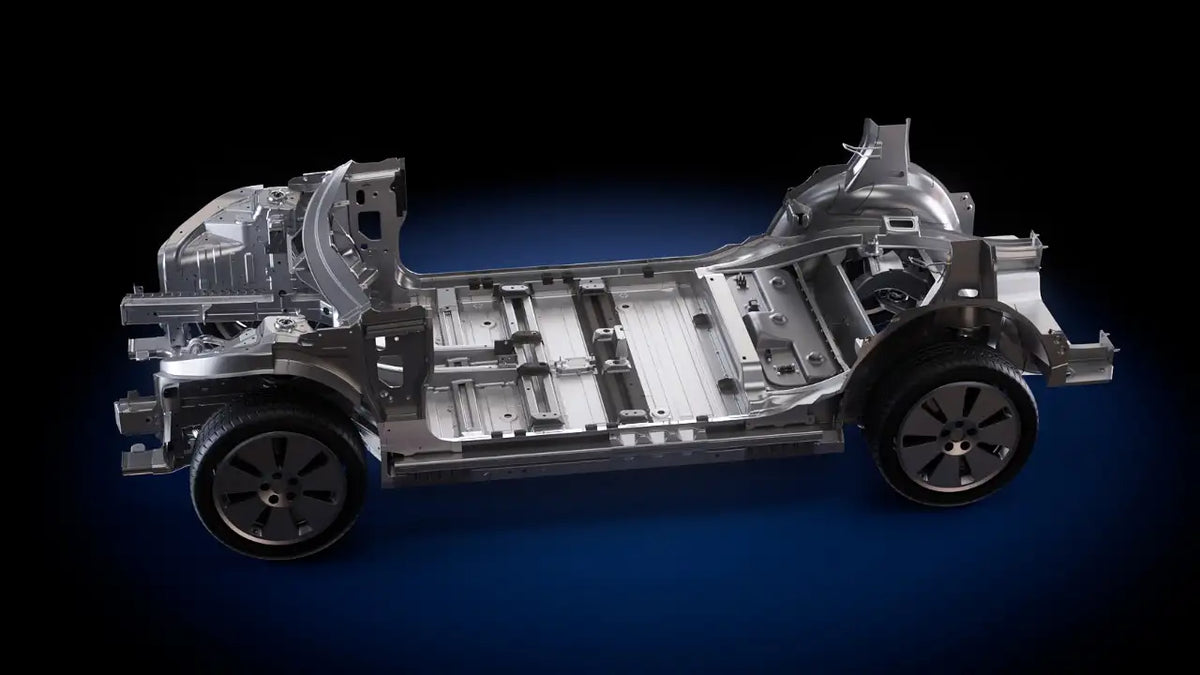
General Motors is developing a fourth-generation electric vehicle platform designed to reduce battery requirements by 20% while improving efficiency by 20%. The architecture also targets lower vehicle weight, improved aerodynamics and a more centralized computing system, with crossover SUVs expected to be among the first vehicle types to use it.
Photo by: General Motors
A New Approach to EV Efficiency and Production Costs
GM introduced the next phase of its electric vehicle technology at its GM Forward event in New York City. Although the company has not confirmed specific launch dates or vehicle models, it says the architecture will support products across several major vehicle categories.
The initial focus is expected to include high-volume crossover SUVs, according to a company spokesperson. GM President Mark Reuss indicated that the first applications would arrive soon, but the automaker has not published a detailed rollout schedule.
The platform is intended to help GM make electric vehicles more affordable to produce without sacrificing the driving range customers expect. Batteries account for a substantial share of an EV's manufacturing cost, so reducing the amount of battery material needed for a given range could improve the economics of future models.
GM also sees the technology as preparation for a broader expansion of electric vehicle adoption. The company operates in markets with different levels of EV demand and wants its next generation of products to be ready as sales opportunities develop.
Key Performance Targets for the Fourth-Generation Platform
GM outlined several improvements compared with its existing electric vehicle technology. These are company-reported targets rather than independently verified results from production vehicles.
-
15% lower vehicle mass, reducing the amount of energy required to move the vehicle.
-
20% higher efficiency, potentially allowing more driving distance from the available battery energy.
-
20% less battery capacity, helping lower material requirements and overall vehicle costs.
-
25% better aerodynamic performance, reducing air resistance as the vehicle travels.
-
40% fewer components in each motor, following changes to the drive units and associated power electronics.
These improvements are designed to work together rather than operate as isolated upgrades. A lighter vehicle with less aerodynamic drag can use energy more efficiently, potentially making a smaller battery sufficient for a comparable driving range.
The reduction in motor components could also simplify manufacturing. Fewer parts may mean less assembly complexity, although GM has not disclosed the expected production-cost savings or provided model-specific estimates.
The company has yet to publish battery sizes, EPA range estimates, charging specifications or pricing for vehicles using the new architecture. Those figures will be important in determining how much of the promised efficiency improvement reaches customers.
LMR Batteries Could Help Reduce Battery Costs
A major part of GM's strategy involves lithium-manganese-rich (LMR) battery chemistry. GM says these cells can cost less than high-nickel alternatives while offering approximately 33% greater energy density than lithium iron phosphate (LFP) batteries.
Higher energy density means a battery can store more energy within a given amount of space or weight. If the technology performs as intended in production vehicles, it could help GM balance driving range, battery size and vehicle packaging more effectively.
The company believes this chemistry can support vehicles that deliver comparable or greater range with 20% less battery capacity. Since the battery is one of the largest contributors to EV material costs, achieving that reduction could make a meaningful difference to manufacturing economics.
However, the company has not provided enough information to calculate a precise reduction in vehicle prices. Battery costs, manufacturing processes, vehicle equipment and production volumes will all affect the final result.
Structural Battery Packaging Creates More Design Flexibility
GM plans to integrate prismatic battery cells into the vehicle structure, according to Zach Walker, the company's director of global EV architecture. The company has not clarified whether the production design will use a cell-to-pack configuration or retain an intermediate module structure.
The new packaging approach is intended to make better use of the space inside the vehicle. Improving how the battery fits into the chassis could create more freedom when engineers determine the vehicle's floor height, roofline and overall proportions.
This matters because aerodynamic improvements can conflict with interior space and passenger comfort. A lower roof may reduce drag, for example, but it can also restrict headroom if the rest of the vehicle is not designed around it.
GM's objective is to improve airflow without forcing designers to compromise the vehicle's shape or usability. The extent of that flexibility will become clearer when the company reveals production models built on the architecture.
Centralized Computing Will Support Future EV Software
The mechanical platform is only one part of GM's development effort. The automaker is also redesigning its electrical and computing systems, moving away from a large number of separate electronic control modules toward a more centralized architecture.
Traditional vehicles may use individual controllers for functions such as body systems, power management and other vehicle operations. Consolidating more of these responsibilities into a unified computing structure can simplify communication between systems and provide greater processing capacity.
For drivers, the potential benefits include more extensive over-the-air software updates, easier delivery of new digital features and better coordination across vehicle functions. These capabilities are becoming increasingly important as automakers compete on software as well as hardware.
GM's direction reflects a wider industry shift, with companies such as Tesla and Rivian also using more centralized vehicle electronics. Ford is pursuing a separate, ground-up EV platform intended to reduce costs and improve efficiency, illustrating how established automakers are rethinking the foundations of their electric vehicles.
GM has not yet explained which software functions will debut with its fourth-generation platform or how frequently future vehicles will receive updates. Further details are expected as the first models approach launch.
 Photo by: General Motors
FAQ
What is GM's fourth-generation EV platform?
It is a new electric vehicle architecture designed to improve efficiency, reduce battery requirements and simplify vehicle hardware. GM expects it to support high-volume models, particularly crossover SUVs.
How much less battery capacity will future GM EVs need?
GM is targeting a 20% reduction in battery capacity while maintaining or improving driving range. Actual results will depend on the vehicle, battery configuration and final production specifications.
What are LMR batteries, and why is GM using them?
Lithium-manganese-rich batteries are a battery chemistry that GM says costs less than high-nickel alternatives. The company also reports approximately 33% greater energy density than LFP cells.
Will GM's new EV platform make electric cars cheaper?
The architecture is intended to lower production costs through smaller batteries, improved efficiency and fewer motor components. GM has not announced specific vehicle prices or confirmed how much consumers could save.
When will GM launch vehicles using the new platform?
GM has described the rollout as approaching but has not announced confirmed launch dates or named the first models. Crossover SUVs are expected to be a key application.
Recommend Reading: New Car Screen Complaints Continue to Frustrate Drivers


Share:
2027 Lexus TZ Prices, Range and US Launch