





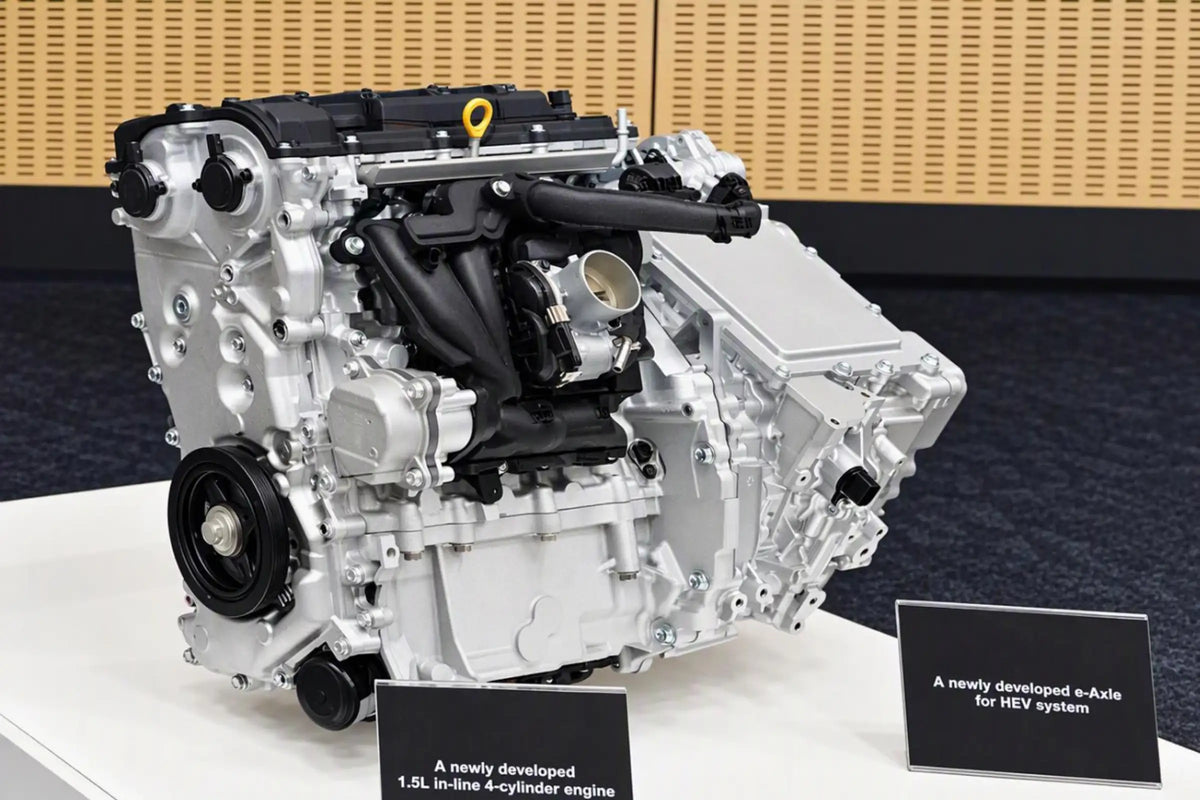
Toyota is developing a new generation of hybrid and plug-in hybrid powertrains designed to improve fuel efficiency by more than 15% compared with existing systems. The improvements center on a newly engineered 1.5-liter four-cylinder gasoline engine, supported by more efficient electric motors, advanced power electronics and revised vehicle designs.
Rather than modifying a conventional engine for hybrid use, Toyota has developed the combustion engine and electrical components together to reduce energy losses across the complete powertrain.
How Toyota Plans to Improve Hybrid Fuel Efficiency
Toyota's next-generation hybrid technology focuses on improving efficiency throughout the vehicle rather than relying on a single mechanical upgrade.
The company has developed a new 1.5-liter gasoline engine specifically for electrified applications. Both naturally aspirated and turbocharged configurations are planned, allowing the engine family to serve different vehicle requirements.
Toyota says the new engine is considerably more compact than its existing 1.5-liter and 1.8-liter units.
The smaller design is intended to reduce packaging constraints while supporting improvements in fuel consumption.
Three major engineering changes contribute to Toyota's projected efficiency gains: lower internal friction, improved temperature management and reduced electrical energy losses.
Reducing mechanical resistance allows more of the engine's output to reach the drivetrain. Better thermal control helps the system operate efficiently under varying driving conditions.
Meanwhile, improvements to the electrical components are intended to limit energy wasted during power conversion.
Together, these changes form the basis of Toyota's target of more than 15% better fuel economy.
A New 1.5-Liter Engine Designed for Electrification
Traditional hybrid development often begins with an existing combustion engine that is modified to work alongside an electric motor.
Toyota is taking a different approach by engineering the gasoline engine, hybrid system and associated electronics as an integrated package.
This allows engineers to optimize how the combustion and electric components operate together from the beginning of development.
The new engine family is designed around a modular architecture, potentially making it easier to adapt the technology to different vehicle sizes and power requirements.
Toyota has also reduced the physical dimensions of the engine, creating additional flexibility for vehicle packaging.
A more compact powertrain can free up space within the engine compartment and give designers greater control over the vehicle's exterior proportions.
The company has not yet provided complete specifications for the engine's horsepower, torque or individual vehicle applications.
As a result, the announced efficiency improvement remains a development target rather than a verified fuel economy rating for a production model.
Smaller Electric Motors and Advanced Power Electronics
Toyota's efficiency strategy also includes changes to the electrical side of its hybrid systems.
The company is developing lighter, more compact electric motors and revised power control units to reduce energy consumption.
An important component is the use of silicon carbide (SiC) power electronics, which can improve efficiency during electrical power conversion.
In hybrid vehicles, power electronics manage energy transfers between the battery, electric motor and other components.
Reducing conversion losses helps the system make more effective use of the energy available during acceleration, regenerative braking and other driving conditions.
Compact electrical components may also contribute to lower vehicle weight, although Toyota has not provided specific weight reduction figures for the complete system.
These improvements are intended to work alongside the redesigned gasoline engine rather than function as separate efficiency measures.
Toyota Develops a Platform for Multiple Powertrains
Another significant part of Toyota's plan involves vehicle architecture.
The manufacturer is developing a multi-powertrain platform initially designed around electric vehicle requirements but adaptable to hybrid and plug-in hybrid systems.
This reverses the more traditional approach of modifying combustion-engine platforms to accommodate electric drivetrains.
Toyota says the architecture will allow different powertrain types to share a common vehicle foundation without substantially compromising passenger space, exterior design or practical capabilities.
The smaller engine and lower-profile hybrid components are particularly important to this approach.
With fewer packaging restrictions, designers may be able to create vehicles with lower hood lines and improved aerodynamic profiles.
Reduced aerodynamic resistance can contribute to lower energy consumption, particularly during sustained higher-speed driving.
Toyota expects these design improvements to complement the efficiency gains achieved through the powertrain itself.
However, the company has not announced which production models will adopt the new architecture first.
What the Technology Means for Future Toyota Hybrids
Toyota's latest engineering developments reinforce its strategy of offering multiple electrified powertrain options rather than relying exclusively on battery-electric vehicles.
Hybrid electric vehicles combine gasoline engines with electric motors, while plug-in hybrids can also recharge their batteries from an external electricity source.
Both technologies may benefit from improved combustion efficiency and lower electrical losses.
For future plug-in hybrid models, more efficient powertrain components could help reduce gasoline consumption when the combustion engine is operating.
However, Toyota has not confirmed whether the new systems will increase electric-only driving range or introduce larger batteries.
The company's approach also reflects continued demand for hybrid vehicles in the United States, where customers have shown growing interest in models that combine improved fuel economy with conventional refueling convenience.
Although Toyota expects substantial efficiency improvements, final results will depend on vehicle weight, aerodynamics, drivetrain configuration and production specifications.
The new technology represents another step in Toyota's effort to improve hybrid efficiency while maintaining flexibility across different vehicle categories.
FAQ
How much more fuel-efficient will Toyota's next-generation hybrids be?
Toyota is targeting fuel economy improvements of more than 15% with its new hybrid and plug-in hybrid powertrain technology. The projected gains come from reduced engine friction, improved thermal management and more efficient electrical components.
What engine will Toyota use in its future hybrid vehicles?
Toyota has developed a new 1.5-liter four-cylinder gasoline engine for electrified powertrains. The engine family includes naturally aspirated and turbocharged configurations and is designed to be more compact than existing Toyota engines.
Why is Toyota developing a smaller hybrid engine?
A smaller engine can reduce packaging limitations and create more flexibility for vehicle design. Toyota also intends to improve efficiency by integrating the gasoline engine, electric motor and power electronics during development.
What are silicon carbide power electronics in Toyota hybrids?
Silicon carbide, or SiC, is a semiconductor material used in advanced power electronics. Toyota plans to use SiC technology to reduce electrical conversion losses and improve the efficiency of its next-generation hybrid systems.
Will Toyota's new technology improve plug-in hybrid electric range?
Toyota has announced plans to improve overall powertrain efficiency but has not confirmed an increase in electric-only range. That figure will depend on the battery capacity, vehicle design and specifications of future plug-in hybrid models.
When will Toyota release its next-generation hybrid engines?
Toyota has outlined the technology and its expected efficiency improvements but has not provided a confirmed launch date for the first production vehicle using the new engine family. Model-specific details are expected as development progresses.
Recommend Reading: Toyota Hilux Hydrogen Pickup Arrives in 2028


Share:
Rivian Leads US Electric Van Sales in Q3 2026