





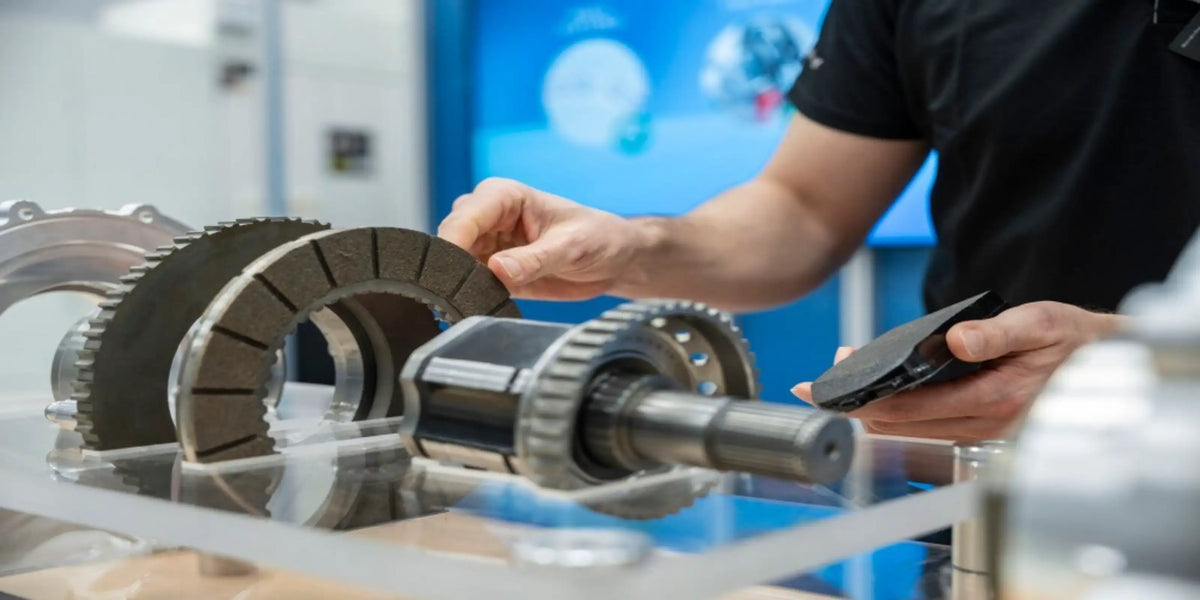
Mercedes-Benz is developing a new battery power conversion system that could allow electric vehicles to manage individual battery cells independently rather than relying primarily on pack-level power control. The experimental technology aims to improve battery efficiency, reduce the impact of aging cells and support more flexible charging and energy management.
Known as the Power Converter, the system remains under development. Mercedes-Benz has not announced a production vehicle, commercial launch date or confirmed efficiency improvements.

How Mercedes-Benz Plans to Change Battery Management
Most electric vehicle batteries contain hundreds or thousands of cells organized into electrically connected groups.
A conventional battery management system monitors important operating conditions, including voltage, temperature and state of charge. However, the electrical connections between cells place limits on how independently their energy output can be controlled.
Cells connected in series must carry the same current, while parallel arrangements also impose shared electrical conditions.
Mercedes-Benz is exploring a different architecture using programmable micro-converters to regulate energy flow at a more detailed level.
Instead of depending entirely on the behavior of larger connected cell groups, the proposed system could adjust how individual cells contribute to charging and vehicle operation.
This would give battery management software greater flexibility when responding to differences in cell performance.
The concept represents a potential change in battery architecture, although its effectiveness will depend on how the additional electronics perform under real driving and charging conditions.
Individual Cell Control Could Improve Battery Longevity
Battery degradation is one of the main challenges affecting electric vehicle ownership over time.
As cells age, their capacity and electrical characteristics can change at different rates.
In conventional battery packs, weaker cells may limit the usable performance of an entire connected group, even when neighboring cells remain in better condition.
Mercedes-Benz's proposed approach could reduce this limitation.
With independent electronic control, the system may be able to reduce the contribution of a deteriorating cell or disconnect it from active operation without immediately disabling the entire battery.
The remaining cells could continue supplying energy, although overall battery capacity and available power might decrease.
This could provide greater tolerance for uneven cell aging and potentially extend the useful operating life of a battery pack.
However, the technology does not eliminate battery degradation or guarantee that expensive repairs will become unnecessary.
Actual durability improvements would require long-term testing, particularly under repeated fast charging, temperature changes and high-power driving conditions.
Different Battery Chemistries Could Work Together
Another potential advantage involves combining battery cells with different characteristics.
Today's EV battery packs generally rely on carefully matched cells because differences in voltage, capacity and charging behavior can complicate energy management.
Mercedes-Benz's micro-converter concept could allow cells with different chemistries or ages to operate within the same battery system.
Each controlled section could receive charging and discharging instructions suited to its electrical characteristics.
In principle, this could support more flexible battery designs and reduce some restrictions associated with combining different cell technologies.
The system could also allow portions of a battery to remain less active when their full capacity is unnecessary.
For example, a vehicle used mainly for short daily journeys might manage part of its battery differently from the cells supplying routine driving demand.
Additional capacity could then become available when longer journeys require it.
Such operating strategies could help manage battery aging, but Mercedes-Benz has not published quantified benefits or confirmed how these functions would operate in a production vehicle.
Power Conversion and Bidirectional Charging
The proposed technology also changes where electrical power conversion takes place.
Conventional electric vehicles use dedicated power electronics for functions such as traction power delivery and charging.
Mercedes-Benz is investigating whether distributed converters could perform some of these functions closer to individual battery cells.
This approach could potentially reduce dependence on certain centralized conversion components while allowing software to regulate battery output more precisely.
Bidirectional energy flow is also part of the proposed architecture.
That capability could support charging and discharging in both directions, an important requirement for applications that transfer stored battery energy to external equipment or electrical systems.
However, bidirectional power conversion within a battery does not automatically establish compatibility with vehicle-to-home or vehicle-to-grid services.
Those applications also require suitable external hardware, electrical protections, communication standards and regulatory compliance.
Mercedes-Benz has not confirmed which external bidirectional charging functions would be offered in future vehicles using this technology.
Engineering Challenges Remain Before Production
The potential advantages of individual cell management come with additional engineering requirements.
Introducing numerous micro-converters into a battery pack increases the number of electronic components that must operate reliably over many years.
Heat management, electrical efficiency, packaging, manufacturing costs and serviceability will all influence whether the design is commercially practical.
Converter losses are particularly important because additional conversion stages could offset some of the efficiency improvements gained through more precise cell control.
The system would also need to maintain safe operation if individual converters malfunction.
Mercedes-Benz believes the technology could improve the efficiency and driving range of future electrified vehicles, but no verified range increase, cost reduction or production timeline has been announced.
For now, the Power Converter is best understood as an experimental approach to making EV batteries more adaptable, rather than a confirmed replacement for conventional battery management systems.
 Photo by: Mercedes-Benz
FAQ
What is the Mercedes-Benz Power Converter?
The Mercedes-Benz Power Converter is a battery technology under development that uses programmable micro-converters to manage energy flow at the individual cell level. Its purpose is to provide more precise control over charging, discharging and battery operation.
How could individual battery cell control improve EV battery life?
Independent cell control could allow the system to limit or isolate deteriorating cells while continuing to use healthier cells. This may reduce the impact of uneven aging, although Mercedes-Benz has not confirmed a specific improvement in battery lifespan.
Can the Mercedes-Benz system use different battery chemistries?
The proposed architecture could potentially support cells with different electrical characteristics in one battery pack. Individual converters would regulate energy flow according to the needs of each controlled cell or section.
Does the Power Converter support bidirectional charging?
Bidirectional energy conversion is included in the proposed technology. However, Mercedes-Benz has not confirmed that vehicles using the system will automatically support vehicle-to-home or vehicle-to-grid charging.
Will the technology increase electric vehicle driving range?
Mercedes-Benz has identified improved efficiency and driving range as potential benefits. The company has not released verified range figures or production test results demonstrating the size of those improvements.
When will Mercedes-Benz introduce this battery technology?
The Power Converter remains in the development stage. Mercedes-Benz has not announced a confirmed production model or release date for vehicles equipped with the system.
Recommend Reading: Mercedes-AMG GT SUV EV: Power, Range and Charging


Share:
Ferrari Luce EV Sells Out Its 2027 Allocation
EVgo Opens First Tesla-Powered Charging Station