





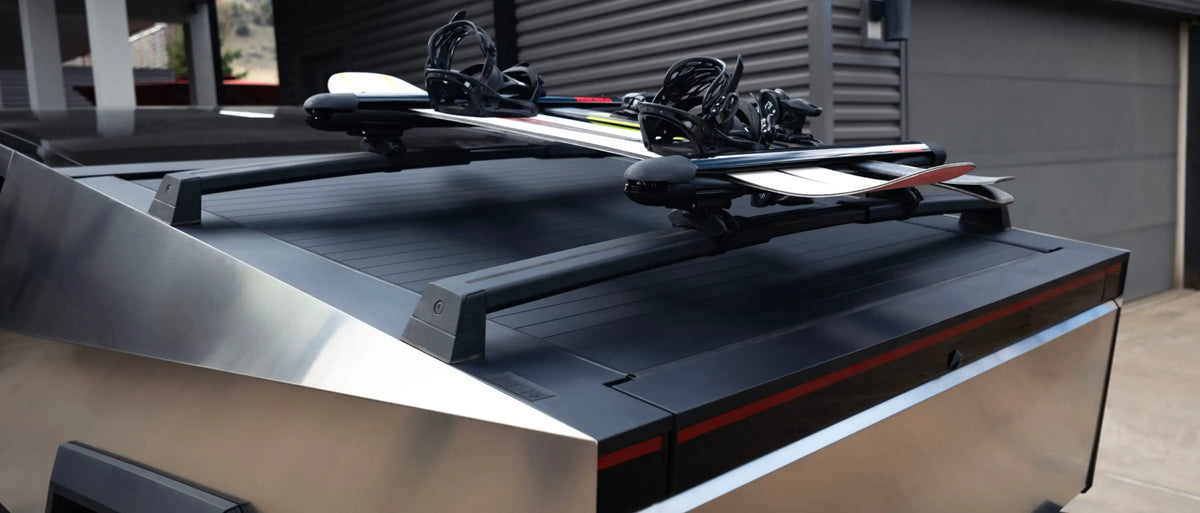
Tesla plans to reduce Cybertruck manufacturing at Gigafactory Texas around mid-2027 to create additional production capacity for its Cybercab autonomous vehicle. CEO Elon Musk confirmed the shift following disappointing electric pickup sales, although Tesla has not clarified whether Cybertruck manufacturing will end permanently or move elsewhere.
The announcement marks a significant change in Tesla's vehicle strategy, placing greater emphasis on autonomous transportation rather than expanding production of its unconventional electric pickup.

Why Tesla Is Reducing Cybertruck Production
The decision follows a prolonged period of weaker demand than Tesla originally anticipated.
Introduced as a concept in 2019, the Cybertruck entered customer deliveries in late 2023 after several years of development.
Its stainless-steel exterior, angular body and unconventional engineering attracted considerable attention, but that visibility did not translate into the sales volumes initially envisioned.
Tesla once discussed annual production potential reaching hundreds of thousands of vehicles. Actual demand has remained substantially below those expectations.
According to Cox Automotive estimates, US Cybertruck sales totaled 4,323 units in Q3 2026.
Across the first nine months of 2026, estimated sales reached 11,586 vehicles.
These figures are independent industry estimates because Tesla does not separately report Cybertruck deliveries in its regular vehicle sales disclosures.
The limited sales volume contrasts sharply with Tesla's Model 3 and Model Y, which continue to account for much of the company's passenger vehicle business.
Reducing Cybertruck output could therefore allow Tesla to redirect factory resources toward a product it considers more important to its future growth.
Gigafactory Texas Will Prioritize Cybercab Production
Tesla intends to use manufacturing capacity released by the Cybertruck production reduction to increase output of the Cybercab.
The Cybercab is a two-seat electric vehicle developed specifically for Tesla's autonomous ride-hailing ambitions.
Unlike conventional passenger cars, its design does not include traditional driver controls such as a steering wheel or pedals.
Tesla views autonomous transportation as an important potential source of future revenue, alongside vehicle sales and energy products.
Expanding Cybercab manufacturing would support that strategy, provided the company can establish sufficient demand and meet applicable safety requirements.
However, Tesla has not disclosed exactly how much additional Cybercab production capacity the change will create.
It has also not provided a confirmed schedule for completely ending Cybertruck manufacturing.
The distinction is important: reducing production at the Texas factory does not, by itself, confirm that every future Cybertruck will be discontinued.
The company's subsequent manufacturing decisions will determine whether the pickup remains available beyond the planned transition.
Cybertruck Sales Have Fallen Short of Expectations
The Cybertruck entered a market where electric pickups were expected to become an important growth category.
However, consumer adoption has developed more slowly than several manufacturers anticipated.
Electric trucks face particular challenges involving purchase prices, vehicle weight, towing-related range reductions and competition from established gasoline-powered pickups.
These factors can make electric pickups harder to position than electric sedans or crossovers.
Tesla's experience illustrates the difficulty of converting early enthusiasm into sustained sales.
The Cybertruck introduced several notable technologies, including steer-by-wire steering and a 48-volt low-voltage electrical architecture.
Its engineering also demonstrated Tesla's willingness to depart from conventional automotive design.
Nevertheless, distinctive technology and strong public recognition have not been sufficient to deliver the expected commercial performance.
Other manufacturers have also reconsidered electric pickup investments as market conditions and customer demand have changed.
The broader slowdown suggests that the challenges extend beyond Cybertruck's unusual appearance.
Tesla Changes Cybertruck Trims and Prices
Tesla has also revised the Cybertruck's available configurations as it prepares for the production adjustment.
The company has reportedly stopped accepting new orders for the lower-priced Dual-Motor All-Wheel Drive configuration.
That leaves the Premium AWD and Cyberbeast versions available through its current ordering lineup.
According to the reported pricing changes, the Premium AWD now starts at $92,490, compared with its previous $89,990 price.
The Cyberbeast has increased from $99,990 to $102,490.
Both changes represent a $2,500 increase.
These prices reflect the reported US vehicle configurations and may change with future adjustments.
Removing a lower-priced version while increasing prices on remaining models could further narrow the Cybertruck's potential customer base.
However, Tesla has not established that these pricing decisions are directly responsible for the planned manufacturing reduction.
What the Decision Means for Tesla's EV Strategy
The Cybertruck production announcement highlights a broader change in Tesla's priorities.
Instead of allocating additional factory capacity to a relatively low-volume electric pickup, Tesla is preparing to expand a vehicle platform designed around autonomous mobility.
That approach carries different commercial and regulatory risks from conventional vehicle manufacturing.
Cybercab's long-term success will depend on autonomous driving performance, regulatory compliance, operational economics and customer adoption.
For Cybertruck owners, the announcement does not establish that existing vehicles will immediately lose software updates, servicing or parts support.
Tesla has not provided a detailed post-production support timetable in the reported announcement.
The decision nevertheless represents an important turning point for a vehicle that became one of the company's most recognizable products.
Cybertruck's manufacturing future remains uncertain, while Tesla's immediate production priority is increasingly focused on Cybercab.

FAQ
Is Tesla discontinuing the Cybertruck in 2027?
Tesla plans to reduce Cybertruck production at its Texas factory around mid-2027. Elon Musk has not confirmed whether manufacturing will permanently stop or move to another facility.
Why is Tesla cutting Cybertruck production?
The Cybertruck has sold considerably fewer vehicles than Tesla originally expected. The company plans to use manufacturing capacity at Gigafactory Texas to support greater production of its Cybercab autonomous vehicle.
How many Cybertrucks were sold in 2026?
According to Cox Automotive estimates, approximately 11,586 Cybertrucks were sold in the United States during the first nine months of 2026. Third-quarter sales were estimated at 4,323 vehicles.
What is replacing Cybertruck production at Gigafactory Texas?
Tesla intends to expand manufacturing of the Cybercab, a two-seat electric vehicle designed for autonomous ride-hailing. The company has not disclosed the exact additional production capacity expected from the change.
How much does a Tesla Cybertruck cost now?
The reported US starting prices are $92,490 for Premium AWD and $102,490 for Cyberbeast. Tesla has also removed the lower-priced Dual-Motor AWD configuration from its ordering options.
Will Tesla continue supporting existing Cybertrucks?
The production announcement does not indicate an immediate end to service or software support for existing vehicles. Tesla has not announced a specific long-term support schedule associated with the manufacturing change.
Recommend Reading: Will Tesla Bring US-Built Model 3s to Canada?


Share:
EVgo Opens First Tesla-Powered Charging Station