





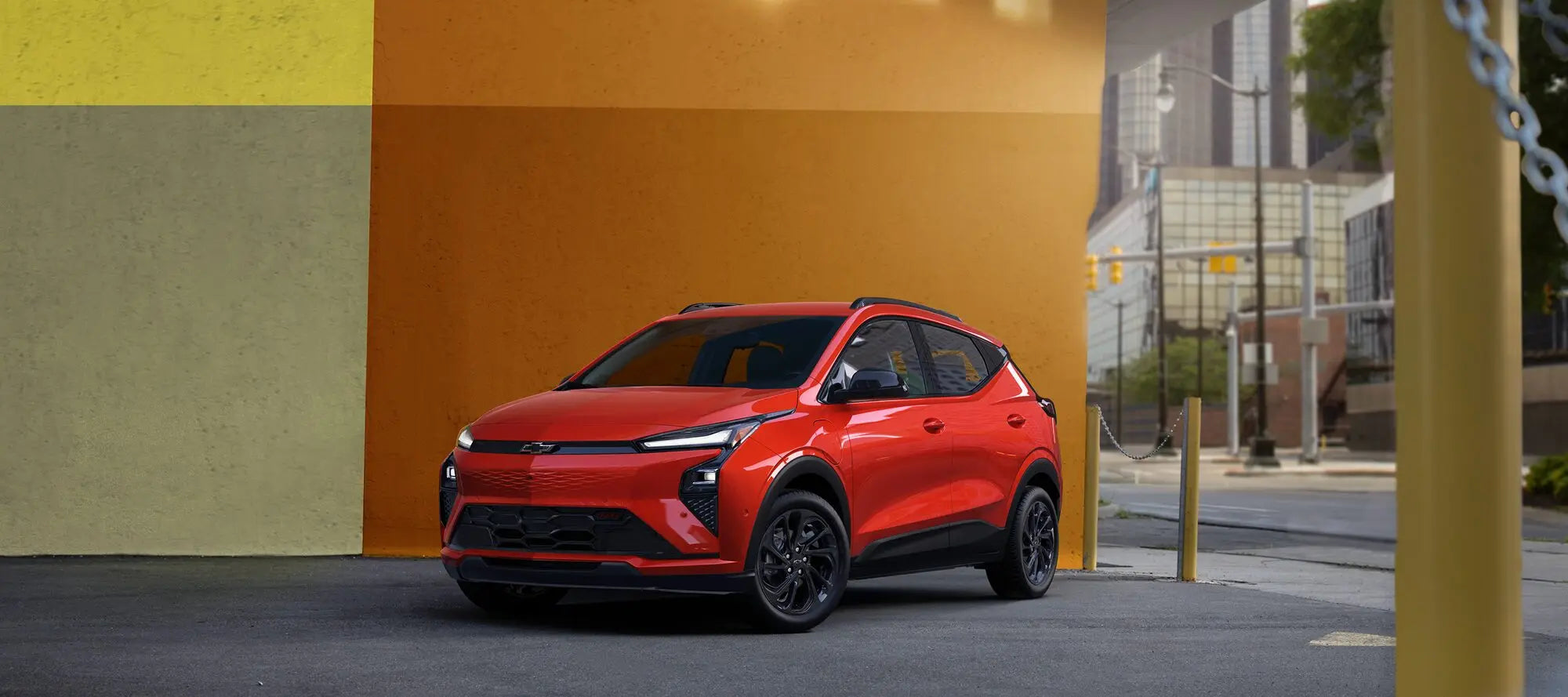
The 2027 Chevrolet Bolt delivers competitive charging, useful technology and 262 miles of EPA-estimated range at a starting price of $28,995. Its challenge is less about the EV itself and more about the U.S. market, where buyers continue to favor larger crossovers even when smaller electric models cost considerably less.
Photo by: Chevrolet
Chevrolet Fixed the Bolt’s Biggest Weaknesses
The previous Bolt offered attractive pricing and efficiency, but slow DC charging made longer trips inconvenient. Chevrolet addressed that limitation in the new generation by raising peak fast-charging capability to 150 kW.
The updated Bolt also adopts the NACS charging connector, giving the vehicle a more relevant charging setup for the North American market. Combined with built-in route planning and Plug & Charge support, the charging experience is considerably more complete than before.
Technology has received a similar update. The infotainment system includes Google Maps, Apple Music support, Gemini AI features and access to video entertainment while the vehicle is parked. Chevrolet provides certain navigation and audio connectivity services for eight years, although continued access after that period may require payment.
Apple CarPlay and Android Auto are not offered.
Inside, Chevrolet has added more storage areas and improved the overall presentation. Available features such as Super Cruise and a 360-degree camera system also give the Bolt equipment that buyers increasingly expect from newer EVs.
Low Price Has Not Guaranteed Strong Demand
The Bolt’s specifications make its early sales performance notable. Chevrolet sold 4,224 Bolts during the first six months of 2026, while the larger and more expensive Equinox EV recorded 16,249 sales over the same period.
Chevrolet has also announced plans to end the Bolt’s current production run as its factory transitions toward gasoline-powered SUVs.
That difference suggests price alone does not determine which EVs Americans choose. Similar patterns have appeared across the market, where larger electric crossovers frequently outperform less expensive compact EVs.
The Bolt is essentially a small, front-wheel-drive hatchback packaged with SUV-inspired styling. That format is popular in many global markets, but U.S. buyers have increasingly centered their purchases around roomier crossovers and SUVs.
Efficiency and Practicality Remain Strong Points
For drivers who prioritize operating costs, the Bolt still makes a convincing case. Its 210-horsepower electric motor provides immediate response, while real-world efficiency can approach 4 miles per kWh under favorable conditions.
The cabin also provides enough rear-seat space to make the vehicle practical for commuting, small families or rideshare use. Electric power means routine maintenance requirements remain relatively limited compared with an equivalent combustion vehicle.
Most importantly, the $28,995 base price places the Bolt well below many larger electric crossovers. Even a better-equipped example can remain around the mid-$30,000 range.
The trade-off is that buyers can notice where those savings come from.
Larger Electric SUVs Offer What Many Buyers Prefer
Compared with vehicles such as the Equinox EV, the Bolt has narrower seats, less cabin width and a shorter wheelbase. Those dimensions can contribute to a busier ride over uneven pavement, while highway wind noise and simpler cabin materials reinforce its economy-car positioning.
The Bolt is also limited to front-wheel drive, while all-wheel drive remains an important preference for many American crossover shoppers.
This helps explain a broader market trend. Larger vehicles such as the Tesla Model Y, Hyundai Ioniq 5 and Chevrolet Equinox EV have generally found stronger demand than smaller or sedan-shaped alternatives from the same brands.
The pattern does not necessarily mean Americans reject affordable EVs. Instead, it suggests many shoppers want lower prices without giving up the space, ride comfort, elevated seating position and available all-wheel drive associated with mainstream crossovers.
For Chevrolet, that creates a difficult position for the Bolt. The vehicle solves many of the technical shortcomings that affected its predecessor and remains one of the more accessible EV choices in the U.S. Yet its compact dimensions—the same factor helping keep its price and energy consumption low—may also limit its appeal in a market increasingly shaped by larger vehicles.
Photo by: Chevrolet
FAQ
How much does the 2027 Chevy Bolt cost?
The 2027 Chevrolet Bolt starts at $28,995. Higher trims and options such as Super Cruise and upgraded seating increase the final price.
What is the range of the 2027 Chevy Bolt?
The Bolt has an EPA-estimated range of 262 miles. Its relatively small size also helps it achieve strong energy efficiency in everyday driving.
How fast can the new Chevy Bolt charge?
The 2027 Bolt supports DC fast charging at a peak rate of 150 kW. That represents a major improvement over the previous generation and makes longer trips more practical.
Does the 2027 Chevy Bolt have a NACS charging port?
Yes. The new Bolt uses a NACS connector, the charging standard originally developed by Tesla and increasingly adopted across the North American EV market.
Why are Chevy Bolt sales lower than Equinox EV sales?
The larger Equinox EV offers the SUV proportions, additional cabin space and vehicle format many U.S. shoppers prefer. In the first half of 2026, Chevrolet sold 16,249 Equinox EVs compared with 4,224 Bolts.
Recommend Reading: YouTuber Sells Chevrolet Silverado EV Amid Repeated Charging Issues


Share:
Tesla FSD v15 and Optimus Get New Timelines
Tesla China Recall Adds Eye-Tracking Checks