





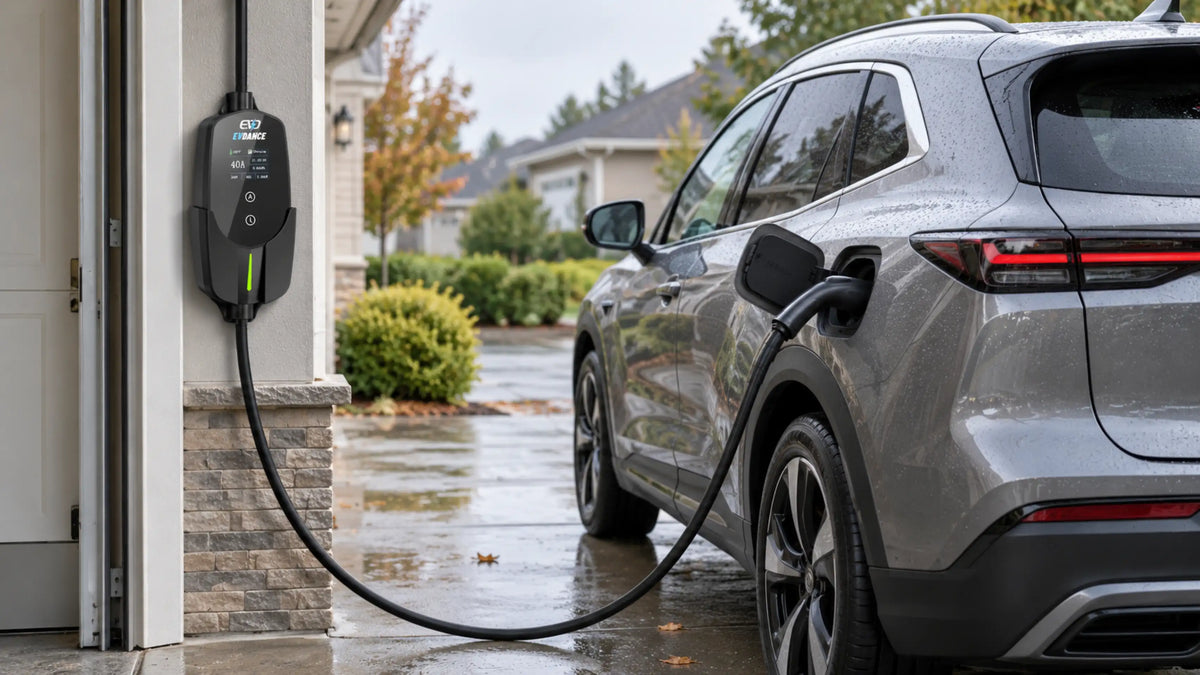
An outdoor-rated portable EV charger can be used outside, but that does not automatically mean it can remain exposed in every condition. The equipment rating, manufacturer instructions, outlet protection and cable placement all need to be considered.
Quick Summary
-
Confirm that the charger is rated for outdoor use.
-
Do not assume an IP rating protects the entire charging setup.
-
Keep the outlet and electrical connections away from standing water.
-
Follow the manufacturer’s instructions for long-term placement and storage.
-
Stop using the equipment if it is damaged, unusually hot or repeatedly reports a fault.
Can a Portable EV Charger Be Used Outdoors?
Yes, provided the equipment is designed for outdoor use and connected to a suitable electrical supply.
The U.S. Department of Energy states that outdoor EV charging can be safe, including in the rain, when outdoor-rated equipment is used. This does not mean that every portable charger is suitable for the same weather or installation.
The product label and manual should identify its operating conditions, temperature range and environmental rating.
Outdoor Charging Is Not the Same as Outdoor Storage
Using a charger outside during a charging session and leaving it outside continuously are two different situations.
Long-term exposure can include direct sunlight, snow, dirt, temperature changes and accidental impact. A charger rated for outdoor operation is not necessarily approved for permanent installation or unrestricted outdoor storage.
There is no universal rule that every portable charger must be unplugged after each session. Follow the manufacturer’s instructions for storage and long-term connection.
What Does IP66 Cover?
An IP rating describes how an enclosure resists the entry of solids and liquids under defined test conditions.
IP66 indicates that the rated enclosure is dust-tight and protected against powerful water jets. It does not indicate protection against submersion.
The rating applies to the enclosure or components identified by the manufacturer. It does not automatically apply to the wall outlet, plug connection, electrical circuit or every part of the charging setup.
The EVDANCE 40A J1772 Portable EV Charger, for example, has an IP66-rated design for indoor and outdoor charging. When using this model, the NEMA 14-50 outlet and circuit must still be suitable for the location and required charging current.
The Outlet Requires Separate Protection
A weather-resistant charger cannot make an unsuitable outlet safe.
Before charging, inspect the outlet and plug connection. Do not use equipment that is cracked, loose, corroded, discolored or visibly wet inside the connection area.
The plug should fit securely without placing unnecessary strain on the receptacle. Matching the plug shape does not confirm that the circuit can support the charger’s current.
An unfamiliar, damaged or repeatedly overheating circuit should be inspected by a licensed electrician.
Keep Connections Away From Standing Water
Place the control box and electrical connections where water cannot collect around them. Avoid puddles, gutters, snowbanks and areas reached directly by sprinklers.
An IP66 rating does not make a charger suitable for use while submerged. If water has entered a plug, outlet or connector, do not begin charging.
Water should also be prevented from running along the cable toward the electrical outlet. Tesla includes this precaution in its Mobile Connector manual. Owners should follow the instructions supplied with their own charging equipment.
What Should You Do After Charging?
For occasional or travel use, inspect the connector before putting the charger away. Allow permitted exterior moisture to dry and remove dirt using the cleaning method stated in the manual.
Do not place a wet or contaminated connector directly into a sealed storage bag. Use the protective caps when supplied and avoid storing heavy objects on top of the control box or cable.
For regular home use, confirm whether the manufacturer permits the charger to remain connected or mounted in that location. The outlet enclosure, cable support and surrounding area must remain suitable for outdoor charging.
When Should You Stop Using the Charger?
Stop charging if the plug or outlet becomes unusually hot, the cable insulation is damaged, water or debris enters a connector, or the charger repeatedly shows a fault.
Smoke, sparking or a burning smell requires immediate attention. Follow the product’s shutdown instructions and do not reconnect the charger until the equipment and power source have been checked.
Lowering the charging current is not a substitute for repairing a damaged outlet or electrical connection.
Outdoor Use Depends on the Full Setup
A portable EV charger can be used outside when the product is rated for the conditions and the electrical supply is properly protected.
The weather rating is only one part of the decision. The outlet, connection points, cable route and manufacturer instructions determine whether the complete setup is appropriate for outdoor charging.
Recommend Reading: NEMA 14-50 Outlet vs. Hardwired EV Charger: Which Is the Better Choice?


Share:
Best Times to Drive an EV This Labor Day 2026
Do EV Chargers Use Power When Not Charging?