





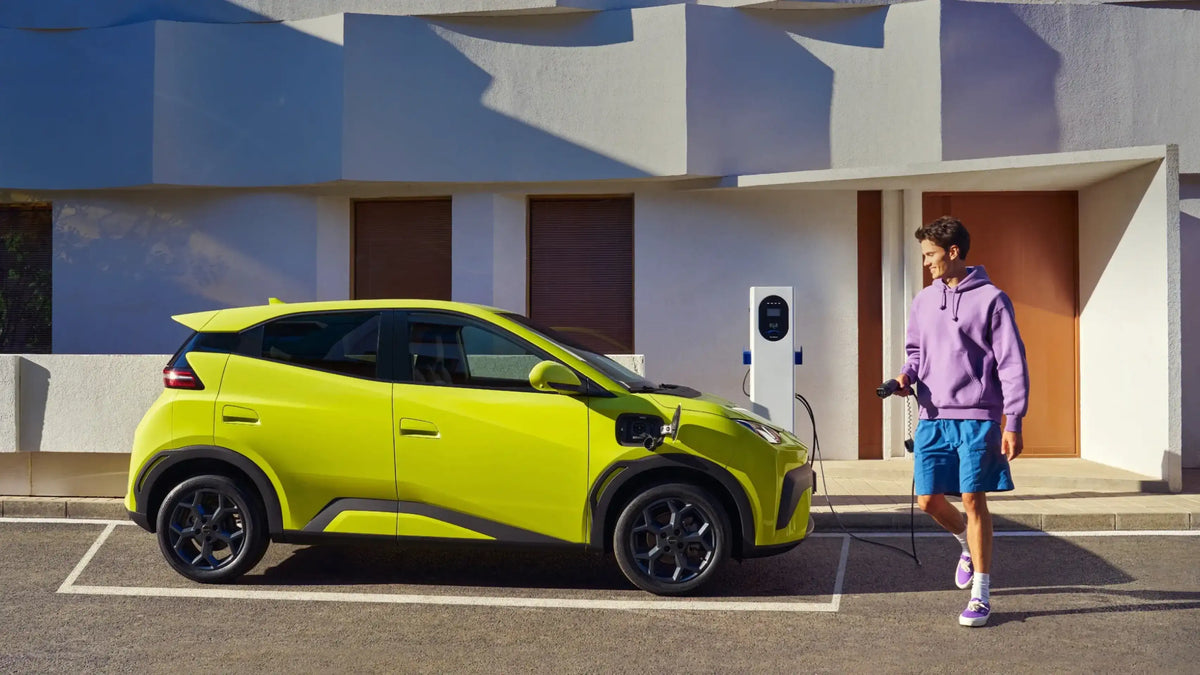
Hyundai Motor CEO José Muñoz says Chinese automakers could become a major competitive force in the U.S. if current market barriers are reduced. His warning is based on what Hyundai is seeing in Europe, where Chinese brands have expanded rapidly with vehicles that can cost 30% to 40% less than comparable models. Photo by:Hyundai
Hyundai Points to Europe as a Warning
Muñoz said Chinese automakers have gained ground quickly in countries such as Italy, Spain and France despite European tariffs and other trade measures.
Price remains one of their biggest advantages. According to Muñoz, Chinese vehicles in some European markets are 30% to 40% cheaper than competing models from established manufacturers.
He highlighted the United Kingdom as an example of what can happen in a market with fewer barriers. Chinese brands have expanded rapidly there, supported by lower-priced electric vehicles and a growing range of models.
That does not mean Chinese manufacturers control the entire UK market, but their presence has become significantly larger than it was only a few years ago.
The trend is part of a broader change in the global auto industry. Chinese companies such as BYD are expanding outside their domestic market while investing in local manufacturing and distribution across Europe.
UK EV Sales Continue to Rise
The UK provides one of the clearest examples of increasing electric vehicle competition.
According to the Society of Motor Manufacturers and Traders, battery-electric vehicles accounted for 29.8% of new UK car registrations in August 2026. That was the second-highest monthly EV share of the year.
From January through August, the UK registered 355,746 battery-electric cars, an increase of 28.6% compared with the same period in 2025.
Petrol-powered registrations moved in the opposite direction. Combined petrol registrations reached 589,842 units, down 3.1% year over year.
Chinese brands have been among the companies benefiting from the shift toward electric vehicles. BYD, in particular, has expanded its UK lineup with lower-priced models while increasing local registrations.
The company’s Dolphin Surf starts below £20,000 in Britain, giving buyers an electric option at a price closer to many conventional compact cars.
Lower pricing is one reason established manufacturers are paying closer attention to Chinese competitors.
U.S. Rules Currently Limit Chinese EV Imports
The U.S. market looks very different because Chinese electric vehicles face several major restrictions.
Current U.S. trade policy places tariffs exceeding 100% on EVs imported from China, making direct imports economically difficult. In addition, federal connected-vehicle rules restrict Chinese-linked hardware and software in passenger vehicles because of national-security and data-security concerns.
Those measures mean Chinese automakers cannot currently enter the U.S. in the same way they have entered markets such as the UK.
However, the long-term policy direction remains under discussion.
President Donald Trump said on September 12 that he would be open to Chinese automakers manufacturing vehicles in the United States if they build factories locally and employ American workers. He separately rejected reports that his administration planned to broadly open the market to Chinese vehicle imports as part of a trade agreement.
Industry groups have urged the administration and Congress to maintain strict restrictions on Chinese vehicle access.
Competition Could Shift Toward Local Production
The most important question may therefore be whether Chinese automakers eventually enter the U.S. through domestic manufacturing rather than imports.
A local-production strategy could look different from the model Chinese brands have used in Europe, where companies including BYD are already investing in factories and searching for additional manufacturing capacity.
Muñoz’s comments reflect concern about the cost and technology advantages Chinese automakers have developed, rather than confirmation that large-scale U.S. entry is imminent.
For now, tariffs and connected-vehicle restrictions continue to create substantial obstacles.
The European experience nevertheless shows why U.S. automakers are watching the issue closely. Chinese manufacturers have demonstrated that they can expand quickly when regulations, pricing and local market conditions allow them to compete directly.
Photo by:BYD
FAQ
Why is Hyundai concerned about Chinese EVs entering the US?
Hyundai CEO José Muñoz says Chinese automakers can offer vehicles at substantially lower prices than many established brands. He cited European markets where some Chinese vehicles are 30% to 40% cheaper than competing models.
Can Chinese EVs currently be sold normally in the US?
Not under the same conditions as most other imported vehicles. Chinese EVs face tariffs above 100%, while federal rules also restrict Chinese-connected vehicle software and hardware.
How fast are EV sales growing in the UK?
UK battery-electric registrations reached 355,746 units through August 2026, up 28.6% from the same period in 2025. EVs represented 29.8% of new registrations in August alone.
Could Chinese automakers build cars in the US?
President Donald Trump has said he would be open to Chinese automakers building vehicles in the United States if they establish local production and hire American workers. Existing regulations would still affect how such companies could operate.
Why are Chinese EVs competitive in Europe?
Price is a major factor, but Chinese manufacturers have also expanded model availability and invested in local production. Several companies are now seeking or operating European manufacturing facilities.
Recommend Reading: Hyundai Santa Fe EREV Coming With 600-Mile Range


Share:
Toyota Hilux Hydrogen Pickup Arrives in 2028