





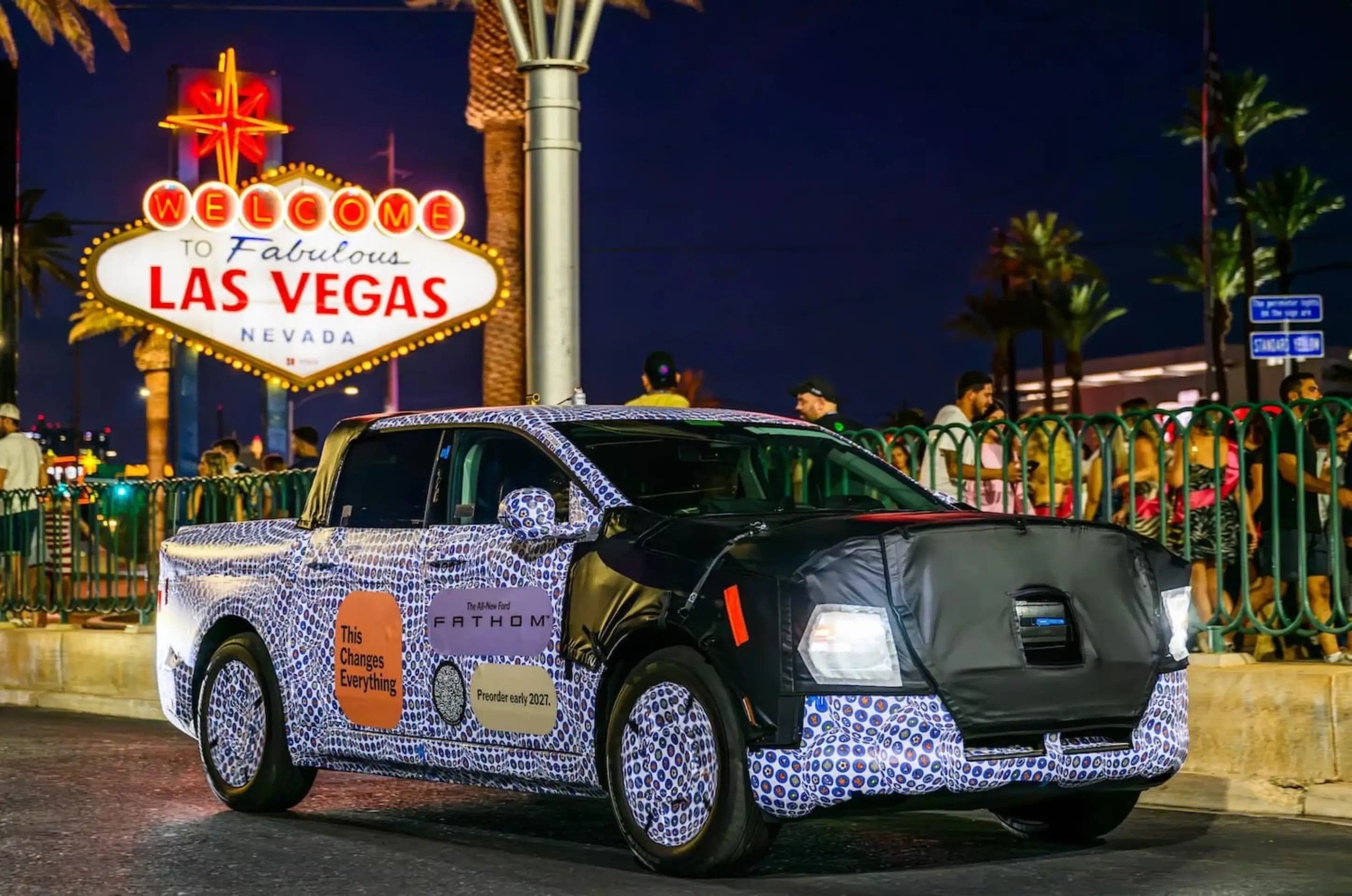
Ford is aiming to sell more than 100,000 Fathom electric pickups in the model’s first year, a target that would place the truck among the highest-volume EVs in the U.S. The company is betting that a roughly $30,000 starting price, lower-cost battery chemistry, and a redesigned manufacturing process can help it reach a scale that most non-Tesla EVs have not achieved. Photo by: Ford
Ford Is Setting a Much Higher EV Sales Target
Ford’s internal goal for the Fathom is unusually ambitious by current U.S. EV standards.
According to people familiar with the program cited by The Wall Street Journal, Ford wants first-year sales to exceed 100,000 units. That level has so far been reached annually in the U.S. only by Tesla EVs.
For comparison, the Chevrolet Equinox EV, the best-selling non-Tesla electric vehicle in the U.S. last year, recorded about 58,000 sales.
Ford has also set aggressive EV production targets in the past without reaching them. The company once planned for annual F-150 Lightning production of 150,000 units, but actual sales remained far below that level.
The Fathom strategy is therefore built around a different premise: reduce cost first, then pursue volume.
A New Factory Method Is Central to the Plan
The Fathom will be the first model based on Ford’s new Universal Electric Vehicle platform.
Instead of building the entire vehicle through one conventional production line, Ford plans to assemble major front, center, and rear sections separately before combining them later in the process. The company refers to this approach as an “assembly tree.”
Ford says the layout should reduce manufacturing complexity and improve efficiency.
The truck will also use large cast structural components to reduce the number of individual parts, a manufacturing approach that has also been associated with Tesla.
Ford has developed a new electrical architecture specifically for the platform rather than adapting systems from earlier EV programs.
Production is scheduled for Ford’s Louisville, Kentucky, assembly plant, which previously built the Ford Escape and Lincoln Corsair.
LFP Batteries Are Part of Ford’s Cost Strategy
Battery cost is another major part of the Fathom program.
The pickup will use lithium iron phosphate, or LFP, batteries. LFP cells are generally less expensive than high-nickel battery chemistries and are well suited to vehicles where affordability and durability are priorities.
Ford’s goal is to avoid the profitability problems associated with some of its earlier electric vehicles.
The company has already canceled or reduced several EV programs, including the previous F-150 Lightning strategy, while shifting more attention toward lower-cost models.
That makes the Fathom more than another electric pickup. It is also a test of whether Ford can design an EV business around lower production cost from the beginning rather than trying to reduce costs after launch.
Ford Wants the Fathom to Be Practical as Well as Cheap
Ford has described the Fathom as a mid-size electric pickup, although people who have reportedly seen prototypes say its exterior dimensions are closer to the compact Ford Maverick.
Inside, CEO Jim Farley has said the truck will provide more passenger space than a Toyota RAV4.
Ford plans to offer both rear-wheel-drive and all-wheel-drive configurations.
The infotainment system will also include native Apple Maps integration, which would be a first for Ford.
Several important specifications remain undisclosed, including official driving range, battery capacity, charging performance, payload, towing figures, and final trim pricing.
Those details will be important because the truck’s approximately $30,000 positioning is one of its strongest selling points.
The Market Will Decide Whether 100,000 Is Realistic
Ford plans to open Fathom orders in early 2027, with production scheduled to begin in the fall of 2027.
The sales environment could make the 100,000-unit target difficult.
U.S. EV demand has grown more slowly than many automakers once expected, and the end of the $7,500 federal EV tax credit has reduced one source of purchase support.
At the same time, a genuinely affordable electric pickup could address a part of the market that remains relatively underserved.
Most electric trucks currently sit well above mainstream compact and mid-size vehicle pricing. If Ford can deliver the Fathom near its expected entry price while maintaining useful range and everyday practicality, it could attract buyers who previously considered EVs too expensive.
The key question is no longer whether Ford intends to compete aggressively in electric vehicles. The Fathom shows that it does. The harder test will be whether lower costs, simplified production, and a more accessible price can translate into 100,000 real customers in one year. Photo by: Ford
FAQ
How many Ford Fathom electric trucks does Ford want to sell?
Ford is targeting more than 100,000 Fathom sales in the first year. Reaching that level would make it one of the highest-volume electric vehicles in the U.S.
How much will the Ford Fathom cost?
Ford is targeting a starting price of around $30,000. Final trim pricing and equipment details have not yet been fully announced.
When will the Ford Fathom go on sale?
Orders are expected to open in early 2027, with production planned for the fall of that year.
Where will the Ford Fathom be built?
Ford plans to manufacture the truck at its Louisville, Kentucky, assembly plant.
What battery will the Ford Fathom use?
The Fathom will use lithium iron phosphate batteries. Ford selected LFP chemistry as part of a broader effort to reduce vehicle and manufacturing costs.
Recommend Reading: Ford Fathom EV Truck: Price, Range and Launch


Share:
Polestar 4 SUV Adds Rear Window and More Space
Tesla Cybercab Begins Paid Rides in Austin