





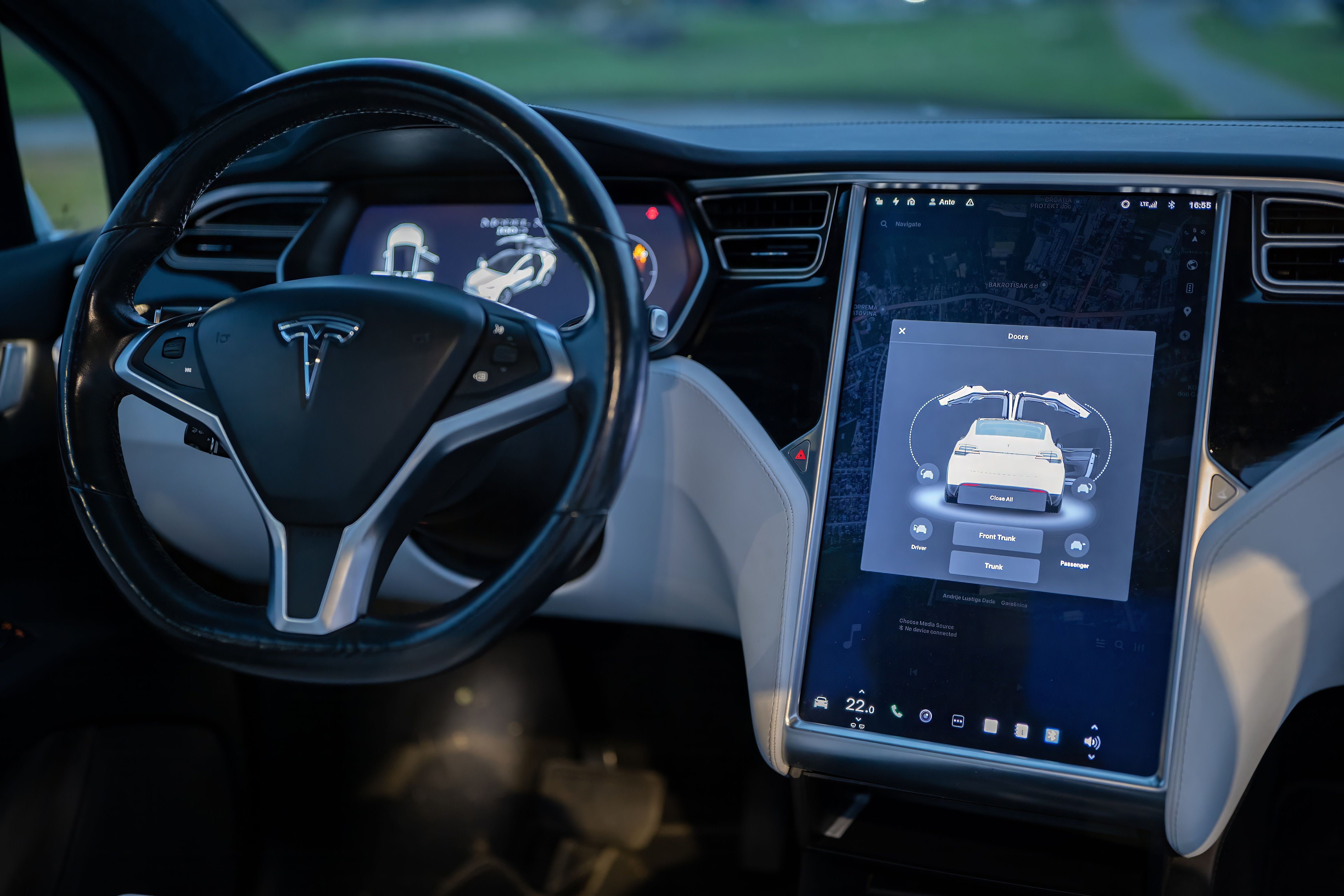
Tesla received approval to operate a driverless ride service in Las Vegas, but Nevada regulators limited the initial fleet to 10 vehicles, far below the 5,000 vehicles requested in its application. The permit also restricts where and how the service can operate.
Nevada Approves a Much Smaller Tesla Fleet
Tesla Robotaxi, LLC applied to the Nevada Transportation Authority in June for permission to operate an Autonomous Vehicle Network Company. Its proposal sought coverage throughout Clark County and requested authorization for as many as 5,000 vehicles during the first year.
The application also identified Harry Reid International Airport and Henderson Executive Airport as intended passenger pickup points.
The authorization issued on July 27, however, is considerably narrower. Tesla may initially deploy no more than 10 fully autonomous vehicles, and those cars must remain inside a geofenced operating area accepted by state regulators.
The permit sets a 45 mph maximum operating speed and excludes airport pickups. Tesla would need additional regulatory approval before increasing its fleet beyond the initial 10 vehicles.
Tesla Must Follow Additional Operating Rules
Fleet size is only one part of Nevada's requirements. Vehicles used for the service must be clearly identified as robotaxis, while riders must be informed that they are entering a vehicle operating without a conventional driver.
The permit also calls for appropriate human supervision, although the source documents do not provide extensive detail about how that requirement will function during individual trips.
Nevada regulators have not publicly provided a detailed explanation for the difference between Tesla's requested fleet of 5,000 vehicles and the 10-car authorization.
The restrictions mean Tesla's Las Vegas operation will begin as a relatively small deployment rather than the large-scale network described in its original filing. Expansion will depend on both Tesla's progress and further approval from the Nevada Transportation Authority.
Other Robotaxi Operators Are Expanding in Nevada
Tesla is entering a market where several autonomous-driving companies are already pursuing commercial operations.
Zoox, owned by Amazon, has permission for a Nevada fleet of up to 100 vehicles under an amended permit issued on July 16. The company has been operating roughly 50 vehicles around the Las Vegas Strip and recently began charging passengers for rides after meeting federal requirements.
Waymo also submitted a Nevada application in June and had already begun fully driverless operations in Las Vegas in early July. Uber's Aviari Services subsidiary filed its own application the following month. Those applications were still pending according to the information cited in the original report.
Against that background, Tesla's request for 5,000 vehicles was substantially larger than the currently authorized fleets of its competitors.
Tesla's Existing Robotaxi Fleet Remains Small
The Nevada permit arrives while Tesla's broader autonomous ride-hailing deployment remains limited in scale.
According to the original report, approximately 20 unsupervised Tesla robotaxis are operating simultaneously across the United States. Its Austin operation reportedly reached around 25 vehicles at its late-April peak before declining from that level.
Adding the full Nevada allowance of 10 cars would therefore represent a meaningful expansion relative to Tesla's existing active fleet, despite being only a small fraction of the company's original request.
Tesla is also manufacturing its purpose-built Cybercab, but vehicle production alone does not determine how quickly those cars can enter commercial service. Autonomous-driving performance, operational readiness and regulatory requirements remain important factors governing deployment.
A Limited Start for Tesla in Las Vegas
The 10-vehicle authorization suggests Nevada is allowing Tesla to establish an initial commercial presence while keeping the first deployment tightly controlled.
The company's original request indicates much larger ambitions. Yet permission for thousands of vehicles does not necessarily mean Tesla would have deployed that many immediately, and the current size of its autonomous fleet suggests a gradual expansion is more realistic in the near term.
Tesla has also indicated that meaningful revenue from its robotaxi program is not expected until at least 2027.
For now, Las Vegas will provide another operating environment in which Tesla can demonstrate its autonomous ride service. Any move from a small fleet toward hundreds or thousands of vehicles will require further regulatory approval as well as sufficient operational capacity to support that expansion.
FAQ
How many Tesla robotaxis can operate in Las Vegas?
Nevada has initially authorized Tesla to operate up to 10 fully autonomous vehicles. Tesla must receive additional approval before expanding beyond that limit.
How many robotaxis did Tesla request in Nevada?
Tesla's application requested authorization for as many as 5,000 vehicles during its first 12 months. The proposed service area originally covered Clark County and included airport pickup locations.
Can Tesla robotaxis pick up passengers at Las Vegas airport?
No. The current permit does not allow Tesla robotaxis to provide pickups at Harry Reid International Airport.
What is the speed limit for Tesla robotaxis in Nevada?
Tesla's authorized autonomous vehicles are limited to a maximum operating speed of 45 mph under the current Nevada permit.
How does Tesla's Nevada fleet limit compare with Zoox?
Tesla is initially capped at 10 vehicles, while Zoox has authorization for a Nevada fleet of up to 100 vehicles. The two companies therefore currently have different permitted deployment scales.
Recommend Reading: Tesla Cybercab Adds Integrated Starlink Antenna


Share:
Ferrari Luce EV Sets $40 Million Auction Record
Tesla Model Y L Reaches 358 Miles in Range Test