





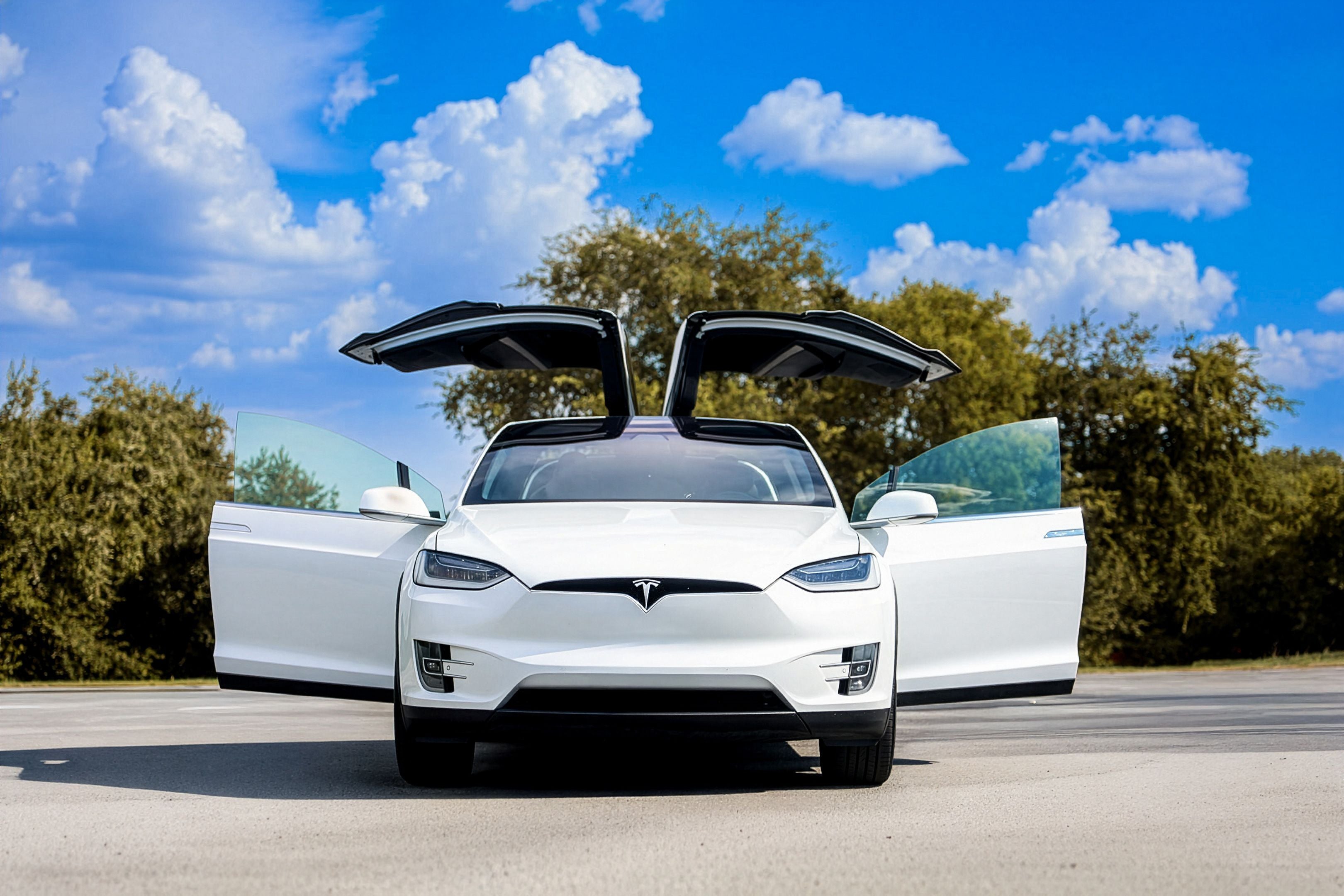
The 2027 Tesla Model Y L traveled 358 miles in Edmunds’ independent range test, exceeding Tesla’s 325-mile estimate by 33 miles, or about 10%. The result also makes the three-row Model Y L the longest-range Model Y that Edmunds has tested so far.

Model Y L Goes Beyond Its Range Estimate
Tesla introduced the Model Y L to the U.S. market last month as a larger alternative to the standard Model Y. One of its main differences is a three-row cabin, but independent testing indicates that the additional size has not prevented the vehicle from delivering competitive efficiency.
Edmunds recorded 358 miles before completing its range evaluation. That is significantly above the 325 miles Tesla lists for the vehicle and represents roughly a 10% improvement over the stated figure.
Among Model Y variants previously evaluated by Edmunds, none has traveled farther in the publication’s standardized testing.
There is an important qualification to that ranking. The rear-wheel-drive Model Y Premium has not yet undergone the same test. That model could eventually exceed the Model Y L because of the efficiency advantages generally associated with a single-motor configuration.
A Larger Battery Helps Extend Driving Distance
Part of the Model Y L’s performance can be explained by its battery. According to Edmunds, the usable capacity is approximately 83 kilowatt-hours, around 4% more than the battery available in the regular Model Y.
Tesla was able to accommodate the additional cells because the Model Y L has a longer wheelbase. The extra space allows the vehicle to use longer battery modules without requiring a completely different approach to battery packaging.
More capacity alone does not fully explain the 358-mile result, however. A larger and heavier three-row vehicle must still control energy consumption effectively to translate additional battery capacity into meaningful highway and mixed-driving range.
Tesla appears to have made several smaller changes aimed at doing exactly that.
Aerodynamic Changes Improve Efficiency
Despite its larger dimensions, the Model Y L has a reported 0.216 drag coefficient, lower than that of the standard Model Y.
Several design revisions contribute to that figure. Tesla modified parts of the body, added a rear spoiler and improved the relationship between the tires and wheels to reduce aerodynamic losses.
These details become increasingly important at higher speeds because aerodynamic resistance accounts for a substantial share of an EV’s energy consumption during faster driving.
Tesla has also revised the panoramic roof. The company says the updated glass reduces incoming solar energy by 30%, helping the interior remain cooler. Lower cabin temperatures can reduce the amount of energy required by the air-conditioning system, particularly in hot weather.
Together, these changes help explain how a physically larger Model Y can still return strong real-world efficiency.
More Space Comes at a Higher Price
The Model Y L was introduced in China before arriving in the United States. In the U.S., it currently sits at the top of the Model Y lineup by price.
The three-row crossover costs $63,630, making it approximately $4,000 more expensive than the Model Y Performance and about $16,000 above the Model Y Premium.
That premium buys more than additional battery capacity. The stretched body provides space for a third row that is more usable than the rear seating arrangements commonly found in compact three-row crossovers.
The combination positions the Model Y L differently from the regular Model Y. Rather than focusing primarily on price or performance, it targets buyers who need additional passenger capacity without moving to a substantially larger electric SUV.
The Result Shows Size Does Not Always Reduce Range
Adding seats, length and battery capacity normally introduces additional weight, creating a potential efficiency penalty. Tesla appears to have offset some of those disadvantages through aerodynamics, thermal improvements and battery packaging.
The 358-mile Edmunds result does not replace Tesla’s official range figure, and real-world driving distance will continue to vary with speed, temperature, climate-control use and other conditions.
Still, the test provides an indication of what the Model Y L can achieve outside its published estimate. For buyers considering the three-row version, its additional passenger space does not appear to require a major compromise in driving range.
Until Edmunds evaluates the rear-wheel-drive Model Y Premium, the Model Y L remains the longest-traveling Model Y in the publication’s testing.
FAQ
What is the real-world range of the Tesla Model Y L?
The 2027 Tesla Model Y L traveled 358 miles in Edmunds’ independent range test. That was 33 miles farther than Tesla’s 325-mile estimate.
How much battery capacity does the Model Y L have?
The Model Y L has approximately 83 kWh of usable battery capacity, according to Edmunds. That is about 4% more than the regular Model Y.
Why can the larger Model Y L travel so far?
Its range benefits from a larger battery and improved aerodynamics. The Model Y L has a reported 0.216 drag coefficient, while other changes help reduce cooling demand and aerodynamic resistance.
Does the Tesla Model Y L have three rows?
Yes. The Model Y L is a three-row version of the Model Y with a longer wheelbase and additional passenger space.
How much does the Tesla Model Y L cost?
The Model Y L is priced at $63,630 in the United States. It currently costs more than both the Model Y Performance and Model Y Premium.
Recommend Reading: Ford Plans Budget EV to Rival Model 3 and Model Y


Share:
Tesla Robotaxi Gets 10-Vehicle Nevada Limit
2027 Lucid Air Keeps Prices and 512-Mile Range