





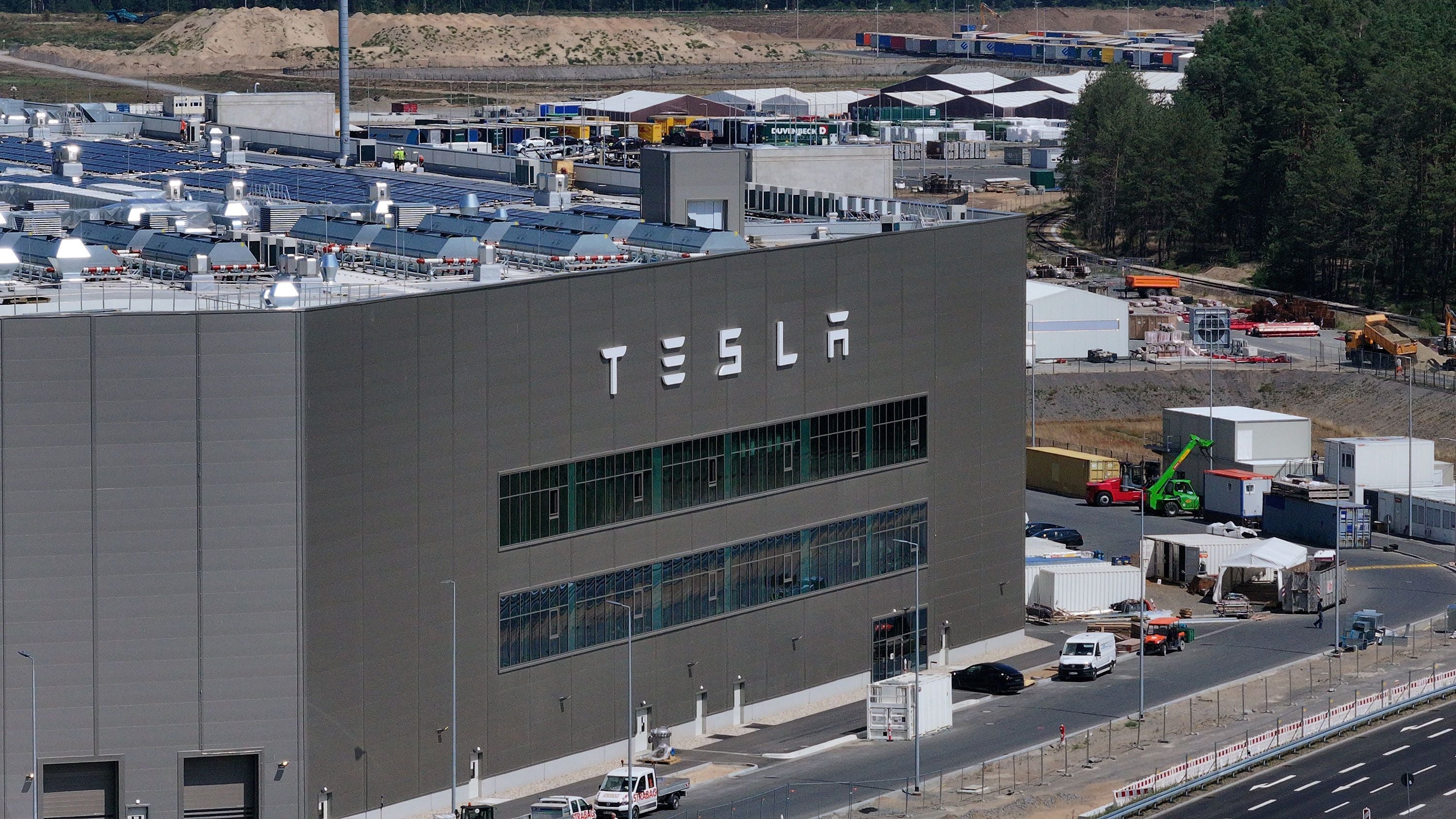
Tesla has proposed a $10.1 billion solar manufacturing complex in Fort Bend County, Texas, that could employ nearly 10,000 people and begin commercial production in early 2029. The project, identified in state documents as Project Crystal Sun, would cover multiple stages of solar cell manufacturing rather than focusing only on final module assembly.
Tesla Outlines a $10.1 Billion Investment
Details of the proposed factory appear in an application submitted through Texas' Jobs, Energy, Technology and Innovation Act (JETI) program. The filing seeks a 10-year limitation on certain property taxes and was submitted through Lamar Consolidated Independent School District.
Tesla's application was signed on July 22, 2026, and became publicly available on August 6. Consulting firm Kroll prepared supporting materials for the project.
The planned investment totals approximately $10.116 billion. Around $1.5 billion would go toward land and other real-property improvements, while approximately $8.6 billion would be allocated to manufacturing machinery and related equipment.
According to the proposed schedule, Tesla would make investments between 2026 and 2028, followed by the start of commercial operations during the first quarter of 2029.
If completed at the scale described in the filing, Crystal Sun would represent one of Tesla's largest manufacturing commitments in the United States.
Factory Would Cover Multiple Solar Production Steps
The project's manufacturing scope is notable because Tesla is proposing more than a conventional solar module assembly operation.
Documents list equipment and facilities for silicon ingot production, wafer processing, surface coating, metallization, printing, cell testing and cleanroom operations. This indicates that several upstream and downstream manufacturing stages could take place at the same Texas complex.
Much of the solar manufacturing capacity added in the United States in recent years has concentrated on assembling modules from cells or other components produced elsewhere. A facility capable of handling ingots, wafers and cells would move more of the supply chain into domestic production.
The filing describes the factory as a vertically integrated operation, although Tesla has not separately announced final annual production capacity or detailed which solar products would use its output.
Nearly 10,000 Permanent Jobs Are Proposed
Tesla estimates that the facility could support 9,712 permanent positions, making employment another major component of the application.
The accompanying economic analysis prepared by Kroll projects a much broader long-term effect if the factory proceeds as proposed. According to that assessment, Crystal Sun could contribute approximately $107 billion to Texas' gross domestic product over a 38-year period.
The same analysis estimates around $6.4 billion in state and local tax revenue during that timeframe.
Those figures are forecasts rather than guaranteed outcomes and depend on the project being constructed, operating at the expected scale and remaining active over the modeled period.
Fort Bend Site Would Cover About 3,050 Acres
Tesla is considering approximately 3,050 acres near Richmond, Texas, south of the Brazos River and around the FM 762 and FM 1994 corridors.
The application identifies five land parcels, although Tesla would use only portions of the properties for the planned campus.
Additional local steps would still be required. The proposed location would need to sit within a designated reinvestment zone, which Fort Bend County has not yet established for the project.
That means the filing should not be interpreted as confirmation that construction will proceed exactly as described. Major incentive applications can change before investment decisions, construction schedules and final factory specifications are settled.
Tesla Says Tax Incentives Could Influence Location
The JETI request is also central to Tesla's decision over where to build the plant.
According to the filing, the company has considered multiple potential locations in different U.S. states. Tesla argues that property-tax expenses would put the Texas location at a financial disadvantage compared with another unidentified site without state and local incentives.
Manufacturing equipment accounts for the majority of Crystal Sun's proposed investment, making property taxation a potentially significant long-term operating expense.
Tesla is therefore seeking the JETI limitation alongside other possible local incentives before making the Fort Bend location economically competitive.
For now, Project Crystal Sun remains a proposal rather than a completed investment decision. However, the scale of the application indicates that Tesla is evaluating a substantial expansion beyond its existing U.S. solar manufacturing footprint, with vertically integrated domestic solar production potentially becoming a much larger part of its energy business.
FAQ
What is Tesla Project Crystal Sun?
Project Crystal Sun is the name used in a Texas incentive application for Tesla's proposed solar manufacturing facility in Fort Bend County. The planned investment is approximately $10.1 billion.
Where would Tesla build the new solar factory?
The proposed site covers portions of roughly 3,050 acres near Richmond, Texas, in Fort Bend County. Local approvals and the creation of a qualifying reinvestment zone would still be required.
When could Project Crystal Sun begin production?
Tesla's filing targets commercial operations beginning in the first quarter of 2029. Investment and construction-related spending are planned across 2026, 2027 and 2028.
How many jobs could the Tesla solar factory create?
The application estimates 9,712 permanent jobs if the project reaches the proposed scale. Actual employment would depend on the final factory configuration and completion of the investment.
What would Tesla manufacture at Project Crystal Sun?
The filing describes equipment for producing ingots, wafers and solar cells, along with coating, metallization, testing and other processes. This suggests a more vertically integrated solar supply chain than a plant focused solely on assembling finished modules.
Recommend Reading: Florida EV Charger Funds Face New Propoal


Share:
Tesla Cybercab Adds Integrated Starlink Antenna
Kia EV3 Starts at $31,385, Offers Up to 321 Miles