





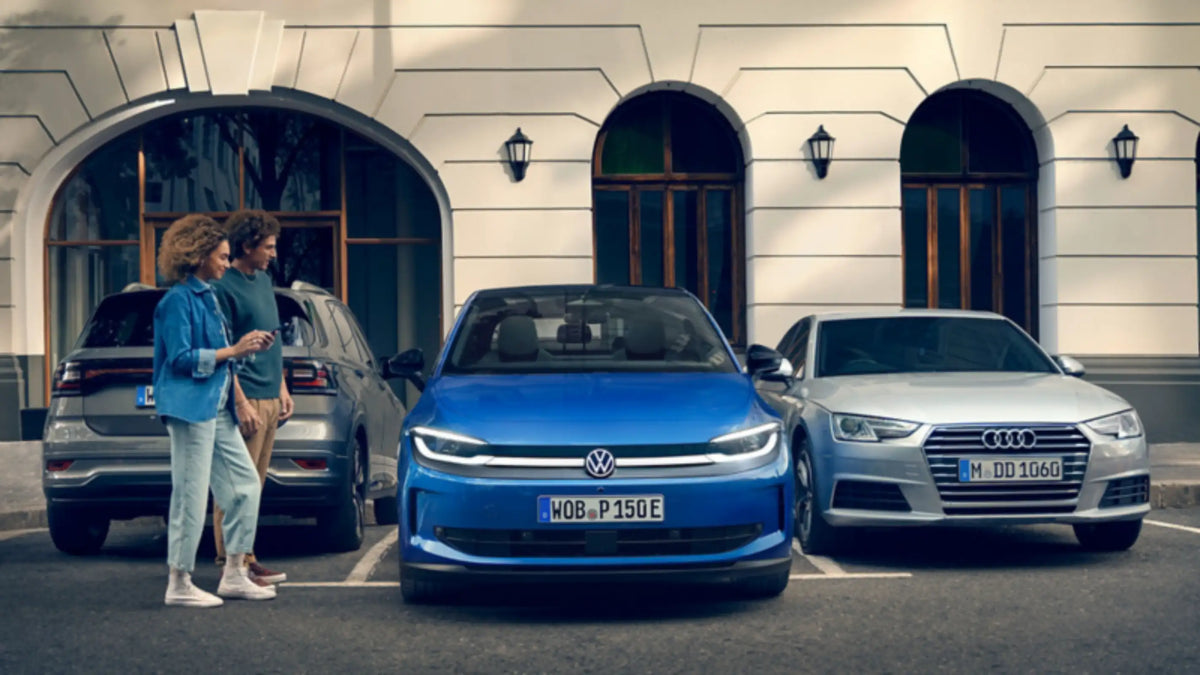
Volkswagen's entry-level ID. Polo Trend now faces reported delivery delays of up to 21 months in Europe, following stronger demand than the company anticipated. The electric hatchback starts at €24,995 in Germany, but its low price and limited production allocation have created a substantial backlog for customers seeking the most affordable version.
 Photo by: Volkswagen
Why Volkswagen ID. Polo Deliveries Are Delayed
Demand for Volkswagen's new electric hatchback has developed faster than its initial production planning anticipated.
According to German automotive publication Edison Media, delivery estimates for the least expensive ID. Polo configuration have reached 21 months, compared with approximately 10 months reported in September.
Earlier reports indicated that the model had accumulated more than 30,000 orders by mid-September. The latest reporting suggests that its order backlog has expanded considerably since then.
However, delivery estimates differ across configurations. Customers ordering the performance-oriented ID. Polo GTI reportedly face a shorter waiting period of approximately seven months.
The difference suggests that production allocation, rather than overall demand alone, is influencing delivery schedules.
Volkswagen is reportedly giving greater manufacturing priority to versions with stronger profit margins, leaving fewer production slots available for the lowest-priced model.
The 21-month estimate should therefore be understood as a reported maximum for a specific configuration, not a uniform delivery time for every ID. Polo buyer.
VW ID. Polo Price, Battery and Driving Range
Volkswagen introduced the ID. Polo with a 52 kWh battery in late April, initially pricing that version from €33,795.
A more affordable configuration followed in July, expanding the model's appeal to customers seeking a lower-cost electric vehicle.
The ID. Polo Trend uses a 37 kWh battery and starts at €24,995, including German market pricing assumptions.
Its advertised driving range is 334 kilometers (207 miles) under the WLTP testing cycle.
WLTP figures provide a standardized basis for comparing vehicles, although actual driving range depends on conditions such as speed, temperature and road characteristics.
The lower-priced model offers a smaller battery and a substantially lower purchase price than the original launch configuration.
That combination appears to have attracted customers who might otherwise have considered conventional compact cars or more expensive electric alternatives.
For prospective buyers, however, the purchase price must now be weighed against the possibility of an extended delivery schedule.
Unexpected Buying Patterns Affect Production Planning
Volkswagen's early expectations about how customers would acquire the ID. Polo have not matched reported ordering behavior.
A company manager interviewed by Edison Media indicated that Volkswagen had expected leasing to account for approximately 90% to 95% of transactions.
Instead, the reported leasing share is closer to 50%, indicating a much larger proportion of customers choosing outright purchases or other financing arrangements.
Demand for the larger-battery configuration has also exceeded expectations.
Another unexpected finding concerns the optional detachable towbar.
According to the same report, approximately 90% of buyers selected the accessory, which costs an additional €810.
These preferences may affect the mix of vehicles Volkswagen chooses to manufacture and the profitability of individual configurations.
Prioritizing better-equipped models can support revenue per vehicle, but it can also increase waiting periods for customers ordering basic versions.
Volkswagen has not provided a detailed public breakdown of production allocations for every ID. Polo trim.
Volkswagen ID. Cross Also Attracts Early Orders
The ID. Polo is part of a wider Volkswagen Group effort to introduce smaller electric vehicles across several brands.
Another model in that strategy is the Volkswagen ID. Cross, an electric crossover positioned alongside the company's compact SUV offerings.
Volkswagen opened German orders for the entry-level ID. Cross Trend at €27,995, including VAT.
In the United Kingdom, the 52 kWh ID. Cross is scheduled to become available for ordering at a starting price of £30,260.
A 37 kWh ID. Cross Life version is planned for January 2027, with an announced starting price of £26,985.
Initial demand for the ID. Cross has reportedly exceeded Volkswagen's forecasts.
The broader small-EV family also includes the CUPRA Raval and Škoda Epiq.
Together, these models have reportedly generated nearly 150,000 orders since production began in June, suggesting substantial interest in more affordable European electric vehicles.
Strong EV Orders Come Amid Volkswagen Cost Cuts
The early response to Volkswagen's smaller electric models contrasts with the group's financial and restructuring challenges.
Volkswagen Group reportedly recorded a €5.9 billion operating loss during the third quarter, reflecting significant pressure on its automotive business.
The company is also pursuing a restructuring strategy intended to reduce expenses and simplify its manufacturing operations.
Its reported Future Plan 2030 includes potential workforce reductions, factory closures and a narrower vehicle portfolio.
These measures place additional importance on improving production efficiency and maintaining sustainable margins across new electric models.
High order volumes demonstrate customer interest, but they do not necessarily translate into immediate deliveries or profitability.
For Volkswagen, the central challenge is converting demand into vehicles that can be produced and delivered at competitive costs.
The ID. Polo's extended waiting times highlight both the appeal of affordable electric cars and the difficulty of matching production capacity with customer demand.
 Photo by: Volkswagen
FAQ
How long is the wait for a Volkswagen ID. Polo?
The entry-level ID. Polo Trend reportedly has delivery estimates reaching 21 months. Other configurations may arrive sooner, with the GTI version currently associated with a waiting period of approximately seven months.
How much does the Volkswagen ID. Polo cost?
The most affordable ID. Polo Trend starts at €24,995 in Germany. The larger-battery version was introduced with a starting price of €33,795, although prices vary by configuration and market.
What is the driving range of the VW ID. Polo Trend?
The 37 kWh ID. Polo Trend has a stated WLTP range of 334 kilometers (207 miles). Actual driving distance will vary with weather, driving speed and other operating conditions.
Why does the cheapest ID. Polo have a longer delivery time?
Strong demand and reported production prioritization of higher-margin configurations are contributing factors. Volkswagen appears to be allocating manufacturing capacity unevenly across the model range.
Is the Volkswagen ID. Polo available in the United States?
The reported launch and pricing information concern European markets. Volkswagen has not announced a confirmed United States launch schedule for the ID. Polo in the supplied reporting.
Recommend Reading: European EV Market Sees Strong Gains in 2025: Top Brands and Models


Share:
Tesla Cybercab Orders Open at $29,990 for Buyers
Rivian Point-to-Point Driving Beta: Who Qualifies?