





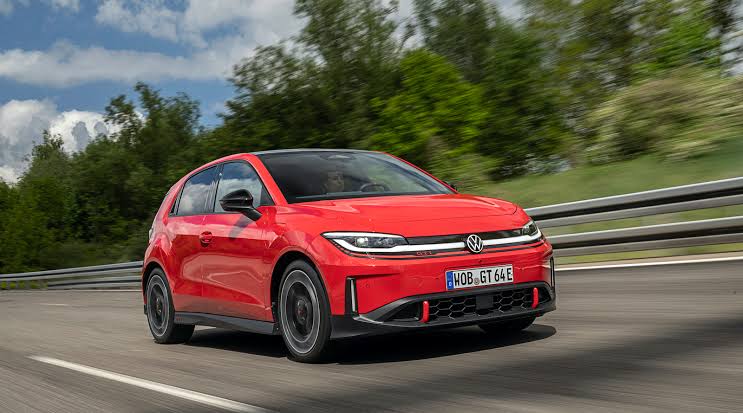
Volkswagen's new family of affordable electric vehicles has attracted more than 70,000 customer orders within just a few months of launch. The early demand suggests competitively priced compact EVs remain highly attractive to European buyers despite growing market competition.

Volkswagen's Entry-Level EV Strategy Gains Momentum
Volkswagen Group's push into the affordable electric vehicle segment appears to be delivering stronger-than-expected results.
The automaker announced that customer reservations for its new Electric Urban Car Family have surpassed 70,000 units, only about three months after the lineup was introduced. Company executives described the response as significantly exceeding internal expectations, indicating solid demand for lower-cost EVs in Europe.
The order volume is spread across several newly launched models, including the Volkswagen ID. Polo, Skoda Epiq, and Cupra Raval. Among them, the ID. Polo has reportedly generated approximately 25,000 orders, while the remaining reservations are shared between the Skoda and Cupra models.
The figures reinforce a trend emerging across Europe's EV market: buyers continue to respond positively when manufacturers combine practical driving range with pricing that is accessible to mainstream consumers.
A Fourth Model Broadens the Lineup
Volkswagen's compact EV portfolio has recently expanded with the arrival of another model designed for urban drivers.
The newly introduced Volkswagen ID. Cross joins the existing lineup, completing the company's planned four-model family of small battery-electric vehicles. With its launch, customers can now choose between two crossover-style models—the ID. Cross and Skoda Epiq—or two hatchbacks, the ID. Polo and Cupra Raval.
Although the vehicles target slightly different customer preferences, they are built around a common engineering approach. By sharing key components across multiple brands, Volkswagen can reduce development costs while offering a wider range of body styles and design identities.
This strategy also allows the group to compete across multiple market segments without developing entirely separate vehicle platforms for each model.
Shared Technology Keeps Costs Competitive
Despite their different exterior designs, the four electric vehicles share the same core mechanical package.
Entry-level versions use a 32 kWh lithium iron phosphate (LFP) battery, providing an estimated driving range of approximately 180 miles. Customers seeking longer distance capability can choose a larger 52 kWh nickel manganese cobalt (NMC) battery, increasing the estimated WLTP driving range to roughly 280 miles.
Every model uses a front-wheel-drive configuration, while power output varies depending on the chosen version, ranging from 114 horsepower to 222 horsepower.
Offering two battery options enables Volkswagen to serve both cost-conscious urban buyers and drivers who require additional range without fundamentally changing the vehicle platform.
Fast Charging Supports Everyday Use
Charging performance has also been designed to remain competitive within the affordable EV segment.
Vehicles equipped with the 32 kWh LFP battery support charging speeds of up to 90 kW, allowing the battery to increase from 10% to 80% in approximately 27 minutes. Models fitted with the larger 52 kWh NMC battery accept up to 105 kW, shortening the same charging session to roughly 24 minutes.
While these charging figures are below those of many premium electric vehicles, they provide sufficient performance for daily commuting and occasional longer trips, helping strengthen the appeal of Volkswagen's newest budget-focused EV lineup.


Share:
U.S. Senate Bill Targets Foreign Auto Ownership
Tesla FSD Subscribers Reach 1.5 Million