





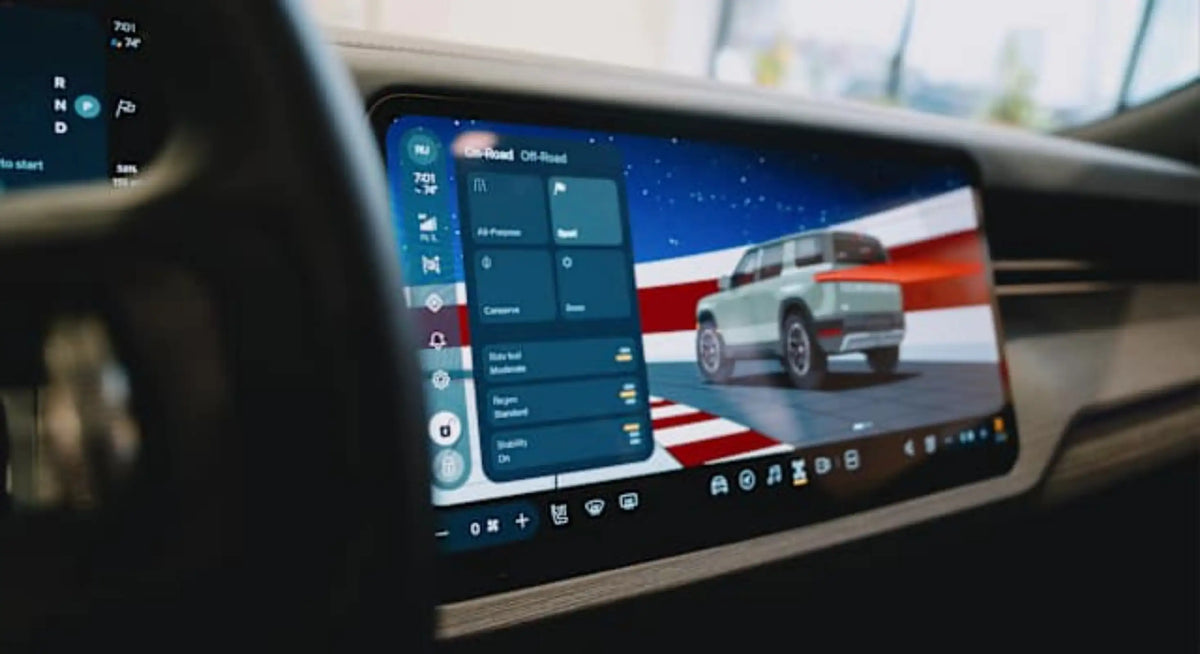
Rivian is facing higher component costs and more complicated supply planning as demand from artificial intelligence data centers puts pressure on semiconductor and electronics supply chains. CEO RJ Scaringe says memory chips and other previously routine components now require significantly more attention, creating additional challenges as the company prepares to expand production of its R2 electric SUV.
The issue extends beyond Rivian, with other automakers reporting similar concerns about component availability and pricing.
 Photo by: Rivian
Why AI Data Centers Are Affecting EV Manufacturing
The rapid expansion of AI computing infrastructure is increasing demand for electronic components used across multiple industries.
Data centers require substantial quantities of memory, processors and supporting circuit-board materials. Some of these components also appear in modern vehicles, where they support digital displays, infotainment systems and driver-assistance technologies.
One important example is dynamic random access memory (DRAM).
Memory manufacturers are directing more production resources toward higher-value products serving AI computing customers.
This can reduce supply flexibility for automotive manufacturers purchasing conventional memory components.
As demand increases, automakers may face higher prices, longer purchasing commitments or greater uncertainty about future availability.
The problem is particularly relevant to electric vehicles with increasingly sophisticated electronic systems.
Although EV batteries and motors receive considerable attention, vehicles also depend on numerous smaller components that must be available before assembly can be completed.
A shortage of an inexpensive electronic part can therefore disrupt production even when major vehicle components are ready.
Rivian Changes How It Plans Memory Purchases
During an interview with venture capital firm Kleiner Perkins, Scaringe discussed how semiconductor procurement has changed.
He explained that memory previously received relatively little attention because it was widely available and generally treated as a standard component.
That situation has changed as competition for electronic hardware has intensified.
Rivian now spends more time evaluating memory requirements, optimizing circuit-board designs and developing purchasing strategies.
These decisions affect both engineering and supply chain management.
Reducing unnecessary memory usage can potentially limit exposure to price increases, while longer-term procurement planning may improve supply predictability.
However, design optimization cannot completely eliminate dependence on external component manufacturers.
Scaringe also emphasized the complexity of automotive supply chains, which involve thousands of direct and indirect suppliers.
Disruptions can emerge several levels below the companies delivering finished components to an automaker.
That makes shortages difficult to anticipate and potentially expensive to resolve.
Circuit-Board Materials Create Additional Challenges
Memory is not the only category experiencing pressure from growing computing infrastructure investment.
Rivian hardware executive Vidya Rajagopalan identified electronic materials and basic circuit components as additional areas of concern.
One example is electronic-grade glass fiber, commonly used in materials for printed circuit boards.
The expansion of data center hardware production has increased competition for certain circuit-board materials.
Limited availability can affect companies manufacturing electronics for vehicles, even when those products serve entirely different markets.
Rajagopalan also pointed to multilayer ceramic capacitors (MLCCs).
These small components are widely used to regulate electrical behavior in electronic circuits.
Although individual capacitors are relatively inexpensive, modern vehicles require large numbers of them across different control modules.
A supply disruption involving such components can complicate the production of complete electronic assemblies.
Rivian's comments illustrate why automotive supply planning must consider basic materials and components alongside advanced processors.
Other Automakers Report Similar Cost Pressures
The semiconductor supply challenge is affecting more than one electric vehicle manufacturer.
Chinese automaker Li Auto has warned about supply constraints and price volatility involving DRAM and NAND flash memory.
These components support vehicle computing functions, including digital cockpit systems and automated driving technology.
Major US automakers have also acknowledged increasing memory expenses.
Both General Motors and Ford discussed higher costs during recent earnings calls.
The companies subsequently announced longer-term supply arrangements with semiconductor manufacturer Micron.
Such agreements can help manufacturers plan component availability, although they do not necessarily prevent future price changes.
The broader situation reflects increasing competition between automotive electronics and other technology industries.
As vehicles incorporate more computing capabilities, their manufacturers become more exposed to semiconductor market conditions.
Rising Component Costs Add Pressure to Rivian R2
Rivian's supply chain concerns come at an important point in its product expansion strategy.
The company is preparing the R2 electric SUV, which has an advertised starting price of approximately $45,000.
Reaching that price target requires careful management of manufacturing expenses.
During a recent earnings call, Scaringe said Rivian was evaluating ways to offset rising costs for memory and other commonly purchased components.
These efforts are particularly important because the R2 is intended to reach a broader market than Rivian's existing premium vehicles.
The company is also developing additional computing technology for future R2 models.
Its planned RAP1 processor and a new lidar sensor are intended to support more advanced automated driving capabilities.
Rivian expects this technology to become available in consumer R2 vehicles next year, according to its current development plans.
However, the company has not confirmed that rising semiconductor costs will result in a higher R2 retail price.
The immediate challenge is controlling electronic component expenses while maintaining the R2's planned affordability and technology roadmap.
 Photo by: Rivian
FAQ
Why is AI increasing costs for electric vehicle manufacturers?
AI data centers are increasing demand for memory chips and electronic materials also used in automotive systems. This competition can raise component prices and make supply planning more difficult for EV manufacturers.
What memory chips are becoming harder for Rivian to source?
Rivian has identified growing challenges involving conventional memory components, particularly DRAM. The company is adjusting its engineering and purchasing strategies to manage availability and costs.
How does the AI boom affect Rivian's R2 electric SUV?
Higher semiconductor and electronic component costs could increase manufacturing expenses for the R2. Rivian is working to manage these pressures while maintaining its advertised $45,000 starting price.
What are MLCCs, and why do they matter for electric vehicles?
Multilayer ceramic capacitors are small electronic components used throughout vehicle circuit boards. Supply shortages can affect the availability of electronic modules needed for vehicle assembly.
Are other automakers experiencing memory chip shortages?
Yes. Li Auto, General Motors and Ford have reported concerns involving memory availability or rising costs. GM and Ford have also established longer-term semiconductor supply agreements with Micron.
What is Rivian's RAP1 processor?
RAP1 is an in-house computing chip being developed for Rivian's future vehicle technology. The company plans to combine it with lidar hardware to support increasingly advanced automated driving capabilities in upcoming R2 vehicles.
Recommend Reading: Rivian Fast Charging Network Reaches 1,185 Ports


Share:
Lucid Cosmos EV Targets 2027 Production Launch
How Google Gemini Works With Apple CarPlay