





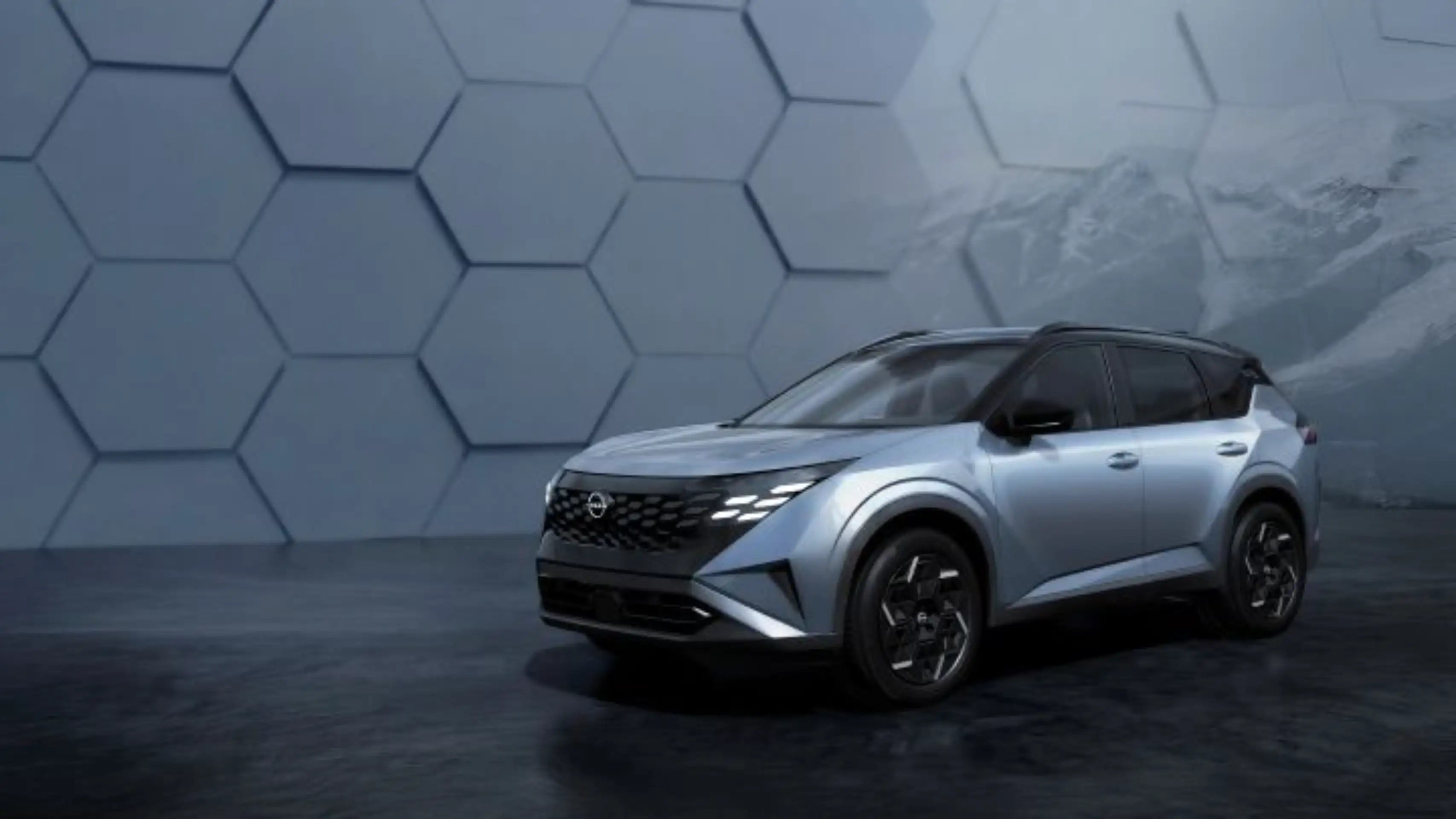
Nissan will launch the Rogue e-Power in the U.S. this November, moving the hybrid SUV forward from its previously planned arrival. The new model will target the Toyota RAV4 and Honda CR-V Hybrid with electric-motor propulsion and expected fuel economy above 40 mpg.
Source: Nissan
Nissan Moves the Rogue Hybrid Launch Forward
Nissan has accelerated the Rogue e-Power's U.S. introduction twice. The fourth-generation Rogue hybrid had previously been expected around mid-2027 before its launch was moved to January and then advanced again to November 2026, according to Automotive News.
The decision gives Nissan an earlier opportunity to compete in a part of the U.S. market where it currently has limited representation.
Although Nissan was an early participant in the modern EV market with the Leaf, it has not built the same presence in conventional hybrids as Toyota and Honda. Nissan currently sells a Rogue plug-in hybrid, but that model is closely related to the Mitsubishi Outlander PHEV.
Tiago Castro, Nissan's senior vice president of U.S. marketing and sales, indicated that confidence in the new hybrid contributed to the accelerated schedule.
The hybrid will arrive before other versions of the redesigned Rogue, putting e-Power at the center of the model's U.S. introduction.
Rogue e-Power Drives Its Wheels With Motors
The most significant difference between the Rogue e-Power and competing hybrids is how power reaches the wheels.
Toyota uses a power-split hybrid arrangement, while Honda's system can combine electric propulsion with direct engine drive under certain conditions. Nissan takes a different approach: the Rogue's gasoline engine does not mechanically drive the wheels.
Instead, electric motors provide propulsion.
A 1.5-liter turbocharged three-cylinder gasoline engine primarily generates electricity for the system. Energy is managed through a relatively small 2-kWh battery, which supplies the electric drive motors.
The battery does not need to be connected to an external charger. It receives energy from the gasoline engine and regenerative braking.
This configuration is intended to provide some characteristics associated with EVs, including immediate electric-motor response, without requiring owners to change their fueling habits or depend on public charging.
Nissan Americas product executive Ponz Pandikuthira has described the vehicle's acceleration and driving behavior as electric because the combustion engine is separated from direct wheel propulsion.
Nissan Targets More Than 40 MPG
Efficiency will be important if Nissan wants the Rogue e-Power to compete directly with established hybrid SUVs.
The automaker expects fuel economy to exceed 40 miles per gallon. If the production vehicle achieves that target, its efficiency would place it in a similar range to the Toyota RAV4 Hybrid and potentially slightly above the Honda CR-V Hybrid.
Despite some similarities, the Rogue e-Power should not be grouped directly with upcoming large-battery extended-range EVs.
Vehicles such as the future Jeep Grand Wagoneer EREV and next-generation Ford F-150 Lightning are expected to combine much larger rechargeable batteries with gasoline range extenders.
The Rogue instead uses a small battery and has no external charging port, making it closer in everyday ownership to a conventional hybrid.
Hybrid Demand Creates an Opportunity for Rogue
Nissan is entering the segment with an SUV that already has substantial U.S. sales volume.
During the first half of 2026, Rogue sales increased 24% year over year to 135,970 vehicles. Adding an efficient hybrid could help Nissan capture customers who currently choose competing electrified compact SUVs.
Honda sold 226,114 CR-Vs over the same period, with hybrids representing 55% of that total. That means electrified powertrains have already become central to the CR-V business rather than remaining a niche option.
Toyota recorded 153,955 RAV4 sales during the period, down 35% year over year, with the decline largely associated with the transition to the sixth-generation model. The latest RAV4 lineup is now entirely hybrid-based, offering standard hybrid and plug-in hybrid configurations.
Those figures illustrate the competitive environment facing Nissan. The Rogue remains a major seller, but Toyota and Honda have spent years establishing hybrid technology across their high-volume SUVs.
The e-Power system gives Nissan a technically distinct alternative. Its success will depend on whether the promised 40-plus mpg efficiency, electric-style driving characteristics, pricing and familiar Rogue practicality are enough to persuade buyers already considering the RAV4 and CR-V.
Source: Nissan
FAQ
When will the Nissan Rogue e-Power launch in the U.S.?
Nissan plans to introduce the Rogue e-Power in November 2026. The company accelerated the launch from an earlier schedule that had placed its arrival in 2027.
How does the Nissan Rogue e-Power hybrid work?
The Rogue e-Power uses electric motors to drive the wheels, while a 1.5-liter turbocharged gasoline engine generates electricity. The engine does not mechanically power the wheels.
Does the Rogue e-Power need to be plugged in?
No. The Rogue e-Power has no external charging port. Its approximately 2-kWh battery receives energy from the gasoline engine and regenerative braking.
What fuel economy will the Rogue e-Power get?
Nissan is targeting more than 40 mpg. Final official fuel-economy ratings were not provided in the source information.
Is the Rogue e-Power an extended-range EV?
Its series-hybrid layout shares some principles with range-extended EVs, but the Rogue uses a much smaller battery and cannot be externally charged. It is therefore different from upcoming large-battery EREVs designed to cover substantial distances on stored grid electricity.
Recommend Reading: Why Nissan Delayed the Cheaper Leaf EV in the U.S.


Share:
What Tesla Still Needs to Prove With Cybercab
Tesla Plans September Push for Three Long-Delayed Products