





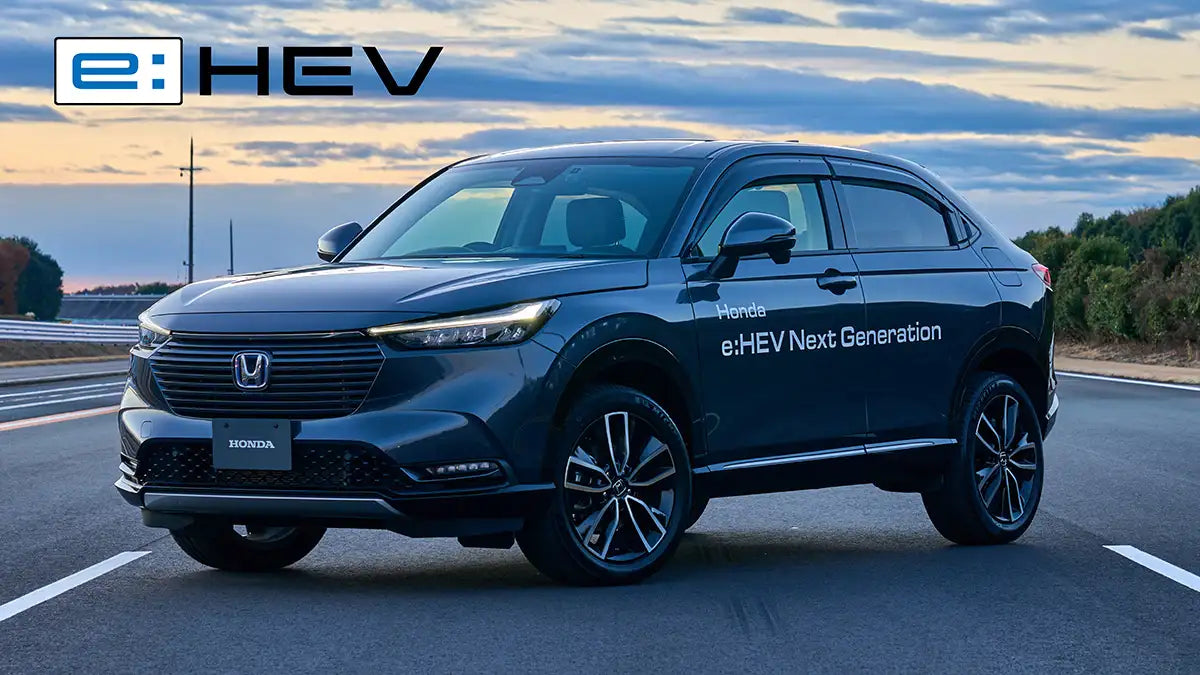
Honda plans to introduce at least 15 next-generation hybrid models worldwide by March 2030, with most intended for North America. The new vehicles will use an updated hybrid powertrain, a lighter and more rigid platform, and a newly developed electric all-wheel-drive system designed to improve fuel efficiency and driving performance. Photo by:Honda
Honda Expands Its Hybrid Vehicle Strategy
Honda is preparing a major expansion of its hybrid lineup as the company adjusts its electrification strategy following the cancellation of its 0 Series electric vehicle program.
The Japanese automaker has confirmed that its next-generation powertrain, known as Honda Hybrid, will begin appearing in production vehicles in 2027.
By the end of its fiscal year on March 31, 2030, Honda expects to introduce at least 15 models equipped with the new technology.
North America will receive the majority of these vehicles, reflecting the company's growing emphasis on hybrid demand in the United States and Canada.
The upcoming lineup will cover multiple vehicle sizes rather than focusing on a single segment. Honda is developing systems suitable for smaller passenger cars, midsize vehicles and larger SUVs.
Although specific model assignments have not been confirmed, future versions of established nameplates such as the Civic and CR-V could potentially adopt the updated technology.
Electric All-Wheel Drive Adds New Capability
One of the most significant developments is Honda's planned electric all-wheel-drive system, commonly described as e-AWD.
Unlike conventional mechanical all-wheel-drive arrangements, electric AWD can use a separate electric motor to provide power to the rear wheels.
This configuration can eliminate the need for a mechanical driveshaft connecting the front and rear axles, potentially improving packaging flexibility and reducing certain mechanical losses.
Honda has not yet disclosed the complete technical specifications of its new system, including the rear motor's output or the precise arrangement of its components.
However, the technology could provide more flexible torque distribution between the axles, particularly when accelerating or driving on surfaces with limited traction.
The company has emphasized that its future hybrids must balance fuel efficiency with responsive driving characteristics.
Because conventional hybrids have smaller batteries than plug-in hybrid vehicles, extended electric-only driving is not expected to be their primary purpose.
Instead, the electric motors will mainly assist propulsion, improve efficiency and support vehicle handling.
New Platform Focuses on Weight and Rigidity
The upcoming hybrid models will also benefit from a redesigned vehicle architecture.
Honda is developing a structure intended to reduce vehicle weight while increasing body rigidity, two factors that influence both energy consumption and driving dynamics.
A lighter vehicle generally requires less energy during acceleration, while greater structural stiffness can help suspension components operate more consistently.
These improvements are particularly relevant for hybrid vehicles, which carry both combustion and electric propulsion components.
Honda's approach combines platform development with improvements to the powertrain rather than relying solely on a larger battery or more powerful electric motor.
The new architecture is expected to support several vehicle categories, allowing Honda to apply related engineering solutions across a broader product range.
This shared approach could also help the company manage development and manufacturing costs as additional hybrid models enter production.
Full-Size SUVs Could Gain 30% Better Efficiency
Honda has outlined a separate hybrid configuration intended for larger vehicles sold in the United States.
The system will combine a newly developed V6 gasoline engine, updated electric motors and an improved lithium-ion battery.
According to Honda's earlier projections, the configuration could deliver approximately 30% better fuel efficiency than current non-hybrid full-size SUVs.
That comparison applies to conventional gasoline-powered SUVs rather than existing hybrid models.
For larger vehicles, the improvement could be particularly important because their greater weight and energy requirements generally result in higher fuel consumption.
Honda has not announced final fuel economy ratings for the upcoming models.
The projected improvement will therefore need to be evaluated against official testing results once production vehicles become available.
Updated e Technology Remains the Foundation
The new Honda Hybrid system builds on the company's existing e architecture, which combines a gasoline engine with electric propulsion and power-generation components.
Depending on operating conditions, the electric motor can provide driving force while the combustion engine generates electricity or contributes directly to propulsion.
During deceleration, regenerative braking allows the system to recover some kinetic energy and store it in the high-voltage battery.
This arrangement enables the vehicle to manage energy use without requiring external charging.
Honda's decision to expand hybrid development follows substantial financial losses associated with the discontinued 0 Series program, reported at approximately $9 billion.
The company is now directing greater attention toward technologies that can improve fuel economy while retaining the convenience of conventional refueling.
With its first next-generation hybrids expected in 2027, Honda is positioning the technology as a central part of its North American vehicle strategy through the end of the decade.
 Photo by:Honda
FAQ
When will Honda release its next-generation hybrids?
Honda expects the first vehicles using its updated Honda Hybrid system to arrive in 2027. The company plans to introduce at least 15 new hybrid models globally by March 31, 2030.
Will Honda's new hybrids have all-wheel drive?
Honda is developing a new electric all-wheel-drive system for its upcoming hybrid lineup. The technology is expected to improve traction and driving response, although Honda has not confirmed which models will receive it.
How does Honda's electric AWD system work?
Electric AWD systems can use a dedicated motor to drive the rear wheels without a conventional mechanical connection to the front powertrain. Honda has not yet released complete technical details of its specific system.
Will the next Honda CR-V and Civic use the new hybrid system?
Honda has not officially confirmed the complete model lineup. However, future versions of the CR-V and Civic are possible candidates because the company plans to introduce the technology across multiple vehicle segments.
How much more fuel-efficient will Honda's new hybrid SUVs be?
Honda projects that its upcoming V6-based hybrid system could improve fuel efficiency by approximately 30% compared with current non-hybrid full-size SUVs. Official fuel economy figures have not yet been announced.
Why is Honda investing more heavily in hybrids?
Honda is expanding hybrid development as it adjusts its electrification plans following the cancellation of the 0 Series EV program. The company sees hybrids as a way to improve fuel efficiency while serving customers who prefer conventional refueling.
Recommend Reading: Honda Ends Prologue Sales After 2026


Share:
Kia EV3 Targets Strong US Sales With $30K Price
2027 Chevy Blazer EV Prices, Range and Updates