





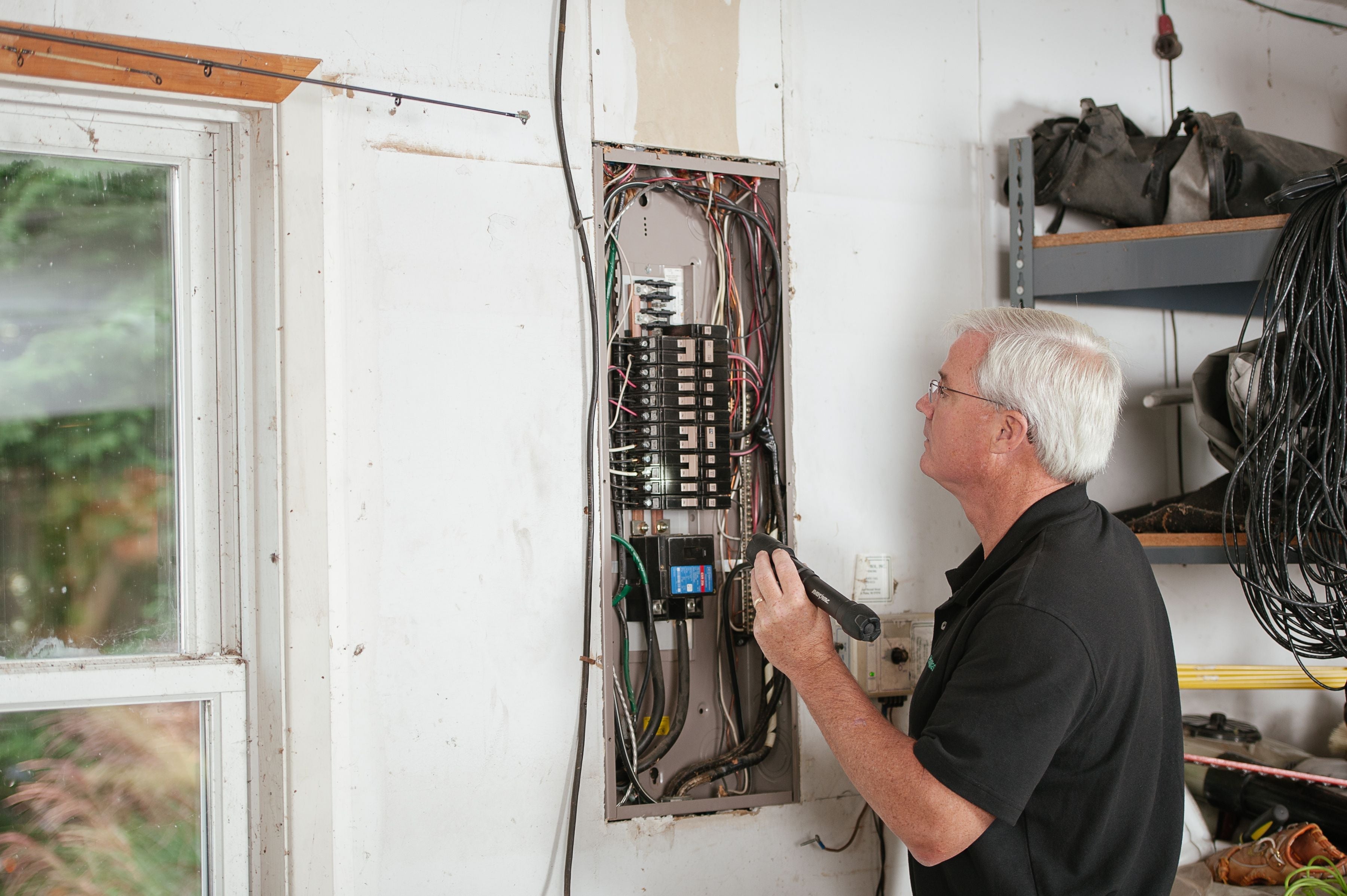
If your EV charger keeps tripping the breaker, the most common causes are charging at too high an amperage, an overloaded circuit, a loose or overheating outlet, moisture or an electrical fault.
When the breaker trips can also provide an important clue.
|
When it trips |
Possible cause |
|
As soon as you plug it in |
Moisture, damaged equipment or an electrical fault |
|
When charging begins |
The charging current may be too high for the circuit |
|
After 30 minutes or several hours |
The plug, outlet or wiring may be overheating |
|
Only at certain times |
Another appliance may be using the same circuit |
Do not keep resetting the breaker without checking why it tripped. A breaker is a safety device, and repeated tripping can be a warning that something needs attention.
What Should You Do First?
Start with these four steps:
-
Check what actually stopped the charge. Look at the electrical panel, the charger display and the vehicle app.
-
Inspect the visible equipment. Look for unusual heat, discoloration, cracks, moisture or a burning smell.
-
Check the charging current. Make sure the charger is not set higher than the circuit can support.
-
Stop using the circuit if the problem returns. Repeated tripping should be checked by a qualified electrician.
If you notice melted plastic, dark marks, buzzing, smoke or a burning smell, disconnect the charger if it is safe to do so and stop using the outlet.
Did the Breaker Trip or Did the Charger Stop?
A charging session can stop even when the breaker has not tripped.
First, check the breaker in your electrical panel. A tripped breaker may sit between the ON and OFF positions. Follow the instructions on the panel when checking its position.
If the breaker is still on, look at the charger’s screen, indicator light or app. The charger may have stopped because it detected:
-
An unusually high temperature
-
A missing or poor ground connection
-
Moisture near a connector
-
Voltage that is too high or too low
-
An internal equipment problem
The vehicle can also pause charging because of a schedule, charging limit or vehicle warning. Checking all three places—the panel, charger and vehicle—can help you avoid diagnosing the wrong problem.
1. The Charging Current Is Too High
One of the most common reasons for breaker trips is a charger setting that does not match the circuit.
EV charging can continue for several hours, so the circuit must be able to handle the load safely over time. In a typical U.S. installation, the charging current is usually limited to 80% of the circuit rating.
|
Circuit rating |
Common maximum charging current |
Power at 240V |
|
20A |
16A |
3.84kW |
|
30A |
24A |
5.76kW |
|
40A |
32A |
7.68kW |
|
50A |
40A |
9.60kW |
|
60A |
48A |
11.52kW |
For example, a 40A charger normally needs a 50A circuit. Setting it to 40A on a 40A circuit may cause the breaker to trip.
However, the breaker rating is not the only thing that matters. The wiring, outlet, plug and charger must also be suitable for the selected current. An outlet that looks like a NEMA 14-50 does not automatically confirm that the wiring behind it can support 40A charging.
The U.S. Department of Energy recommends having home charging equipment installed and checked by a qualified electrical contractor.

2. Another Appliance Is Using the Same Circuit
EV chargers should generally use a circuit that is suitable for the charger and installed according to local requirements.
If another appliance is connected to the same circuit, the combined demand may be too high. The charger might work normally until a dryer, heater or other high-power appliance turns on.
This can explain why charging only stops at certain times, even though the current setting has not changed.
Do not use a splitter or improvised adapter to solve this problem. An electrician can confirm whether the charger has a suitable circuit and whether any other equipment is connected to it.
3. The Outlet or Plug Is Getting Too Hot
If the breaker trips after charging for 30 minutes or several hours, heat may be building up at the outlet, plug or wiring connection.
Possible causes include:
-
A plug that is not fully inserted
-
A loose or worn outlet
-
Loose wiring behind the outlet
-
Dirt, corrosion or damage on the contacts
-
An outlet not designed for repeated high-power charging
-
Cable tension pulling on the plug
A loose connection creates resistance, and resistance creates heat. The charging session may begin normally but stop later as the temperature rises.
After disconnecting the power, look for discoloration, melting or a loose-fitting outlet. Do not open the outlet or electrical panel yourself unless you are qualified to do so.
If the plug or outlet becomes unusually hot, stop charging and have it inspected.
4. The Charger Detects Moisture or an Electrical Fault
An EV charger has built-in protection that can stop charging when electricity is flowing where it should not. Moisture, damaged insulation, dirty connectors or a wiring problem can all trigger this protection.
This is more likely when the problem appears:
-
Immediately after plugging in
-
During or after rain
-
After washing the vehicle
-
When a connector has been dropped or damaged
-
When moisture or debris is visible inside the charging port
Allow wet connectors to dry completely and inspect them for contamination or damage. Never try to bypass a ground-fault warning.
If the same warning returns, stop using the charger until the equipment and circuit have been checked.
Can You Lower the Charging Current?
If there is no burning smell, unusual heat, visible damage, moisture or ground-fault warning, you may lower the current once to see whether the behavior changes.
For example, a charger set to 40A could be reduced to 32A or 24A if those settings are supported by the charger, vehicle and circuit.
If the lower setting prevents the breaker from tripping, it gives you a useful clue. The original current may be too high, or the outlet and wiring may only develop a problem under a heavier load.
However, lowering the current is not a permanent repair for a damaged outlet, loose connection or wiring fault. The cause should still be investigated.
An adjustable portable EV charger can make it easier to match the charging current to a compatible circuit, but the selected setting must always follow the circuit rating, product instructions and local electrical requirements.
When Should You Call an Electrician?
Stop using the circuit and arrange an inspection if:
-
The breaker trips repeatedly
-
It trips even when the charger is disconnected
-
The breaker will not reset
-
The outlet or plug becomes hot
-
You see dark marks, corrosion or melted plastic
-
You hear buzzing or crackling
-
You smell burning material
-
The outlet no longer holds the plug securely
-
A ground or leakage warning keeps returning
-
You do not know the circuit rating or wire size
An electrician can check the breaker, wiring, outlet, ground connection and voltage while the charger is under load. These problems cannot always be identified by looking at the outside of the outlet.

How to Prevent Future Breaker Trips
Use a charger that matches the available circuit, and make sure the charging current is set correctly. Keep plugs fully inserted, avoid placing tension on the cable and inspect frequently used outlets for looseness or discoloration.
For a charger that will stay in one location, ask an electrician whether a hardwired installation would be more suitable than a plug-in charger.
Most importantly, do not treat repeated breaker trips as a minor inconvenience. Finding the cause early can protect the charger, the vehicle and the electrical system in your home.


Share:
Ford Fathom EV Truck Starts Under $30,000
How to Charge an EV at a Hotel or Vacation Rental