





Why Official Range Figures Often Miss the Mark
Electric vehicle range estimates published by regulators are designed to provide a standardized benchmark, but they rarely reflect everyday driving conditions. Factors such as temperature fluctuations, driving style, road elevation, and sustained highway speeds can all influence how far an EV actually travels on a single charge.
In controlled environments, testing cycles combine city and highway scenarios. However, real-world usage—especially long-distance highway driving at 70 mph (113 km/h)—tends to produce different outcomes. This gap has led independent organizations to conduct their own evaluations, aiming to measure how closely vehicles align with or deviate from their official ratings.

How the Highway Test Was Conducted
A recent large-scale evaluation examined nearly 30 electric vehicles, focusing specifically on highway performance. Each car was driven continuously at a steady 70 mph until its battery was depleted. This method isolates one of the most demanding driving conditions for EVs: sustained high-speed travel.
It’s important to note that this approach naturally disadvantages some vehicles. Since regulatory estimates include mixed driving conditions, falling short during highway-only testing is not necessarily a failure. On the other hand, exceeding official figures under these conditions is considered a strong indicator of efficiency.
German Brands Lead in Range Performance
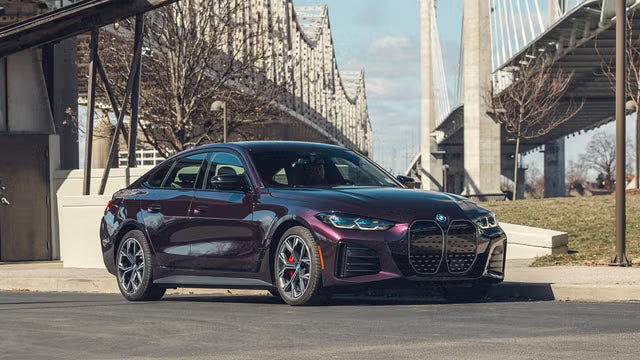
Among all manufacturers tested, BMW stood out as the top performer. On average, its vehicles exceeded their official range figures by 18.6%, a significant margin in this type of test.
Two models contributed to this result:
- BMW i4 M50 delivered approximately 51 miles more than its rated range
- BMW i5 M60 surpassed expectations by around 45 miles
Close behind, Mercedes-Benz and Mini also demonstrated strong results, each averaging about 12% above their official estimates. When grouped together, German brands collectively outperformed their ratings by nearly 9.7%, suggesting a consistent approach to conservative range estimation or highly efficient highway performance.

South Korean EVs Show Consistency
Manufacturers from South Korea delivered results that closely matched their official figures. On average, their vehicles deviated by only -0.6%, indicating a high level of accuracy between lab testing and real-world outcomes.
Key observations include:
- Hyundai Ioniq 6 and Kia EV9 remained very close to their rated range
- Hyundai Ioniq 5 N slightly exceeded expectations by 6.8%
- Kia Niro EV fell short by 5.5%, slightly lowering the group average
Overall, this category demonstrated predictability rather than overperformance, which may appeal to buyers seeking reliable estimates.
Mixed Results From U.S. Automakers
American brands showed a wider spread of outcomes, with some models exceeding expectations while others underperformed.
From Tesla, results varied:
- Cybertruck and Model Y Long Range slightly surpassed their official figures
- Model 3 Long Range and Model S Long Range did not perform as well
- The Model S Long Range missed its estimate by 44 miles (10.7%)
Other U.S. manufacturers faced larger gaps:
- Ford F-150 Lightning recorded a deficit of 50 miles
- Chevrolet Silverado EV came in 21 miles below its rating
- Rivian R1S and Lucid Air Touring both showed shortfalls of 52 miles
These results highlight that while some vehicles remain competitive, performance consistency is less uniform across the segment.
What These Results Mean for Buyers
The findings underline an important point: EPA range figures are best viewed as guidelines rather than guarantees. Real-world performance depends heavily on how and where a vehicle is driven.
However, several key insights emerge:
- Some manufacturers, particularly BMW, appear to provide conservative estimates or deliver strong efficiency at highway speeds
- Others, like South Korean brands, offer highly accurate projections, reducing uncertainty for consumers
- A number of vehicles still fall short under demanding conditions, though not dramatically in most cases
Perhaps the most notable takeaway is that many EVs now come close to—or even exceed—their official ratings, even under less favorable conditions. This reflects broader improvements in battery technology, aerodynamics, and powertrain efficiency across the industry.

A More Nuanced View of EV Range
While standout performers may attract attention, the broader trend is one of convergence. Differences between rated and real-world range are becoming smaller, and overall reliability in range estimation is improving.
For potential buyers, this means less guesswork. Whether choosing a performance-oriented sedan or a practical SUV, most modern EVs are capable of delivering dependable range—provided expectations are aligned with real-world driving conditions.
Recommend Reading: Rivian R2 Base Model: Range Trails Tesla Model Y at Similar Price


Share:
BMW i3 range, charging and specs: what to expect
Sony Honda Afeela EV Project Cancelled: What Happened