





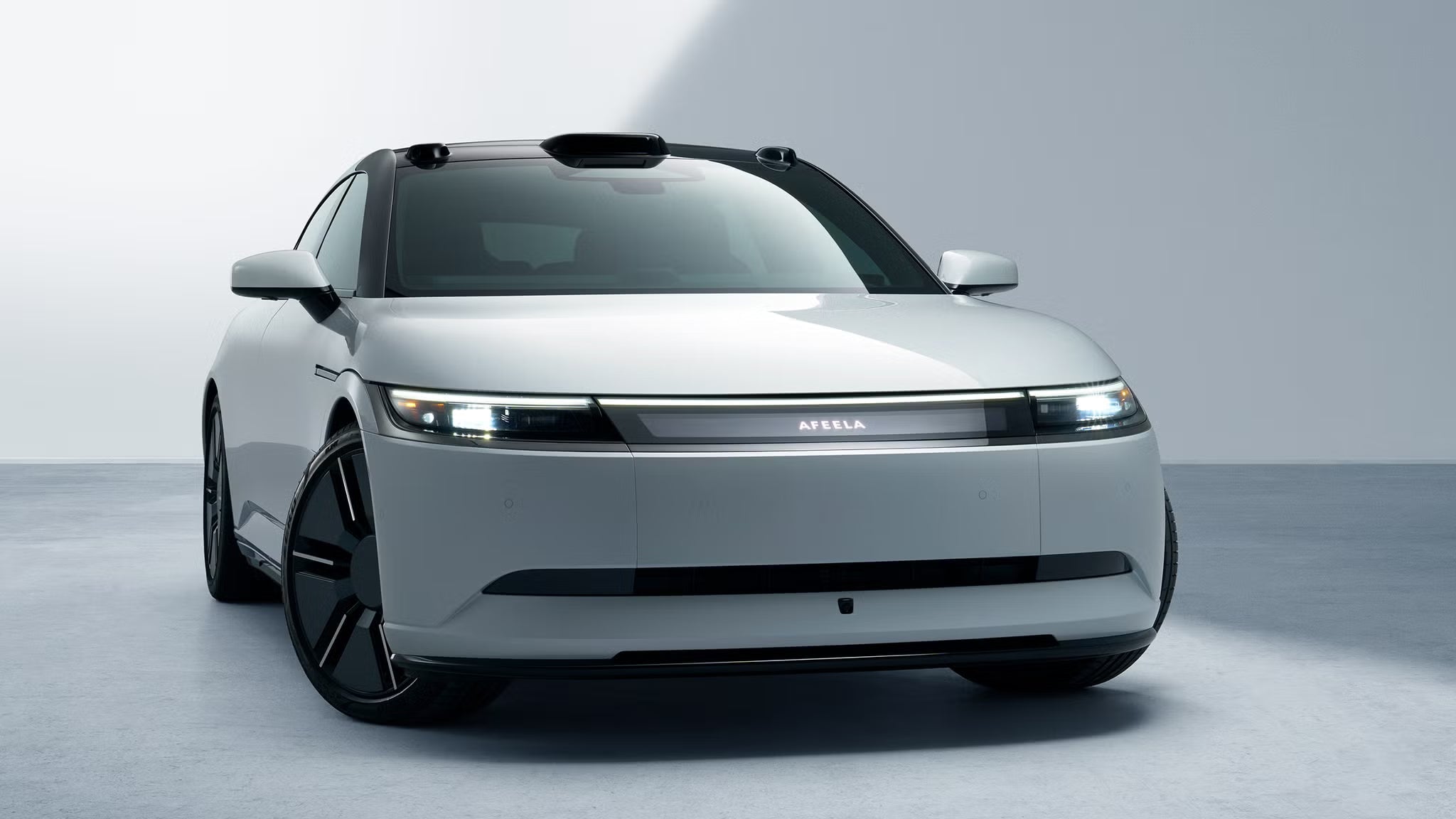
A High-Profile EV Collaboration Comes to an End
Sony Honda Mobility, the joint venture created by Sony and Honda, has officially halted its electric vehicle program under the Afeela brand. The decision brings an abrupt end to plans for both a premium electric sedan and a follow-up SUV that were intended to showcase a blend of advanced software and automotive engineering.
In a joint announcement, the companies confirmed that development and production plans for the initial models will no longer move forward. The sedan, known as the Afeela 1, had already progressed into pre-production, while a second model—an SUV—was expected to follow later in the decade. Both vehicles were originally scheduled to be manufactured at Honda’s facility in Ohio.

Strategic Shifts in the EV Market
The cancellation reflects broader adjustments taking place across the electric vehicle sector. Sony Honda Mobility cited changing market conditions as a primary factor behind the decision. However, a deeper reason lies in Honda’s internal restructuring of its own EV roadmap.
Honda has recently stepped back from a dedicated next-generation EV platform that was intended to underpin multiple future models. This platform was also expected to serve as the technological foundation for Afeela vehicles. Without it, the joint venture no longer had access to critical components and engineering resources required to bring its products to market.
The scrapped lineup included several anticipated models under Honda and Acura branding, which signals a broader recalibration of the company’s electrification strategy rather than a single isolated project cancellation.
Dependency on Shared Technology
From the outset, the Afeela program relied heavily on a combination of Sony’s software expertise and Honda’s vehicle engineering. While Sony contributed to areas such as user interface design, connectivity, and sensor integration, Honda was responsible for core automotive systems, including the underlying architecture.
With Honda discontinuing that shared platform, Sony Honda Mobility faced a significant technical gap. Developing a new architecture independently would have required substantial time and investment, likely delaying the project beyond acceptable timelines.
As a result, the partnership opted to discontinue the program entirely instead of attempting to redesign the vehicles from the ground up.
Competitive Pressures in the Premium EV Segment
Even before the cancellation, questions had emerged regarding the competitiveness of the Afeela lineup. The Afeela 1 sedan was positioned as a high-end electric vehicle, with pricing expected to exceed $90,000.
However, its core specifications appeared less compelling when compared to similarly priced competitors. Estimated driving range was around 300 miles, and maximum charging speed was projected at 150 kW—figures that are increasingly common, even among lower-priced EVs.
At the same time, the vehicle emphasized advanced driver-assistance capabilities and a sophisticated sensor array. The system was designed to support future autonomous functions, featuring a large number of cameras, radar units, and other sensing technologies.
While these features aligned with Sony’s strengths in electronics and software, they may not have been sufficient to differentiate the product in a crowded market where buyers often prioritize range, charging speed, and price.
A Market in Transition
The decision to cancel Afeela models comes during a period of mixed momentum in the EV industry. Some automakers have recently scaled back or discontinued certain electric programs, particularly in segments where demand has not met earlier expectations.
At the same time, other companies continue to invest aggressively in new products. Emerging models from brands such as Rivian, BMW, and Volvo indicate that competition is intensifying, especially in the mid-size and premium segments.
This divergence highlights the complexity of the current market environment. While long-term electrification trends remain intact, short-term strategies are evolving as companies respond to cost pressures, regulatory changes, and shifting consumer preferences.
Lessons From the Afeela Project
The end of the Afeela initiative underscores the challenges of launching a new automotive brand, even with strong backing from established companies. Integrating cutting-edge technology into a vehicle platform requires not only innovation but also alignment in long-term strategy and resource allocation.
In this case, the reliance on a shared platform that was later abandoned proved to be a critical vulnerability. It also illustrates how quickly priorities can change within large organizations, particularly in a rapidly evolving sector like electric mobility.
Looking ahead, it remains unclear whether Sony will pursue future automotive ventures independently or through new partnerships. For Honda, the focus appears to be shifting toward a revised electrification plan that may differ significantly from earlier ambitions.

What This Means for the EV Landscape
Although the Afeela models will not reach production, the broader implications extend beyond a single project. The cancellation reflects a more cautious and selective approach among some automakers as they reassess investment priorities.
At the same time, it reinforces the importance of competitive fundamentals—such as range, charging performance, and pricing—in determining success in the EV market. Advanced technology alone may not be enough to secure a foothold without strong value propositions in these key areas.
As the industry continues to mature, similar strategic pivots are likely to occur, shaping the next phase of electric vehicle development worldwide.
Recommend Reading: Honda Ends 0 Series EV Program and Cancels Acura RSX Electric







Share:
Do Some EVs Beat Their EPA Range? Real-World Test Results
How Chinese EV Makers Have Turned Profit and What It Means Globally