


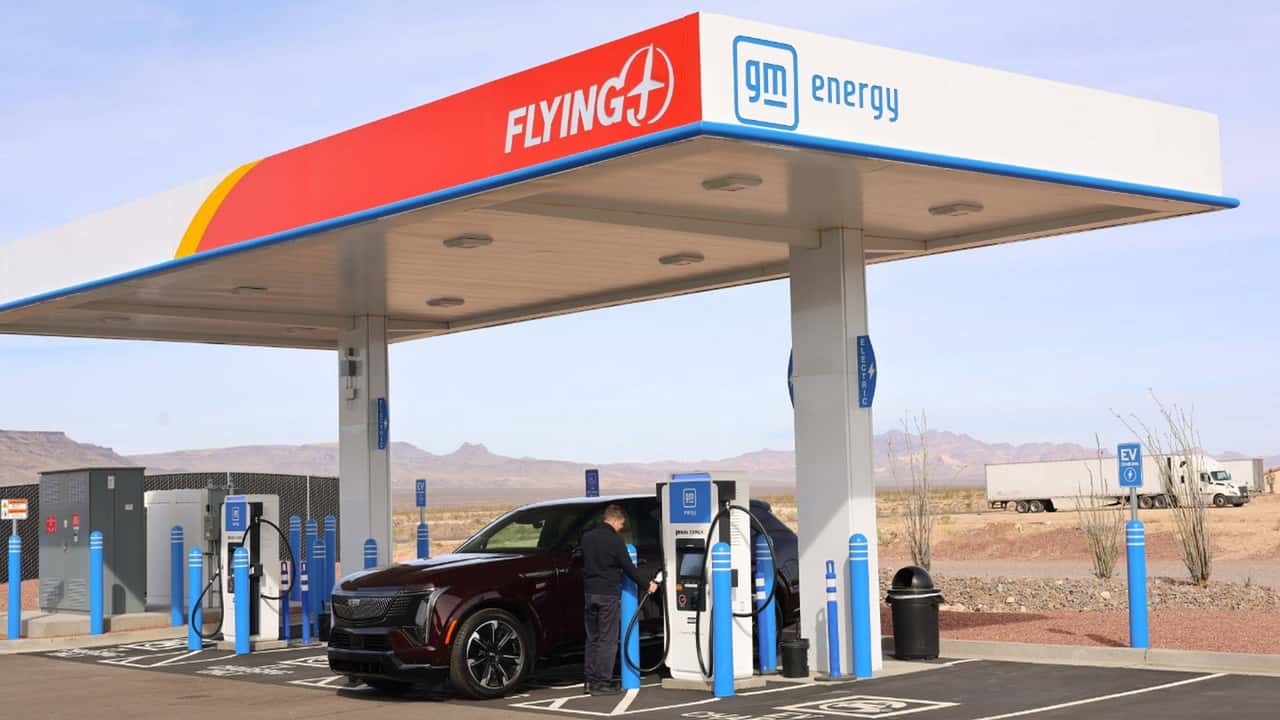
Pilot has expanded its fast-charging network to more than 300 locations across the United States, marking a significant step toward its nationwide charging goals. The growing network strengthens long-distance EV travel by adding more high-power charging stations along major highway routes.

Over 200 Pilot and Flying J Stations Now Offer EV Fast Charging

Pilot Passes a Major Expansion Milestone

Pilot Company has reached another important benchmark in its nationwide electric vehicle charging rollout. The travel center operator now offers fast-charging facilities at more than 300 Pilot and Flying J locations, significantly expanding its coverage in less than a year.

The company recently confirmed that the network has grown to 301 charging sites, reflecting rapid deployment across the country. Since last autumn, the number of charging locations has increased by more than 50%, demonstrating continued investment in highway charging infrastructure despite broader uncertainty surrounding the EV industry.

For drivers traveling long distances, the larger network means more charging opportunities along key interstate corridors, helping reduce concerns about charger availability during road trips.


New Locations Continue to Open Across the U.S.

Pilot accelerated construction during the first half of the year by opening approximately 50 additional charging sites spread across 25 states.

According to charging data providers, the network now includes nearly 1,300 individual charging stalls, making Pilot one of the largest travel-center-based charging providers in North America.

Rather than focusing on urban charging, Pilot has concentrated its investments on highway travel centers where EV drivers are more likely to stop for extended breaks. Most locations also provide amenities commonly used during road trips, including restaurants, convenience stores, grocery items, restrooms, seating areas, and complimentary Wi-Fi.

By combining charging with traditional travel services, Pilot aims to make charging stops more convenient for drivers covering long distances.


High-Power Chargers Designed for Road Trips

Pilot's charging stations use EVgo's 350-kilowatt DC fast chargers, offering some of the highest charging speeds currently available for compatible electric vehicles.

Each charger includes two charging connectors. When only one vehicle is connected, the charger can provide its maximum output. If both connectors are in use simultaneously, available power is shared between the two charging sessions.

Many compatible EVs can also take advantage of Plug & Charge technology, allowing charging sessions to begin automatically after the vehicle is connected, provided payment credentials have already been linked beforehand.

These features are intended to simplify the charging process while reducing wait times for travelers making frequent highway stops.


Pilot Continues Upgrading Existing Facilities

Expansion has not been limited to entirely new charging locations.

Alongside opening additional travel centers, Pilot has also modernized a number of existing charging sites during the year. Recent projects included newly installed chargers at locations in Massachusetts and Florida, while multiple older sites across the United States and Canada received infrastructure upgrades.

By improving both new and existing facilities, the company is working to increase network reliability while supporting higher charging demand as EV ownership continues to grow.


A Long-Term Partnership Is Driving Growth

Pilot's charging expansion is part of a broader infrastructure initiative announced in 2022, when the company partnered with GM Energy and EVgo to build a large-scale highway fast-charging network across the United States.

The partners set a target of installing up to 2,000 DC fast chargers at as many as 500 Pilot and Flying J travel centers. The first locations entered service toward the end of 2023, and deployment has accelerated steadily since then.

By March 2025, the network had expanded to more than 130 charging locations across over 25 states. With 301 sites now operating, the project has passed the halfway point toward its long-term location goal, making it one of the fastest-growing interstate charging networks in North America.


Highway Charging Competition Continues to Intensify

Pilot's progress reflects a broader trend of rapid investment in public charging infrastructure across the United States.

Major retailers, travel centers, utilities, and charging providers are all expanding their networks to meet growing demand from EV owners. Companies increasingly recognize that reliable highway charging is essential for supporting long-distance travel and encouraging wider EV adoption.

Pilot is not alone in this effort. Walmart has also accelerated deployment of its charging network, with more than 600 charging ports already in operation. Other operators continue adding high-power chargers along major transportation corridors, giving drivers more options than ever before.

As competition increases, network operators are focusing not only on charger availability but also on overall customer experience, including station reliability, amenities, payment simplicity, and charging speed.


What the Expansion Means for EV Drivers

The addition of more than 300 Pilot charging locations improves access to reliable fast charging across many of America's busiest interstate routes.

For road-trip travelers, greater charger density reduces the distance between charging stops and provides more flexibility when planning longer journeys. Travel centers also offer food, restrooms, and other services that allow drivers to make productive use of charging time.

Although the network has not yet reached its ultimate target, the current pace of expansion suggests Pilot remains committed to building a nationwide charging network capable of supporting increasing numbers of electric vehicles in the years ahead.

Over 200 Pilot and Flying J Stations Now Offer EV Fast Charging

FAQ

How many EV charging locations does Pilot currently operate?

Pilot has expanded its network to 301 charging locations across the United States. These stations are primarily located at Pilot and Flying J travel centers along major interstate highways.

What charging equipment does Pilot use?

Pilot installs EVgo 350-kW DC fast chargers. Each charger includes two connectors and can deliver maximum power to a single compatible vehicle when the second connector is not in use.

Can drivers use Plug & Charge at Pilot stations?

Yes. Compatible electric vehicles support Plug & Charge, allowing charging sessions to begin automatically after the vehicle is plugged in, provided payment information has already been configured.

Who is building Pilot's charging network?

The project is a collaboration between Pilot Company, GM Energy, and EVgo. Together, they plan to deploy up to 2,000 fast chargers across as many as 500 travel center locations.

Why is Pilot's charging expansion important?

The growing network improves highway charging coverage, making long-distance EV travel more convenient while expanding access to high-power charging infrastructure across the United States.

Recommend Reading: US EV Fast Charging Growth Shifts Toward Quality

You Might Be Interested