





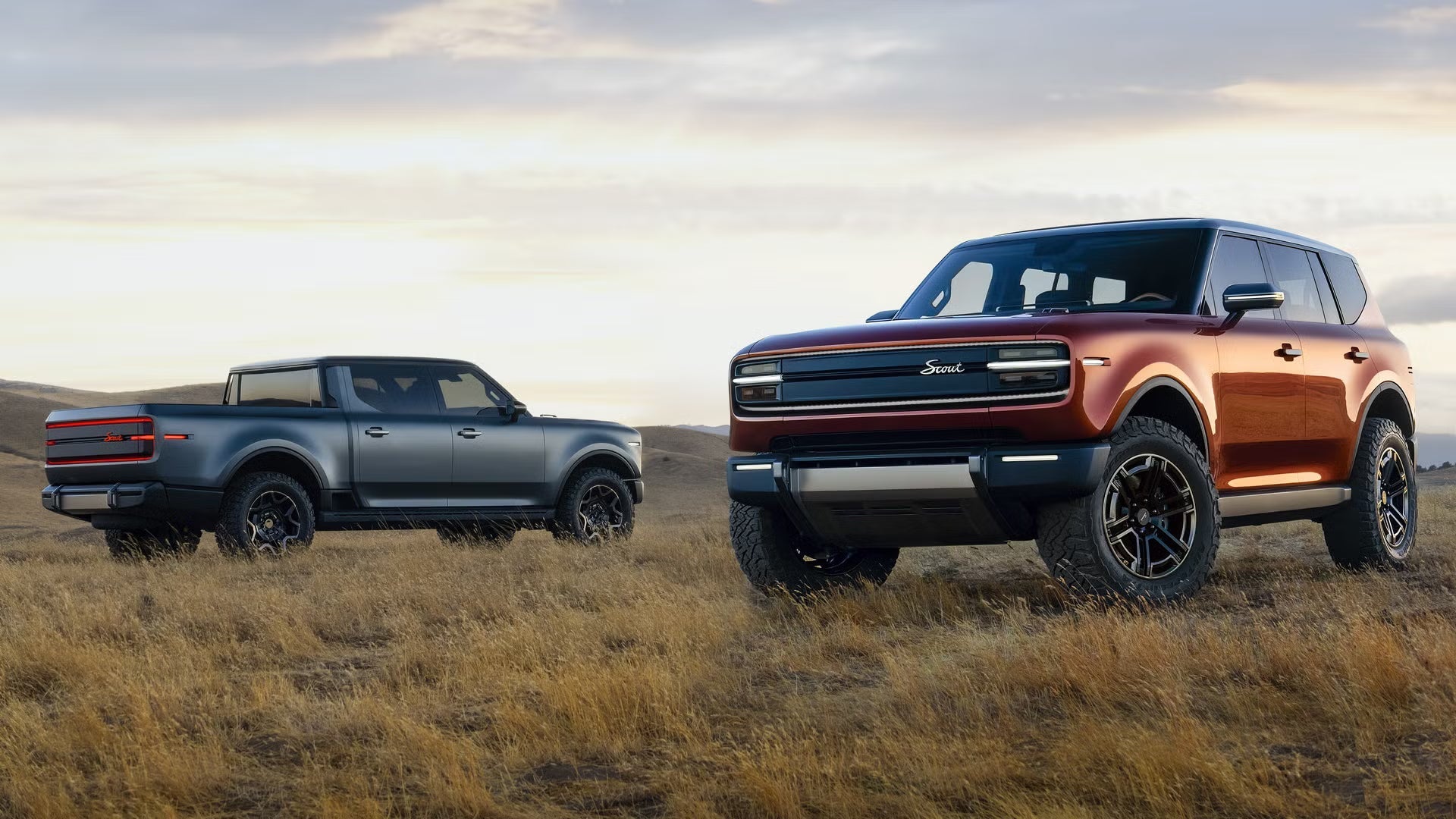
Scout Motors' first electric SUV and pickup are scheduled to reach customers in 2028, but the company faces significant production, financial, and legal challenges before that happens. Even so, the Traveler SUV and Terra pickup stand out with retro styling, body-on-frame construction, and an optional range-extending powertrain that few competitors currently offer.
If Scout can successfully launch on schedule while maintaining its targeted pricing, the brand could carve out a distinctive position in the growing electric truck market despite intense competition.

Scout Is Building a Different Kind of Electric Truck
Rather than following the formula established by many EV startups, Scout is combining classic off-road design with modern electric technology.
The company recently showcased prototype versions of the Traveler SUV and Terra pickup, giving the public another look at vehicles expected to enter production in 2027 before customer deliveries begin the following year.
Both models draw heavy inspiration from the original Scout utility vehicles while incorporating modern proportions and premium materials. Compared with other electric SUVs, the Traveler is closer in size to the Rivian R1S, while the Terra pickup is even longer than the Rivian R1T, positioning both vehicles in the larger off-road segment.
Their upright stance, squared-off bodywork, and wide track create a distinctive appearance that separates them from many current EV designs.
Interior Design Focuses on Physical Controls
One of Scout's biggest design priorities is reducing dependence on touchscreen controls.
According to company executives, frequently used vehicle functions are intended to remain accessible through physical buttons, switches, and rotary controls, while the digital display handles secondary settings.
Prototype interiors also feature premium materials, including leather upholstery, denim-inspired trim pieces, metal switchgear, and patterned design elements intended to reflect the brand's heritage.
Although production specifications may change before launch, Scout appears committed to balancing modern technology with a more traditional driving experience.
The Range-Extender Could Be Scout's Biggest Selling Point
Perhaps the most important feature separating Scout from many American EV competitors is its optional Harvester range-extending system.
Instead of relying solely on battery power, customers can choose an onboard gasoline generator designed to recharge the battery during longer trips. Scout estimates this configuration will deliver more than 500 miles of total driving range, reducing concerns about long-distance travel or charging availability.
The company says the option has generated significant early interest, with more than 80% of reservation holders reportedly selecting the range-extender version.
Unlike conventional hybrids, the gasoline engine does not directly power the wheels. Instead, it functions primarily as an electricity source, allowing drivers to benefit from electric propulsion while extending usable range.
Production Timeline Still Carries Significant Risk
While enthusiasm for the vehicles remains strong, Scout still has several major milestones to reach before customers receive their orders.
The company plans to begin manufacturing in 2027, with retail deliveries following in 2028. That schedule leaves several years to complete factory construction, finalize engineering validation, and prepare large-scale production.
Industry history demonstrates how difficult these launches can be. Numerous EV startups have experienced delays, rising costs, or financial struggles while attempting to move from prototypes to mass production.
Meeting both production targets and the expected starting price of approximately $60,000 will be critical to Scout's long-term success.
Volkswagen's Challenges Could Affect Scout
Although Scout operates as its own brand, it remains a wholly owned subsidiary of Volkswagen Group.
That relationship creates both advantages and risks.
Volkswagen has recently faced growing financial pressure, including reports of possible workforce reductions and broader restructuring efforts across its global operations. While Scout is developing its own vehicle platform instead of adapting existing Volkswagen architectures, major financial decisions made by its parent company could still influence future investment and production priorities.
For now, Scout continues developing its vehicles independently, but investors and reservation holders will likely continue monitoring Volkswagen's financial health.
Direct Sales Strategy Faces Legal Opposition
Scout also plans to bypass traditional dealerships by selling directly to consumers.
This business model follows the approach already used by Tesla, Rivian, and Lucid, allowing manufacturers to control pricing and customer experience more directly.
However, dealer associations in several states have challenged these sales models through legal action, arguing that existing franchise laws restrict direct vehicle sales. Scout may encounter similar regulatory disputes as it expands toward launch.
Market Conditions Could Improve by 2028
The timing of Scout's arrival may ultimately work in its favor.
The U.S. EV market has recently experienced slower sales growth, changing government incentives, and increased uncertainty surrounding federal EV policies. By entering the market in 2028, Scout may avoid some of today's near-term headwinds if demand rebounds over the next several years.
Industry forecasts also suggest continued growth in both battery-electric and plug-in hybrid vehicle adoption during the latter part of the decade, potentially creating a more favorable environment for new entrants.
If Scout successfully launches its unique extended-range trucks at competitive pricing, it could attract buyers seeking something different from today's mainstream electric pickups and SUVs.

FAQ
When will Scout begin delivering the Traveler and Terra?
Scout currently expects production to start in 2027, with customer deliveries planned for 2028. The timeline remains subject to manufacturing readiness and final regulatory approvals.
What is Scout's Harvester range extender?
Harvester is an optional gasoline-powered generator that produces electricity for the battery. Scout estimates it can increase total driving range to over 500 miles without mechanically driving the wheels.
How are Scout vehicles different from Rivian models?
Scout emphasizes classic off-road styling, body-on-frame construction, physical interior controls, and an optional extended-range powertrain. Rivian currently offers fully battery-electric vehicles without a gasoline range extender.
Will Volkswagen's financial situation affect Scout?
Scout is owned by Volkswagen Group, so major corporate decisions could influence funding and long-term planning. However, Scout is developing its own platform and continues operating as a separate brand.
Why is Scout using direct vehicle sales instead of dealerships?
The company plans to sell directly to customers to simplify pricing and ownership, following a model already adopted by several EV manufacturers. That strategy, however, may face legal challenges in some U.S. states.
Recommend Reading: Volkswagen Dealers Sue Scout Motors Over Direct EV Sales Plan









Share:
Scientists Warn Against Overnight EV Home Charging