





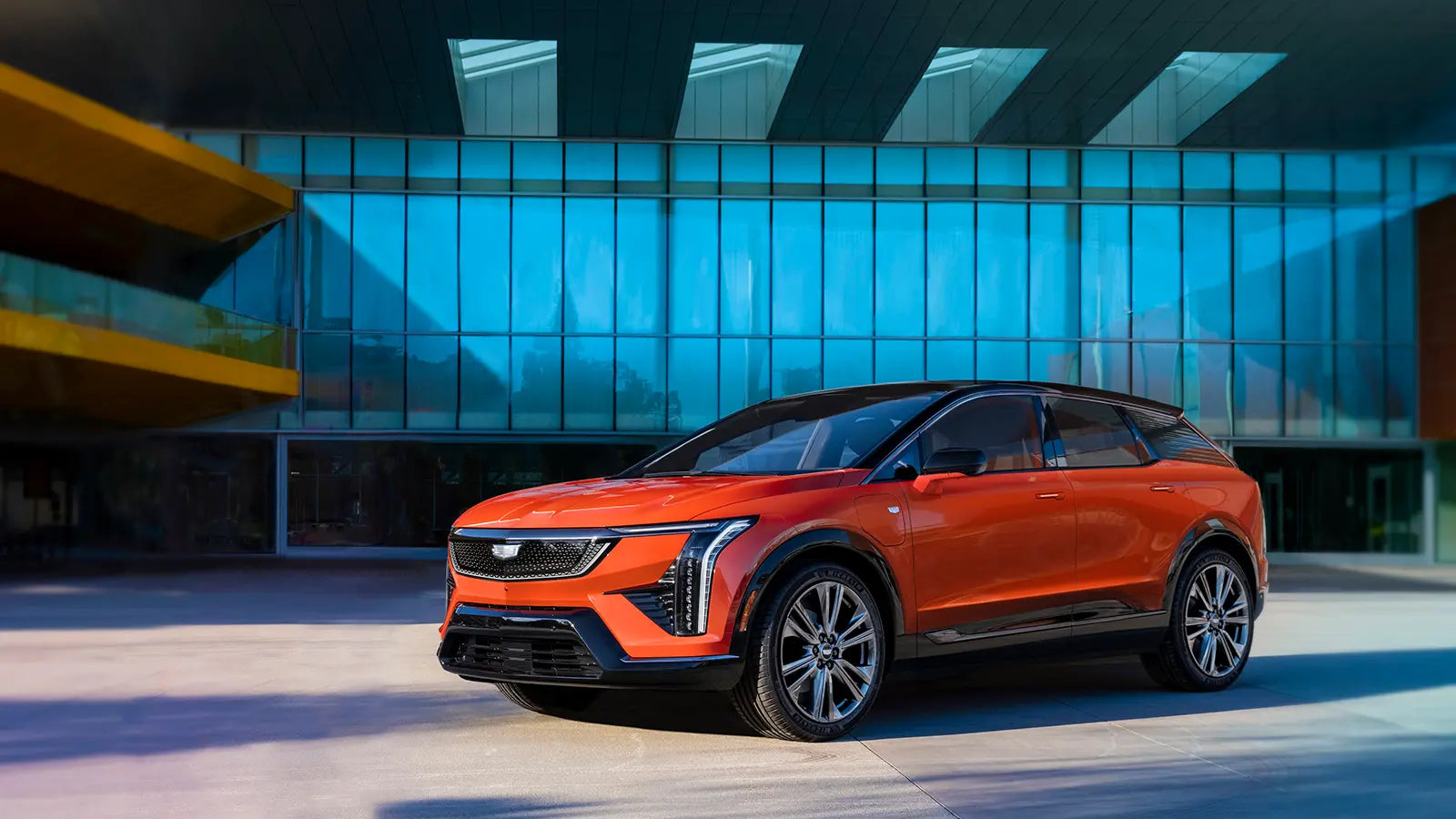
General Motors is preparing to equip future versions of the Cadillac Optiq with a new EV platform developed in China for selected international markets. However, the technology will not be used in U.S.-market vehicles due to regulatory restrictions on Chinese automotive software and hardware.
The move highlights a broader industry trend: global automakers are increasingly relying on China's fast-moving EV development ecosystem to remain competitive in regions where domestic Chinese brands continue to raise the bar in charging speed, software, and intelligent vehicle technology.

China-Developed Platform Expected for Future Optiq Models
According to Reuters, General Motors plans to replace the Optiq's existing EV architecture with the Xiao Yao platform, a system created by the Pan Asia Technical Automotive Center (PATAC), GM's engineering joint venture in Shanghai.
Although reports suggest the next-generation Optiq will transition to this platform, GM emphasized that the technology is designed specifically for the Chinese market and will not affect the Cadillac Optiq sold in the United States.
A GM spokesperson explained that Xiao Yao combines the company's global engineering experience with locally developed technologies covering electric propulsion, vehicle chassis, intelligent driving systems, and digital cockpit functions. The company also noted that reports about the Optiq remain speculative while declining to discuss future product plans.
Why GM Is Turning to Local EV Technology
The decision reflects the growing competitive pressure facing international automakers in China.
GM's Ultium platform has supported most of its latest electric models in North America, but it has struggled to gain momentum in China. Vehicles such as the Buick Electra E5 and Electra E4 have faced intense competition from rapidly evolving domestic manufacturers including BYD, Nio, and Xpeng, whose vehicles often deliver more advanced software, faster charging, and highly connected cabin experiences.
To better compete, GM has increasingly embraced a "developed in China for China" strategy rather than relying solely on technology originally engineered for Western markets.
The Xiao Yao platform is the clearest example of that approach.
What Makes the Xiao Yao Platform Different
When SAIC-GM introduced Xiao Yao, the company positioned it as a next-generation software-focused architecture built with flexibility in mind.
The platform supports multiple powertrain types, including:
- Battery electric vehicles (BEVs)
- Plug-in hybrid vehicles (PHEVs)
- Extended-range electric vehicles (EREVs)
It is also designed to accommodate numerous vehicle categories, from compact sedans and SUVs to larger MPVs.
Beyond flexibility, Xiao Yao introduces several technical upgrades that are becoming increasingly important in China's EV market, including:
- 900-volt electrical architecture
- Ultra-fast charging capability
- Advanced intelligent cockpit systems
- Support for front-, rear-, and all-wheel drive
- Software-defined vehicle architecture with frequent feature updates
Several recently launched Buick models already utilize this platform, demonstrating GM's confidence in its capabilities.
Why U.S. Buyers Won't Get This Version
Despite the platform's advanced features, the Chinese-developed architecture is not expected to reach North America.
Current U.S. policies restricting the use of certain Chinese-developed connected vehicle hardware and software make deployment impractical for American-market vehicles.
As a result, Cadillac's U.S. Optiq will continue using GM's existing domestic EV platform, while overseas versions may evolve on a different technological path.
This creates the possibility that international Optiq models could eventually offer faster charging speeds or more advanced digital features than their American counterparts.
Global Markets Require Different Strategies
GM's decision reflects a wider shift among global manufacturers toward regional product development.
Rather than building one EV platform for every market, automakers increasingly tailor their technology to local customer expectations and competitive conditions.
Europe provides a clear example. As Chinese EV brands rapidly expand across the continent, established manufacturers face mounting pressure to improve charging performance, software capability, and overall value.
An Optiq equipped with Xiao Yao technology could help Cadillac remain competitive in overseas markets where Chinese-developed EVs have become major rivals.
Reuters did not specify which countries will receive the updated platform.
Western Automakers Are Expanding R&D in China
GM is far from the only company strengthening its engineering presence in China.
Several international manufacturers now view China not only as a major sales market but also as a source of advanced EV development.
Examples include:
- Renault, which developed the latest Twingo E-Tech through its Shanghai engineering center.
- Audi, which has announced expanded research efforts in China.
- Hyundai, which is also investing in Chinese research and development to accelerate future EV technologies.
This growing trend reflects the speed at which China's EV industry has evolved, particularly in battery systems, charging technology, software integration, and intelligent vehicle features.
What This Means for Cadillac's EV Strategy
The reported Optiq update illustrates how regional EV development strategies are becoming increasingly common.
Rather than depending exclusively on global vehicle architectures, automakers are adapting products to meet local market demands. For GM, adopting the Xiao Yao platform abroad could improve competitiveness without affecting North American products.
While U.S. buyers are unlikely to see the China-developed Optiq, the reported change signals that the company's future EV portfolio may rely on different technologies depending on where vehicles are sold.

FAQ
Why is GM reportedly changing the Optiq's EV platform?
GM appears to be adopting a China-developed platform to better compete in markets where local EV manufacturers have advanced rapidly in charging, software, and vehicle technology.
Will the China-developed Optiq be sold in the United States?
No. GM has confirmed that the Xiao Yao platform is intended for China and will not be used in U.S.-market Cadillac Optiq models because of regulatory restrictions.
What is the Xiao Yao platform?
Xiao Yao is an EV architecture developed by PATAC, GM's Shanghai engineering joint venture. It supports battery electric, plug-in hybrid, and extended-range vehicles while emphasizing software integration and fast charging.
Which vehicles already use the Xiao Yao platform?
Several Buick models sold in China, including the Electra L7 and Electra E7, already use the platform.
Are other global automakers using Chinese EV technology?
Yes. Companies including Renault, Audi, and Hyundai are expanding EV research and development in China to benefit from the country's rapidly advancing automotive technologies.
Recommend Reading: GM Expands EV Charging Access With One App









Share:
Rivian Sets Stage for Major Autonomy Push With First AI & Driver-Tech Showcase