





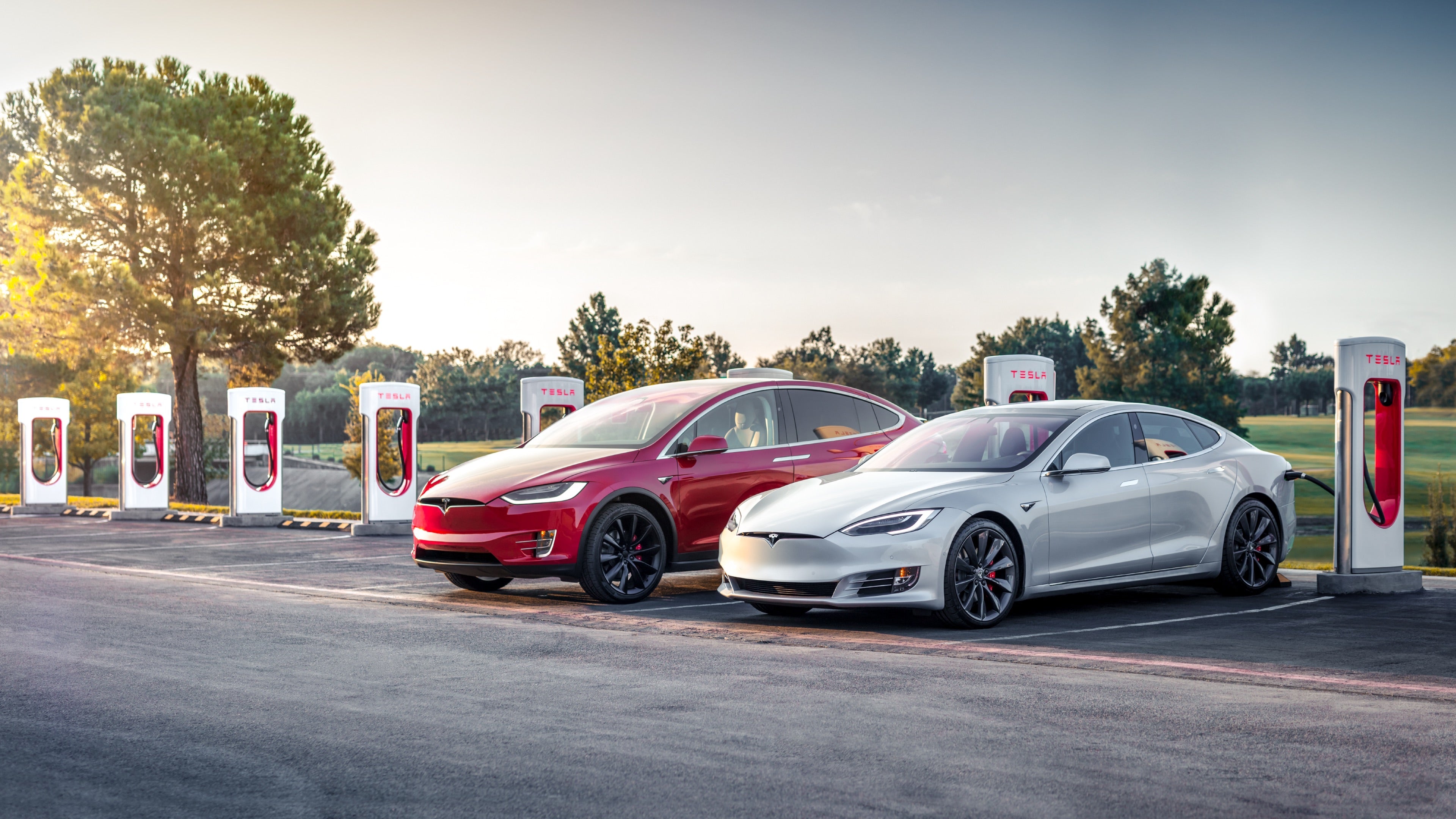
Tesla's vehicle business has shown stronger-than-expected momentum in the second quarter, but whether that recovery continues will depend on sustained demand across major markets. While deliveries exceeded expectations, regional performance remains uneven and the company's long-term growth still relies heavily on a limited product lineup.

Second-Quarter Deliveries Beat Expectations
Tesla surprised investors by reporting more than 480,000 global vehicle deliveries in the second quarter, comfortably outperforming many market forecasts that had predicted around 406,000 units. The result marked one of the company's strongest quarterly performances after an extended period of slowing sales.
The rebound came after several difficult years. Following its record 1.8 million vehicle deliveries in 2023, Tesla experienced declining annual sales, while 2025 proved especially challenging as competition intensified and consumer sentiment toward the brand became increasingly divided. The Cybertruck also failed to generate the level of demand many analysts had anticipated, adding pressure to Tesla's overall product strategy.
Although the latest delivery figures suggest the company has regained some momentum, they do not necessarily indicate that every major market is recovering at the same pace.
Europe Emerges as Tesla's Bright Spot
One of the strongest contributors to Tesla's recent performance has been Europe. Industry registration data published by the European Automobile Manufacturers' Association (ACEA) indicates Tesla registrations increased by approximately 77% during the first five months of the year compared with the same period last year.
Tesla does not publish detailed regional delivery figures, making it difficult to determine exactly how much Europe contributed. Nevertheless, independent market data suggests the region played a significant role in the company's quarterly improvement.
Several factors may explain this growth.
Lower financing costs and attractive leasing offers have likely encouraged more buyers to consider Tesla vehicles. At the same time, the broader European plug-in vehicle market has continued expanding as consumers respond to government incentive programs, stricter emissions regulations and elevated fuel prices.
According to Benchmark Mineral Intelligence, sales of battery-electric and plug-in hybrid vehicles across Europe reached roughly 2.5 million units during the first half of the year, representing a 27% increase compared with the previous year.
However, analysts caution that some of this demand may be linked to temporarily high gasoline prices rather than a permanent improvement in consumer purchasing behavior.
Questions Remain About Europe's Momentum
Whether European demand remains strong through the remainder of the year is still uncertain.
Energy prices helped improve the economic case for electric vehicles earlier this year, particularly as geopolitical tensions pushed fuel costs higher across many European countries. If oil prices stabilize or decline, some analysts believe EV demand growth could moderate accordingly.
Financial institutions have also warned that recent sales gains may not automatically translate into sustained expansion over the coming quarters. Consumer confidence, interest rates, manufacturer incentives and government policies will all continue influencing purchasing decisions.
As a result, Europe currently represents both Tesla's biggest opportunity and one of its largest uncertainties.
China Continues to Be a Competitive Challenge
Tesla's position in China presents a very different picture.
The company reportedly recorded roughly a 2% decline in second-quarter sales, extending a series of consecutive quarterly declines in its largest international market.
Despite that slowdown, Tesla continues to perform relatively well considering the increasingly crowded competitive landscape. Domestic manufacturers—including BYD, XPeng, Li Auto, and several other Chinese brands—continue introducing new electric models across nearly every price segment while engaging in aggressive pricing strategies.
Interestingly, some competitors have recently experienced their own sales challenges. Reports indicate that BYD's domestic sales fell by approximately 22% in June, highlighting how competitive conditions are affecting nearly every manufacturer rather than Tesla alone.
Industry observers also note that the Model Y remains one of China's best-selling SUVs regardless of powertrain, demonstrating that Tesla's core products continue attracting significant consumer interest even without frequent model launches.
Nevertheless, analysts believe future growth in China may remain constrained until Tesla expands its product portfolio further and introduces additional software capabilities, including a broader rollout of its advanced driver-assistance technologies.
The Company Still Depends Heavily on the Model Y
Although Tesla's overall delivery results improved, one issue remains largely unchanged: the company still relies heavily on a small number of vehicles.
The Model Y continues to account for a substantial share of Tesla's global volume, making continued demand for the crossover critical to the company's financial performance.
That dependence creates both stability and risk. A successful refresh can support sales across multiple regions, but any slowdown in consumer interest leaves Tesla with relatively few alternatives compared with traditional automakers that offer dozens of models across different vehicle categories.
Tesla Still Faces Headwinds in the U.S.
While Europe provided encouraging news, Tesla's performance in the United States remained under pressure.
According to Cox Automotive estimates, Tesla sold approximately 124,800 vehicles in the U.S. during the second quarter, representing a 13% decline from a year earlier. Even so, the company still outperformed the broader American EV market, which experienced a sharper drop after the expiration of the federal EV tax credit and the rollback of several policies supporting electric vehicle adoption.
Among Tesla's lineup, the Model Y remained relatively resilient, posting only a modest year-over-year decline. Other vehicles—including the Model 3, Cybertruck, and the aging Model S and Model X—experienced noticeably weaker performance.
These results suggest Tesla continues to benefit from strong demand for its best-selling crossover, but its broader portfolio is showing signs of age in an increasingly competitive market.
Model Y L Could Help Attract New Buyers
To strengthen its position, Tesla is introducing the Model Y L, an extended version of its popular crossover.
The larger model features a longer body, improved third-row usability, and a redesigned interior layout intended to appeal to families seeking additional passenger space. Compared with the previous seven-seat Model Y, the new version offers easier access to the rear seats and a more practical cabin configuration.
Industry analysts believe this update addresses one of the most common requests from crossover buyers: more usable seating capacity without moving into a full-size SUV.
Although the Model Y L is not an entirely new vehicle, it represents Tesla's most meaningful product refresh in recent years. Rather than relying solely on software updates, the company is offering a vehicle that visibly differs from the standard Model Y, potentially encouraging existing owners to upgrade while attracting first-time buyers.
Whether that will be enough to generate sustained sales growth remains uncertain, but it gives Tesla a stronger product than it had entering the year.
Can Tesla Maintain Its Momentum?
The second-quarter delivery figures indicate that Tesla's automotive business is in a healthier position than many analysts expected only a few months ago. However, maintaining that momentum will require more than one strong quarter.
Regional demand remains inconsistent. Europe is expanding rapidly, China continues to present fierce competition, and the U.S. market is adjusting to a less favorable policy environment. At the same time, Tesla still depends heavily on the Model Y while competitors continue introducing new electric vehicles across multiple price segments.
Looking ahead, additional product launches, software improvements, and future autonomous driving services may all influence Tesla's next stage of growth. Until those initiatives become meaningful contributors, vehicle sales will remain the company's primary performance indicator.
The latest results suggest Tesla has stabilized after a difficult period. The next several quarters will determine whether the recent rebound marks the beginning of a lasting recovery or simply a temporary improvement driven by favorable market conditions.

FAQ
Why did Tesla's second-quarter deliveries exceed expectations?
Tesla delivered more than 480,000 vehicles worldwide, significantly outperforming analyst forecasts. Stronger European demand and continued popularity of the Model Y contributed to the better-than-expected results.
Which market contributed most to Tesla's recent sales growth?
Europe appears to have been the strongest contributor. Industry registration data showed Tesla's sales in the region increased substantially during the first five months of the year, supported by broader EV market growth.
Why are Tesla's sales still under pressure in China?
China remains one of the world's most competitive EV markets, with domestic brands launching new models at a rapid pace. Although Tesla's Model Y continues to sell well, the company has introduced relatively few new products and has not fully expanded advanced driver-assistance features in the market.
How is Tesla performing in the U.S.?
Tesla remains the country's largest EV manufacturer, but U.S. sales declined year over year in the second quarter. Even so, its performance was stronger than the overall EV market, which was affected by the end of federal purchase incentives.
Could the Model Y L improve Tesla's future sales?
The larger Model Y L offers more interior space and a more practical three-row layout, potentially attracting families who previously considered larger SUVs. While it strengthens Tesla's lineup, its long-term impact on overall sales remains to be seen.
Recommend Reading: Tesla Q2 Deliveries Beat Expectations Worldwide


Share:
Toyota EV Sales Surge as New Models Gain Traction
US EV Fast Charging Growth Shifts Toward Quality