





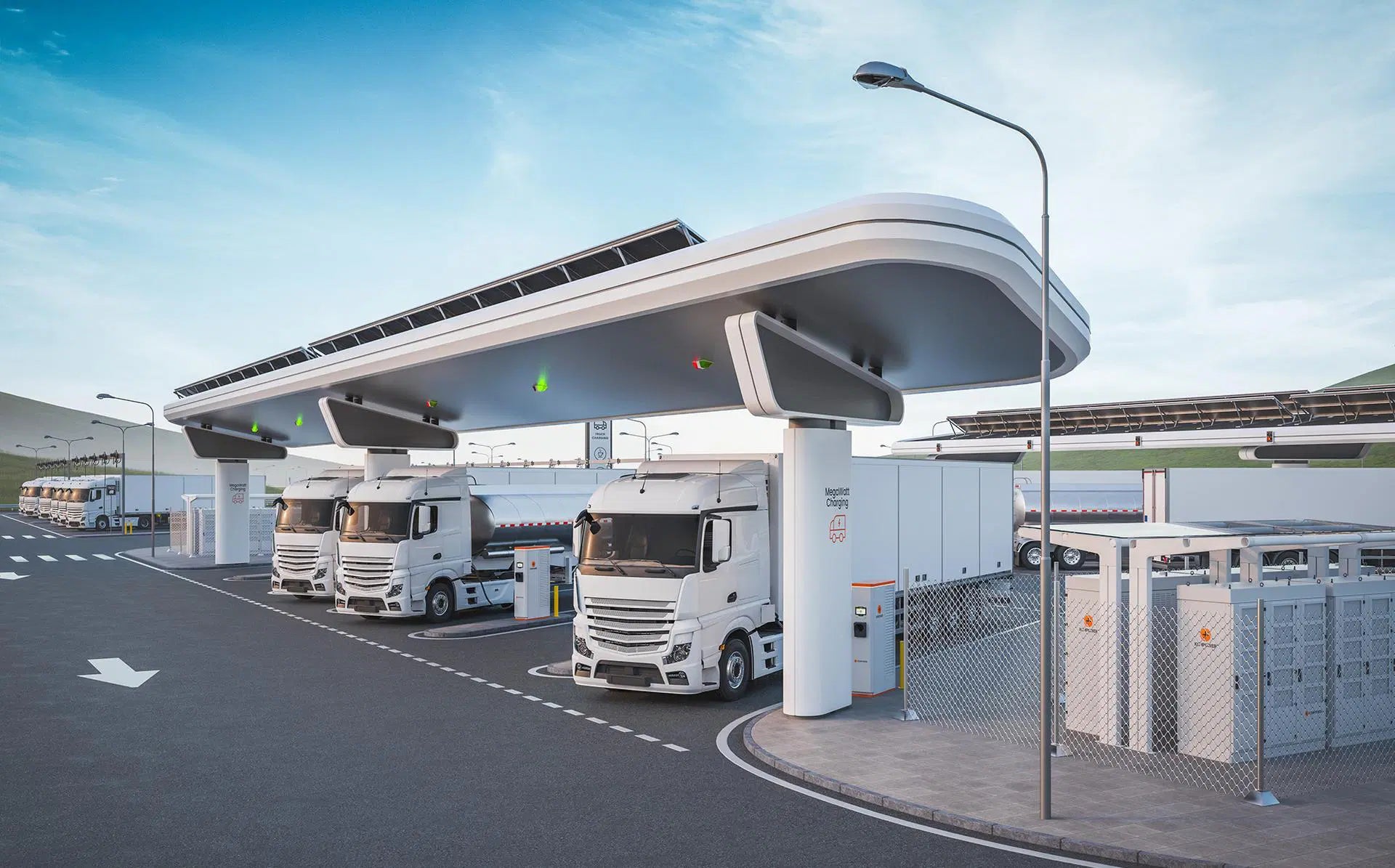
American charging networks are rapidly deploying next-generation hardware capable of delivering 500 kilowatts to over 1 megawatt of power. However, no passenger electric vehicle currently sold in the United States possesses the battery architecture required to accept these ultra-fast charging speeds.

The Vehicle Capability Gap in the American Market
While infrastructure providers are accelerating their technical capabilities, automotive engineering in North America remains a bottleneck. Most premium electric models available to domestic consumers face strict intake limitations well below these new thresholds. For instance, upcoming premium models such as the Porsche Cayenne Electric, Lucid Gravity, and BMW iX3 are engineered with a maximum intake ceiling of 400 kilowatts. Even advanced utilities fail to maximize the new network capacities; the Tesla Cybertruck has demonstrated brief spikes reaching 500 kilowatts when connected to specialized infrastructure, yet its official specifications maintain a peak of 325 kilowatts.
This proactive infrastructure deployment is fundamentally an exercise in future-proofing. Stakeholders anticipate a resurgence in consumer demand alongside the eventual arrival of high-performance international models. Loren McDonald, the CEO of Chargeonomics, notes that high-capacity vehicles engineered overseas—particularly from Asian markets—could penetrate the domestic market within the next five years. Establishing an advanced grid framework today ensures compatibility with tomorrow's more advanced battery architectures.
How Intelligent Load Management Optimizes High-Power Stations
Megawatt-level hardware also revolutionizes grid efficiency through advanced power distribution. Modern high-output stations employ dynamic load balancing. This software-driven approach evaluates the exact electrical limitations and instantaneous needs of every connected vehicle, distributing the collective energy supply across multiple stalls without wasting electricity.
If an older vehicle with a low intake threshold and a premium model with an advanced battery architecture plug into adjacent stalls, the system eliminates energy waste. The older vehicle receives its exact maximum intake, while the remaining high-voltage capacity is routed entirely to the faster-charging car. This optimization ensures that even during peak traffic hours, individual stalls do not suffer from the severe power drops that frequently plague older charging networks. By generating immense total power, these stations can simultaneously support numerous vehicles at their absolute peak acceptance rates.
The Nationwide Rollout of Ultra-Fast Hardware
Multiple manufacturers are actively installing these high-capacity systems across the United States. Historically, dominant players like Tesla limited their widespread infrastructure to capacities between 250 and 325 kilowatts. However, the company is now gradually deploying its upgraded V4 Supercharger network, which steps into the 500-kilowatt domain.
Concurrently, alternative providers are pushing well into megawatt territory. ChargePoint recently introduced an integrated 600-kilowatt standalone system that eliminates external power cabinets. From Europe, Swiss engineering corporation ABB announced strategies to introduce 1.2-megawatt systems to the American market. Similarly, Kempower has debuted a specialized system featuring a Megawatt Charging System port capable of pushing 1.2 megawatts alongside a standard connector rated for 560 kilowatts. Furthermore, Italian manufacturer Alpitronic plans an early next-year rollout of hardware delivering 1,000 kilowatts for commercial logistics trucks and 600 kilowatts for consumer vehicles.
Strategic Future-Proofing vs. Current Market Realities
The rapid deployment of these systems highlights a divergence in strategy between infrastructure providers and automotive manufacturers. While international regions, particularly China, lead the deployment of ultra-high-speed facilities like 1.5-megawatt networks, American networks are playing catch-up to ensure they are not left behind.
Some domestic network operators prefer a phased approach. Ionna, a prominent charging joint venture supported by a coalition of major automakers, currently focuses its deployments on 400-kilowatt stations. Seth Cutler, the chief executive officer of Ionna, emphasizes that while current configurations are perfectly optimized for existing consumer vehicles, the organization is actively evaluating higher thresholds. Ultimately, infrastructure can only do so much; carmakers must deliver vehicles capable of accepting these blistering power levels to make the technology viable.

FAQ
What is the maximum charging speed of current US electric cars?
Most top-tier passenger electric vehicles available in the United States currently max out at a charging capacity of 400 kilowatts. Models like the Lucid Gravity and Porsche Cayenne Electric are bound by this ceiling. The Tesla Cybertruck is an exception that has demonstrated temporary intake speeds of up to 500 kilowatts under specific conditions.
Why are companies installing megawatt chargers if cars cannot use them?
Infrastructure providers are deploying ultra-high-power hardware to future-proof the charging grid for next-generation passenger vehicles and heavy-duty commercial trucks. They anticipate that automotive battery technology will catch up within the next five years, particularly as advanced foreign models enter the domestic market. Installing these networks ahead of time ensures the grid is prepared for a rebound in electric vehicle adoption.
How does dynamic load balancing benefit electric vehicle drivers?
Dynamic load balancing allows a charging station to intelligently split its massive power capacity among multiple vehicles based on their specific real-time capabilities. This prevents energy from being wasted on vehicles with low intake thresholds while ensuring high-capacity cars receive maximum available power. Consequently, stations can maintain high charging speeds across all stalls even during periods of heavy station traffic.
Which companies are leading the rollout of ultra-fast charging hardware in the US?
Major equipment manufacturers including ChargePoint, ABB, Kempower, and Alpitronic are actively introducing hardware capable of delivering between 600 kilowatts and 1.2 megawatts. Additionally, Tesla is progressively deploying its V4 Supercharger stalls, which elevate its domestic charging capability to 500 kilowatts. Meanwhile, automaker-backed networks like Ionna are establishing foundational networks at 400 kilowatts with plans for future expansion.
Recommend Reading: This New Battery-Powered DC Fast Charger Can Be Installed in Hours


Share:
Honda Shifts Focus Back to Hybrid Vehicles
Congress Proposes EV Fee That Could Hit $150