





Honda is scaling back its electric vehicle expansion after reporting a major financial setback tied to EV investments. The company is now prioritizing hybrid SUVs and sedans, especially for the U.S. market, while reducing the scale of its long-term EV strategy.
The Japanese automaker confirmed that future growth will rely more heavily on gasoline-electric hybrid technology rather than a rapid transition to fully battery-powered vehicles. New hybrid models based on an updated platform are expected to begin arriving in 2028.

Honda Reverses Parts of Its EV Strategy
After years of promoting an aggressive electrification roadmap, Honda has changed direction. The company recently posted its first annual loss since becoming a publicly traded company in 1957, attributing much of the financial pressure to costly EV-related decisions and slower-than-expected market conditions.
The automaker disclosed losses totaling roughly $9 billion connected to its electric vehicle business. In response, Honda has canceled several previously announced targets related to battery-electric and fuel-cell vehicles.
Among the most notable changes:
- The company dropped its goal for EVs to account for 20% of global sales by 2030
- Plans to transition toward an all-electric and hydrogen-focused lineup by 2040 have been abandoned
- Future product investment will now lean heavily toward hybrid technology
Honda executives indicated that consumer demand for hybrids remains stronger and more predictable in several major markets, particularly North America.
New Hybrid Platform Arrives In 2028
Honda’s revised strategy centers around a next-generation hybrid powertrain designed to improve fuel efficiency and lower operating costs without depending entirely on charging infrastructure.
According to the company, the updated system is expected to deliver more than 10% greater efficiency compared to the hybrid setup introduced in 2023. The first vehicles using the technology are scheduled to debut in 2028.
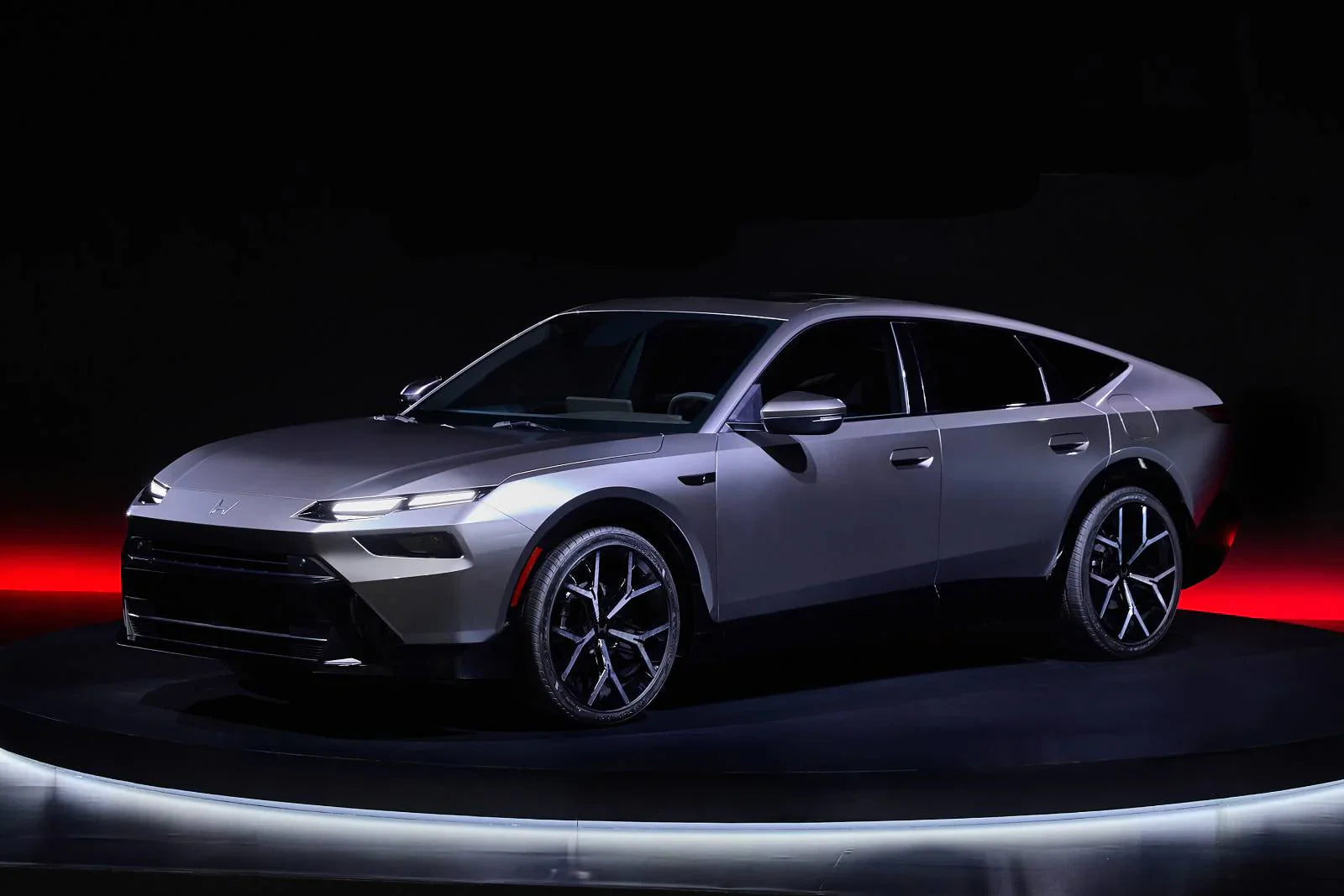
During a recent business presentation, Honda previewed two concept vehicles:
- A midsize sedan carrying the Honda badge
- A crossover SUV branded as Acura
Both concepts appeared closely related in design language to previously canceled electric prototypes. However, instead of being developed as dedicated EVs, these vehicles are now expected to use hybrid drivetrains.
The presentation also suggested that the United States will remain a central focus for Honda’s future product plans.
U.S. Market Will Receive Most New Hybrid Models
Honda plans to introduce at least 15 hybrid models by March 2030, with American buyers expected to receive the majority of them.
The company believes hybrid SUVs with all-wheel drive capabilities will continue to attract strong demand in the U.S., where larger crossovers remain dominant across multiple price segments.
To support this transition, Honda intends to spend approximately 4.4 trillion yen, equivalent to nearly $28 billion, on new gasoline and hybrid vehicle development over the next three years.
By comparison, spending allocated toward future EV programs appears far smaller. The company reportedly plans to invest only about $5 billion into upcoming electric vehicle projects during the same period.
That funding gap highlights how dramatically Honda’s priorities have shifted.
Why Honda Is Betting On Hybrids Again
Honda’s strategy adjustment reflects broader uncertainty across the automotive industry. While EV adoption continues to grow globally, several automakers have recently delayed or reduced electric expansion plans because of slowing demand, high production costs, and concerns about charging infrastructure.
Hybrid vehicles offer a middle ground for manufacturers. They improve fuel economy and reduce emissions while avoiding some of the cost and infrastructure challenges associated with fully electric vehicles.
For Honda, hybrids also provide a way to maintain profitability in key regions without requiring immediate large-scale battery production growth.
The company still plans to develop electric vehicles, but those programs may increasingly target overseas markets or premium segments rather than becoming the core of its global lineup.
Hybrid SUVs Could Become Honda’s Main Growth Driver
Honda’s future lineup is expected to lean heavily toward crossover utility vehicles, particularly in North America. The combination of hybrid efficiency and SUV practicality aligns with current consumer buying patterns in the region.
The Acura-branded crossover shown during Honda’s presentation suggests the company may also use hybrid systems more aggressively in luxury models.
At the same time, the reduced emphasis on EVs marks a significant shift from the industry-wide expectations that dominated only a few years ago. Honda now appears to be positioning hybrids as a longer-term solution rather than a short transitional phase.

FAQ
Why did Honda reduce its EV ambitions?
Honda reported approximately $9 billion in losses connected to its electric vehicle strategy. The company said market conditions and slower EV adoption contributed to the decision to prioritize hybrids instead.
Is Honda still making electric vehicles?
Yes. Honda has not canceled EV development entirely, but future investment in electric models will be smaller than previously planned. Hybrid vehicles will now receive most of the company’s funding and product focus.
When will Honda’s new hybrid models launch?
The first vehicles using Honda’s next-generation hybrid system are expected to arrive in 2028. The company plans to launch at least 15 hybrid models by 2030.
What types of hybrids is Honda developing?
Honda is mainly focusing on SUVs and sedans equipped with all-wheel drive hybrid systems. Many of these vehicles are intended for the U.S. market.
How much is Honda investing in hybrids?
Honda plans to invest around 4.4 trillion yen, or roughly $28 billion, into gasoline and hybrid vehicle development over the next three years.
Did Honda cancel its 2040 electrification goal?
Yes. Honda no longer plans to fully transition to electric and fuel-cell vehicles by 2040, reversing an earlier long-term strategy.
Recommend Reading: Affordable Honda Super-N EV Launches With Manual-Style Driving


Share:
Android Auto Update Expands Across More Car Screens
New ultra fast EV chargers coming to the US