





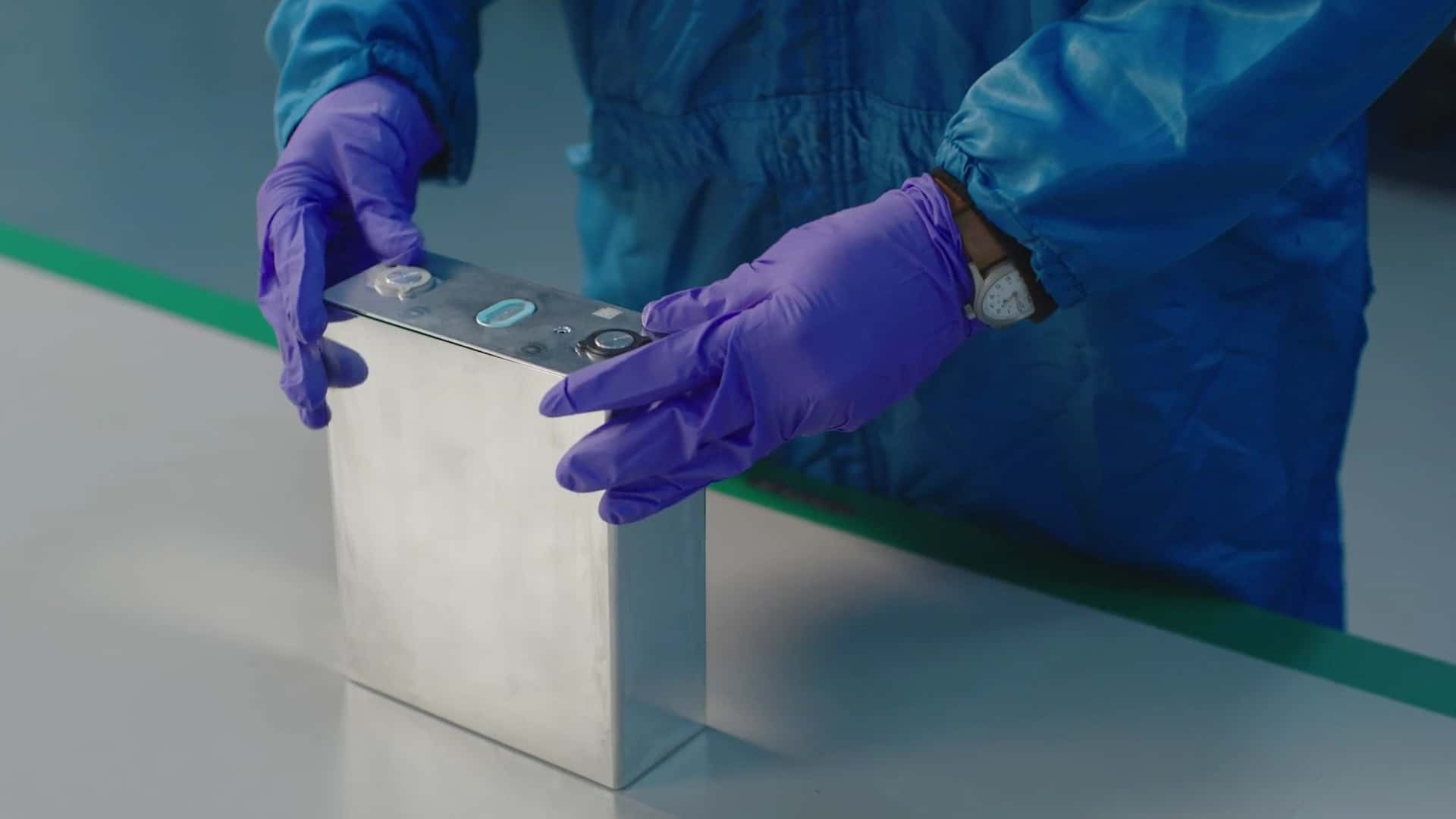
Sodium-ion batteries are becoming a bigger part of General Motors’ long-term energy strategy. GM has partnered with startup Peak Energy to develop sodium-ion battery technology for large-scale energy storage projects in the United States, signaling a broader shift beyond electric vehicle applications.
Rather than focusing exclusively on EV batteries, GM is increasingly investing in energy infrastructure solutions as demand rises from utilities, renewable energy projects, and expanding AI-driven data centers.

GM Expands Into Sodium-Ion Battery Development
General Motors announced a collaboration with Peak Energy, a U.S.-based battery startup specializing in sodium-ion technology. The partnership centers on creating battery cells designed specifically for stationary energy storage systems rather than passenger vehicles.
According to GM, research and development activities will begin immediately, including materials engineering and component testing. Prototype battery cells are expected to be developed at the company's battery research facility in Michigan before any future manufacturing decisions are made.
The project is also supported by GM Ventures, the automaker’s investment division, highlighting the company's growing interest in battery technologies beyond its current EV lineup.
Why Sodium-Ion Batteries Are Attracting Attention
Sodium-ion batteries function similarly to lithium-ion batteries by storing and releasing electrical energy through chemical reactions. However, sodium offers several potential advantages that have attracted increasing industry attention.
One of the most significant benefits is raw material availability. Sodium is estimated to be roughly 1,000 times more abundant than lithium, reducing concerns about long-term resource constraints. The chemistry also carries the potential for a smaller environmental impact due to easier material sourcing.
GM believes sodium-ion batteries may also perform more consistently across a broader range of temperatures. This characteristic could improve reliability in both extremely hot and extremely cold environments, making the technology attractive for utility-scale installations.
Another key advantage involves durability. The company expects sodium-ion batteries to support long operating lifespans with high cycle counts, an important consideration for energy storage systems that charge and discharge daily.
Lower System Complexity Could Reduce Costs
Beyond the battery cells themselves, sodium-ion technology may simplify the design of entire energy storage installations.
Peak Energy says its systems can reduce or eliminate the need for extensive active cooling equipment. Traditional battery installations often require sophisticated thermal management systems, adding cost, maintenance requirements, and operational complexity.
By using a more temperature-tolerant chemistry, energy storage operators could potentially deploy simpler and quieter installations.
The startup has already installed what it describes as the first passively cooled grid-scale sodium-ion battery system in Colorado. It is also working with renewable energy developers and storage providers on several pilot projects across the United States.
For large commercial customers and utility operators, reducing system complexity can translate directly into lower operating expenses and improved reliability over time.
Competing Against An Established Battery Market
Despite growing interest in sodium-ion technology, the sector remains in its early stages compared with the established lithium battery industry.
Today, lithium iron phosphate (LFP) batteries dominate much of the global energy storage market. Their widespread adoption has been supported by mature manufacturing capacity, proven safety characteristics, and competitive pricing.
GM believes sodium-ion batteries still have significant room for improvement because the technology remains relatively young. By contrast, many gains in LFP development may become more incremental as the chemistry matures.
However, competition will be intense. Chinese battery manufacturers already possess a substantial lead in sodium-ion commercialization. Industry giant CATL has demonstrated sodium-ion batteries capable of operating in extremely low temperatures while maintaining charging performance comparable to more moderate conditions.
As a result, American companies entering the field will need to accelerate development to narrow the technology gap.
GM's Broader Battery Strategy
The sodium-ion initiative is only one piece of GM's expanding battery portfolio.
In the near term, the automaker's Ultium Cells joint venture with LG Energy Solution plans to manufacture LFP batteries to meet growing demand for energy storage products.
GM is also pursuing second-life battery programs. The company recently announced plans with Redwood Materials to repurpose approximately 10,000 retired EV battery packs for data center applications in Nevada.
Additionally, GM intends to deploy 100 reused EV battery systems at a Michigan facility. The installation is expected to provide 7.2 megawatts of available energy capacity while generating more than $3 million in long-term electricity savings.
Taken together, these projects suggest GM sees the future battery market as highly diversified, with different chemistries serving different use cases rather than a single technology dominating every application.
The Growing Importance Of Energy Storage
As electricity demand rises from renewable energy integration, industrial electrification, and AI infrastructure, energy storage is becoming a rapidly expanding market.
For automakers with advanced battery expertise, this creates opportunities beyond vehicle manufacturing. By investing in multiple battery chemistries simultaneously, companies can adapt to different customer needs and market conditions.
GM's latest sodium-ion initiative reflects that approach. While commercial deployment remains several years away, the partnership signals increasing confidence that alternative battery technologies may play a meaningful role in future energy systems.

FAQ
What is GM using sodium-ion batteries for?
GM is developing sodium-ion batteries primarily for stationary energy storage systems rather than electric vehicles. These systems can help store electricity for utilities, renewable energy projects, and large commercial users.
Why are sodium-ion batteries considered promising?
Sodium is far more abundant than lithium and may reduce material supply concerns. The chemistry also offers potential benefits in temperature tolerance, durability, and overall system simplicity.
Will GM use sodium-ion batteries in its electric vehicles?
The current partnership focuses on grid-scale energy storage applications. GM has not announced plans to introduce sodium-ion batteries into its passenger EV lineup.
How do sodium-ion batteries compare with LFP batteries?
LFP batteries currently dominate energy storage markets because of established supply chains and proven performance. Sodium-ion technology is newer but may offer future advantages in cost, sustainability, and system design.
When could GM begin producing sodium-ion batteries at scale?
GM has started research and prototype development, but no mass-production timeline has been announced. Commercial deployment is expected to remain several years away.
What other battery projects is GM pursuing?
GM is expanding LFP battery production, investing in battery recycling partnerships, and deploying second-life EV battery systems for industrial and data center energy storage applications.
Recommend Reading: Sodium-Ion Batteries Reach U.S. Grid Storage, But Big Challenges Remain


Share:
GM Expands EV Charging Access With One App
Semi-Solid-State Dodge Charger EV Enters Testing