





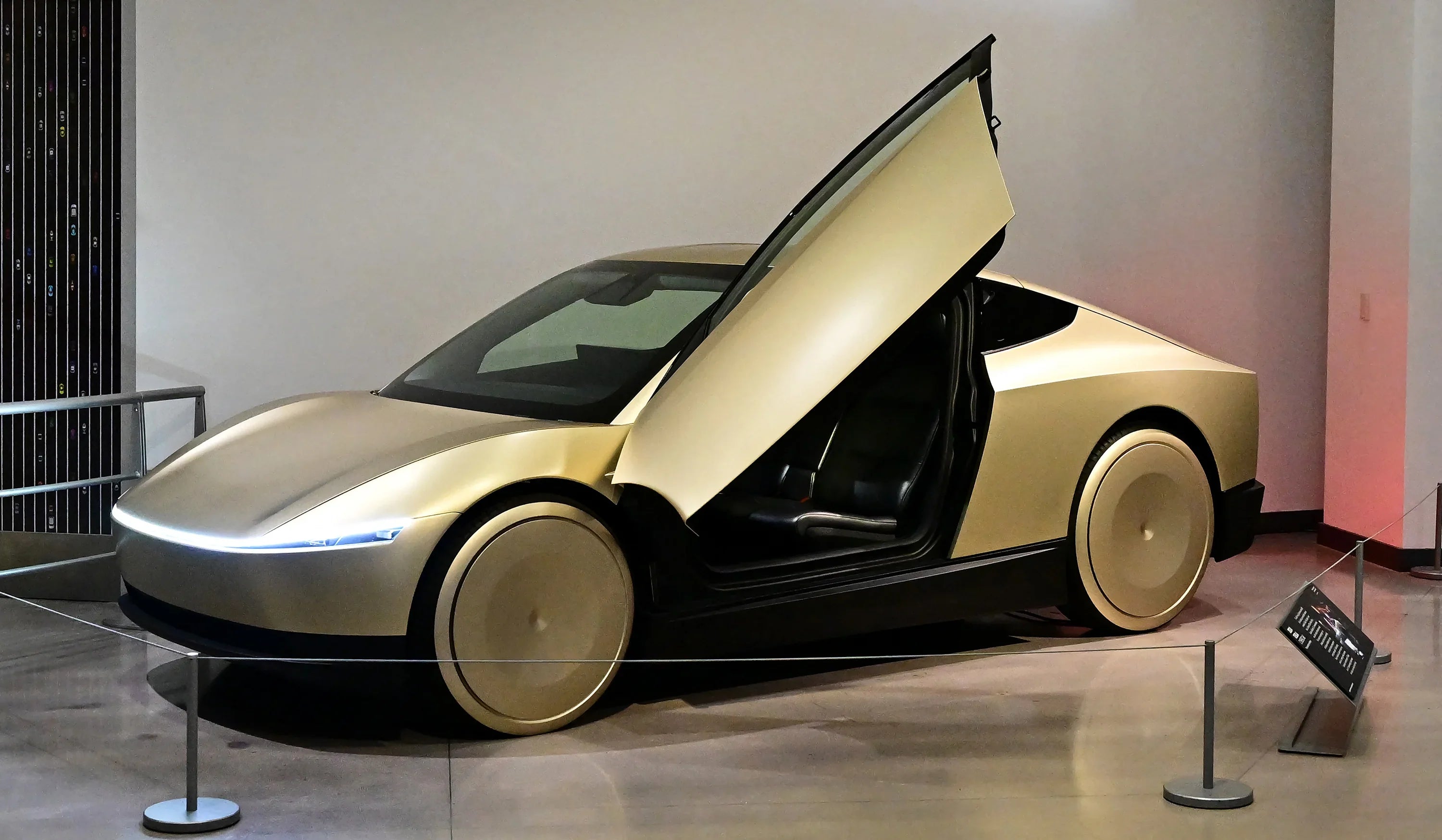
Tesla has started testing a Cybercab prototype without a steering wheel or pedals on public streets in Austin, Texas, marking an important step toward its goal of launching a purpose-built autonomous taxi. While the company has demonstrated the vehicle operating in real-world traffic, many technical and operational questions remain unanswered before commercial deployment.

Tesla Begins Public Testing of a Driverless Cybercab
Tesla has expanded development of its dedicated robotaxi by introducing a version of the Cybercab that removes traditional driving controls entirely. The latest demonstration took place on public roads in Austin and represents the first time the company has publicly shown the vehicle in this configuration outside controlled environments.
A short video released by Tesla shows the compact two-seat vehicle traveling through city streets. Although the cabin no longer includes a steering wheel or pedals, a company safety monitor occupies the right-side seat during testing. Tesla has not explained what responsibilities that person has or whether they can intervene if necessary.
The appearance of a steering-wheel-free prototype suggests Tesla is moving closer to the design originally presented during the Cybercab's unveiling in October 2024. Earlier test vehicles seen in public retained conventional controls despite the company's long-term vision of a fully autonomous cabin.
A Different Design Philosophy From Other Robotaxi Companies
Removing manual driving controls distinguishes Tesla's latest prototype from many autonomous vehicles currently operating in commercial services.
Companies such as Waymo continue deploying robotaxis that retain conventional steering wheels and pedals. Those backup controls allow trained employees or emergency responders to reposition vehicles if unusual situations occur. Some autonomous fleets also rely on remote support teams that can assist vehicles when software encounters unexpected conditions.
Tesla's latest prototype appears to move further toward eliminating those traditional fallback systems. The company has not yet disclosed how emergency operations, maintenance procedures, or recovery scenarios would be handled if a Cybercab became disabled or encountered hardware failures.
This represents one of the largest unanswered questions surrounding Tesla's autonomous transportation strategy.
Consumer Ownership Could Create New Challenges
Tesla's long-term plans differ from many existing robotaxi operators in another important way.
Rather than keeping every autonomous vehicle within a centrally managed commercial fleet, CEO Elon Musk has previously said Cybercab models could eventually be sold directly to consumers. If that approach remains unchanged, owners may face situations that fleet operators currently manage internally.
For example, autonomous driving systems rely heavily on cameras and onboard computing. If sensors become damaged or software experiences a malfunction, a privately owned vehicle without manual controls could require entirely different support procedures than today's vehicles equipped with steering wheels and pedals.
Tesla has not yet explained how owners would regain control, authorize vehicle movement, or transport a disabled Cybercab if autonomous functions become unavailable.
Testing Continues as Development Advances
The latest road testing demonstrates continued progress toward Tesla's autonomous ambitions, but it does not answer every question surrounding the project. The company has shared only limited technical details about the vehicle's operating systems, safety redundancies, or regulatory readiness.
As additional testing expands in Austin, industry observers will be watching closely for more information about how Tesla plans to address emergency intervention, customer ownership, and large-scale deployment before the Cybercab reaches the market.
How Tesla's Timeline Compares With Competitors
Tesla has repeatedly stated that it intends to introduce the Cybercab before 2027, although the company has not confirmed a specific production or customer delivery date. The recent public testing suggests development is continuing, but several milestones still need to be completed before large-scale deployment becomes possible.
Unlike traditional vehicle launches, autonomous transportation depends on more than manufacturing readiness. Companies must demonstrate reliable driving performance across a wide variety of traffic conditions while also satisfying regulatory requirements that differ by location. Expanding road tests are therefore only one step in a much longer commercialization process.
Tesla's approach also differs from many rivals because it relies heavily on its Full Self-Driving (FSD) software and a camera-based perception system rather than combining multiple sensor technologies. Whether this strategy can achieve the level of reliability required for a steering-wheel-free vehicle remains one of the industry's most closely watched questions.
Several Operational Questions Remain
The Cybercab's minimalist design reflects Tesla's long-term vision of autonomous mobility, but it also introduces practical considerations that have yet to be explained publicly.
One key issue involves vehicle recovery. If the car experiences a hardware malfunction, damaged cameras, or software interruption, Tesla has not detailed how the vehicle would be moved without traditional driving controls. Existing autonomous fleet operators generally have procedures that allow trained personnel to retrieve or reposition vehicles when necessary, but Tesla has not disclosed whether a similar system will be available for privately owned Cybercabs.
The company has also provided limited information about the role of the safety monitor shown during testing. It remains unclear whether that individual has access to hidden controls, specialized diagnostic equipment, or simply observes vehicle performance while the software handles driving tasks.
As testing continues, future demonstrations and regulatory filings will likely provide greater insight into these operational details.
What Comes Next for the Cybercab
The latest Austin road tests represent an important milestone rather than a final product announcement. Demonstrating a vehicle without a steering wheel or pedals shows Tesla is moving closer to its original design philosophy, but commercial success will ultimately depend on safety validation, regulatory approval, production readiness, and public acceptance.
Competition within autonomous mobility is also becoming more intense. Several companies continue expanding robotaxi services while refining their own technologies and operational models. Tesla's ability to distinguish itself may depend not only on autonomous driving performance but also on how effectively it addresses ownership, maintenance, and customer support for vehicles designed to operate without conventional controls.
For now, the Cybercab remains an ambitious project in active development. The coming months should reveal whether Tesla can translate successful public testing into a commercially viable autonomous transportation platform within its stated timeframe.

FAQ
Why is Tesla testing a Cybercab without a steering wheel?
Tesla designed the Cybercab as a dedicated autonomous vehicle intended to operate without traditional driving controls. The latest public testing reflects the company's original design vision first presented in 2024.
Does the Cybercab still have a safety driver?
The recent demonstration showed a safety monitor seated inside the vehicle during testing. Tesla has not explained whether that person can directly control the vehicle or is present solely to supervise testing.
How is Tesla's Cybercab different from Waymo's robotaxis?
Many commercially deployed Waymo vehicles retain steering wheels and pedals for backup operation. Tesla's latest Cybercab prototype removes those controls entirely, creating a different approach to autonomous vehicle design.
Can consumers buy a Cybercab?
Tesla has previously stated that it intends to sell the Cybercab to private customers, although pricing, availability, and final ownership details have not yet been announced.
When could the Cybercab become available?
Tesla has indicated that the Cybercab is expected to arrive before 2027, but the company has not confirmed a specific launch schedule. Additional testing and regulatory approvals will likely be required before commercial deployment.
Recommend Reading: Tesla Cybercab Production Begins at Texas Factory









Share:
California EV Rebate Plan Targets First-Time Buyers