





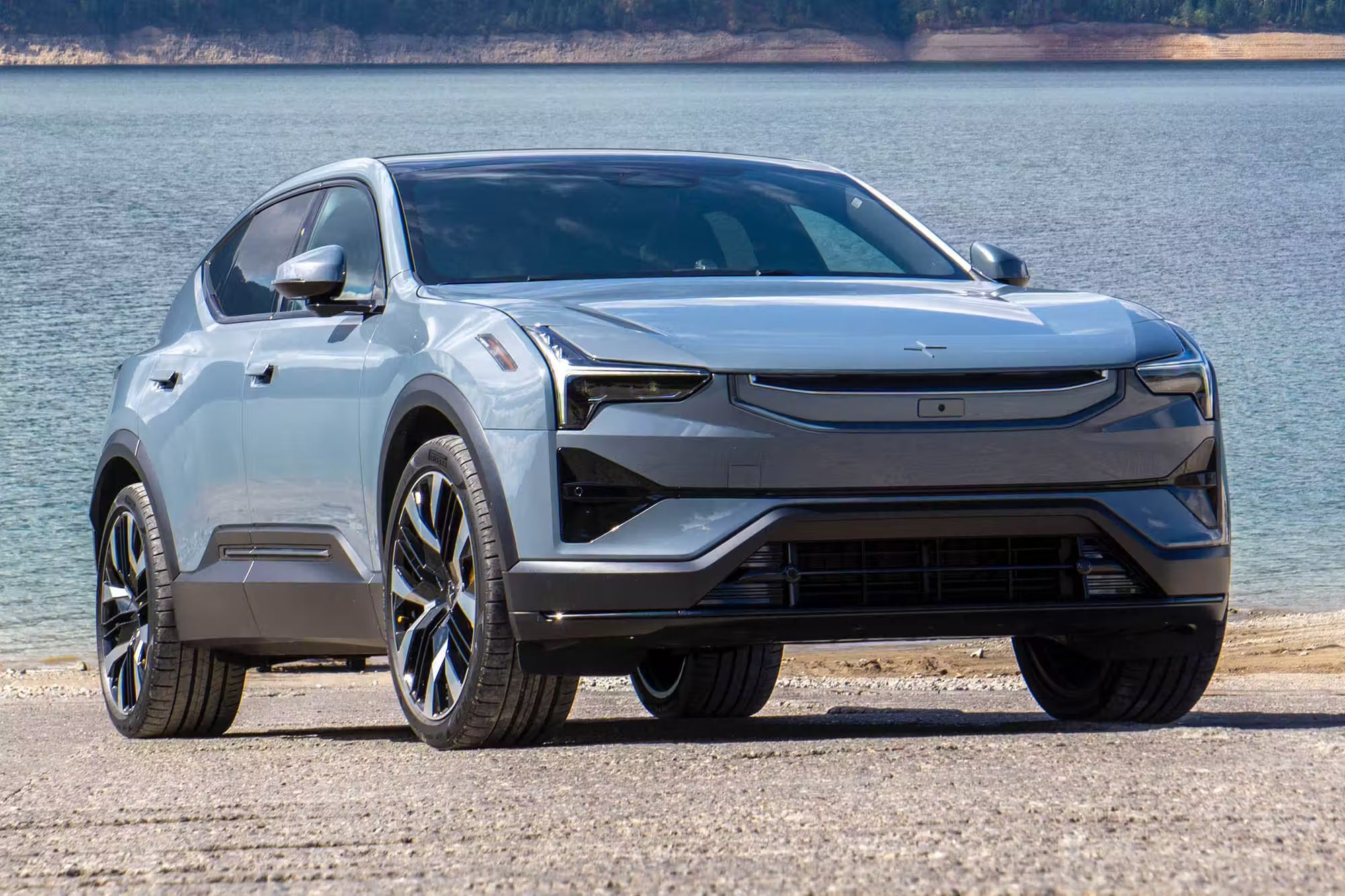
Polestar will stop introducing new vehicles to the U.S. beginning with the 2027 model year after the company failed to obtain approval under America's Connected Vehicle Rule. Existing inventory will remain available, and current owners will continue receiving service and support, but future Polestar models will no longer be marketed or sold in the country.

U.S. Regulations Reshape Polestar's Strategy
The decision follows a ruling by the U.S. Department of Commerce, which declined to grant Polestar an authorization required under the Connected Vehicle Rule. The regulation targets connected vehicles containing certain software or hardware linked to countries designated as foreign entities of concern, including China.
As a result, Polestar cannot introduce new model-year 2027 vehicles into the American market. The company confirmed that while customers can still purchase vehicles currently in dealer inventory, its U.S. product lineup will not expand beyond existing stock.
Owners who already drive Polestar vehicles will continue to have access to warranty coverage, customer support, and the company's established service network.
What the Connected Vehicle Rule Means
The Connected Vehicle Rule represents one of the most significant regulatory changes affecting imported electric vehicles in recent years.
Beginning with the 2027 model year, vehicles containing prohibited software tied to certain foreign suppliers cannot be sold in the United States. Additional restrictions covering connected hardware are scheduled to take effect in 2030.
Federal officials argue that connected vehicle technologies—including communication systems, driver-assistance software, and onboard computing platforms—could present national security concerns if developed or controlled by companies with links to countries viewed as strategic competitors.
For manufacturers operating across global supply chains, complying with these requirements has become increasingly complex.
Overseas Production Was Not Enough
Before the latest ruling, Polestar had already diversified its manufacturing footprint beyond China.
The Polestar 3 is assembled in South Carolina at Volvo Cars' manufacturing facility, while the Polestar 4 is produced in Busan, South Korea, through a manufacturing partnership.
Despite those production changes, regulatory approval ultimately depends on more than final assembly location. Connected software architecture and technology sourcing also fall under the scope of the new U.S. requirements.
Interestingly, Volvo—which also has ownership ties to Geely Group—received authorization allowing it to continue offering connected vehicles in the United States. Polestar, however, did not receive the same approval.
Company Focus Shifts Toward Faster-Growing Regions
Rather than presenting the move as a withdrawal from the global EV market, Polestar says it is concentrating resources where demand has been strongest.
The company reports that Europe now represents nearly 80% of its retail sales, and when broader international markets are included, that share reached 94% during the first quarter of the year.
Chief Executive Officer Michael Lohscheller described the strategy as an adjustment to changing regional market conditions. Future investment will prioritize Europe while also expanding into markets including Canada, Latin America, Southeast Asia, and Eastern Europe.
Polestar has also announced plans to manufacture the upcoming Polestar 7 in Europe, reinforcing the continent's importance to its long-term production strategy.
Product Development Continues Despite U.S. Exit
Leaving the American new-car market does not signal a slowdown in Polestar's broader product roadmap.
The automaker recently reported its strongest first-quarter global sales performance, supported by growth across Europe, Australia, and South Korea. Several new products also remain under development.
A next-generation Polestar 2 is progressing through development, while the Polestar 7 is expected to compete directly in the increasingly crowded midsize electric crossover segment.
Meanwhile, Polestar has continued improving its current lineup. The latest updates to the Polestar 3 include an 800-volt electrical architecture, significantly faster DC charging capability, and a more powerful Nvidia Drive AGX Orin computing platform for advanced vehicle functions.
Although American buyers will no longer receive future Polestar model-year releases under current regulations, the company continues investing in technology, manufacturing, and international expansion. The U.S. decision highlights how geopolitical policy and connected vehicle regulations are becoming as influential as consumer demand in determining where electric vehicles can be sold.

FAQ
Why is Polestar ending new vehicle sales in the United States?
Polestar will stop selling new 2027 model-year vehicles in the U.S. because it did not receive authorization under the Connected Vehicle Rule. Without that approval, the company cannot introduce future connected vehicles into the American market.
Can customers still buy a Polestar in the U.S.?
Yes. Polestar will continue selling its remaining inventory of current vehicles, including existing Polestar 3 and Polestar 4 models. However, no new model-year vehicles will be added after current stock is depleted.
Will current Polestar owners continue to receive service?
Yes. The company has confirmed that existing customers will continue to receive warranty coverage, maintenance support, customer service, and access to its established service network throughout the United States.
What is the Connected Vehicle Rule?
The Connected Vehicle Rule restricts the sale of vehicles that contain certain software or hardware linked to foreign entities identified by the U.S. government as national security concerns. Software restrictions begin with the 2027 model year, while hardware requirements are scheduled to take effect in 2030.
Is Polestar leaving the global EV market?
No. The company is shifting its focus toward regions where demand is growing more quickly, particularly Europe. Polestar also plans continued expansion in markets such as Canada, Latin America, Southeast Asia, and Eastern Europe while developing future EV models.
Recommend Reading: Polestar 4’s Missing Rear Window Wins Over Buyers Despite Early Doubts










Share:
Slate's Affordable Electric Pickup Arrives With a Different Strategy