





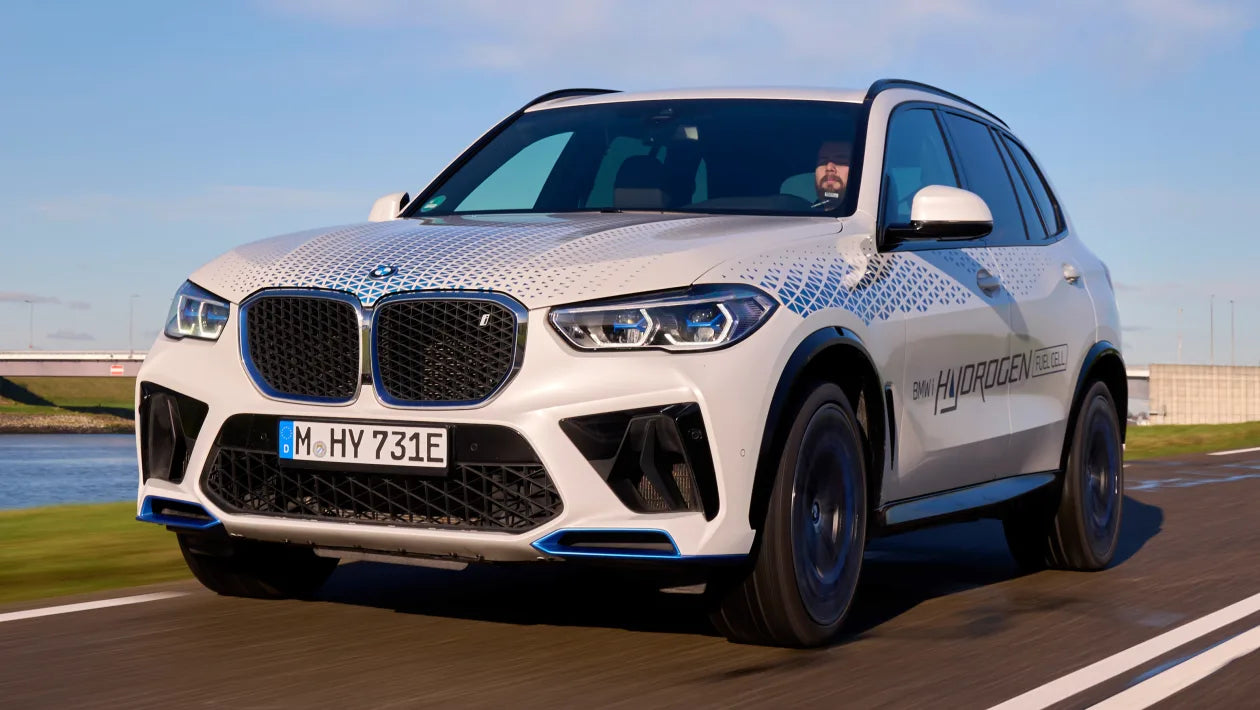
The upcoming 2027 BMW iX5 is expected to feature one of the largest battery packs ever installed in a mainstream electric SUV. BMW has confirmed that U.S.-spec models will receive 144 kWh of usable battery capacity, positioning the iX5 among the highest-capacity EVs currently announced for the consumer market.
This unusually large battery could help the iX5 achieve exceptionally long driving range while reinforcing BMW’s strategy of offering multiple electrified powertrain options within its popular X5 lineup.

BMW Confirms Record-Size Battery for the iX5
BMW has revealed key technical details about the electric iX5 ahead of its launch, including a battery pack rated at 144 kWh usable capacity in North America and 141 kWh usable capacity in Europe. The figure exceeds the capacity of any previous battery fitted to a BMW passenger vehicle.
Although official EPA range estimates have not yet been released, the company’s recently introduced electric models provide useful context. The BMW iX3 and i3, both equipped with 112 kWh usable batteries, are expected to deliver well beyond 400 miles of driving range under EPA testing. Given the significantly larger pack in the iX5, industry observers expect it to rank among the longest-range electric SUVs available when it reaches showrooms.
How the iX5 Compares With Other Electric SUVs
The size of BMW’s new battery becomes more apparent when compared with rival vehicles.
The Lucid Gravity Grand Touring uses a battery pack rated at approximately 123 kWh and achieves more than 400 miles of EPA-estimated range. Meanwhile, the upcoming electric version of the Porsche Cayenne is expected to utilize a battery pack with roughly 113 kWh of total capacity.
Among current competitors, the Rivian R1S Max Pack comes closest, offering approximately 140 kWh usable capacity. Even so, BMW’s announced figure slightly exceeds Rivian’s largest passenger-SUV battery.
Only a handful of oversized electric trucks and luxury utility vehicles from General Motors employ larger battery systems. Models such as the Chevrolet Silverado EV, GMC Hummer EV, and Cadillac Escalade IQ use battery packs exceeding 200 kWh, though they belong to a substantially different vehicle category.
Managing the Challenges of a Massive Battery
Large battery packs can increase range, but they also introduce engineering compromises. Additional battery capacity typically results in greater vehicle weight, which can affect efficiency, braking performance, ride comfort, and handling.
Reports indicate that the new iX5 may weigh approximately 3,000 kilograms (about 6,600 pounds), placing it among the heaviest electric SUVs in its class.
To address these challenges, BMW has reportedly revised the vehicle’s chassis and suspension systems. Engineers separated key suspension functions to improve load management and ride quality while adapting the vehicle to the extra mass created by the battery pack.
Additional modifications include revised placement of adaptive dampers and anti-roll components, helping maintain the driving dynamics expected from a BMW despite the vehicle’s substantial weight.
Advanced Packaging Helps Reduce Bulk
BMW has also incorporated newer battery packaging techniques to improve efficiency.
Like other next-generation BMW EVs, the iX5 uses cell-to-pack battery construction, which removes intermediate modules commonly found in traditional battery designs. By eliminating unnecessary layers, engineers can improve packaging efficiency while reducing weight and lowering the vehicle floor.
According to reports, BMW also made numerous small dimensional adjustments throughout the battery structure to maximize usable space without significantly increasing cabin or floor height. These measures are intended to make the large battery fit within the existing vehicle architecture while preserving passenger comfort.
Built on an Evolved Platform
Unlike the newer BMW iX3, which is based entirely on the company’s dedicated Neue Klasse electric architecture, the iX5 utilizes an updated version of BMW’s Cluster Architecture platform.
Originally developed to support internal-combustion vehicles, the architecture has been extensively modified to accommodate advanced electric propulsion technologies.
The SUV still benefits from several innovations introduced through the Neue Klasse program, including sixth-generation cylindrical battery cells and an 800-volt electrical system. The 800-volt setup is expected to support faster charging speeds and improved efficiency compared with conventional EV platforms.
More Than Just an Electric X5
The iX5 represents a broader strategy for BMW’s best-selling SUV family. Alongside the fully electric model, the company plans to continue offering multiple propulsion options, including gasoline-powered mild hybrids, plug-in hybrids, diesel variants in select markets, and a hydrogen fuel-cell version.
BMW says final development work is currently underway at its manufacturing facility in Spartanburg, South Carolina, where engineers are completing calibration and validation testing before production begins.
If its projected range meets expectations, the iX5 could become one of the most capable long-distance electric SUVs available in North America while expanding consumer choice within the rapidly evolving premium EV segment.

FAQ
Why is the BMW iX5 battery considered significant?
The 2027 BMW iX5 will use a 144 kWh usable battery in the U.S. market. That is the largest battery capacity BMW has publicly announced for a production passenger vehicle.
How does the iX5 compare with the Rivian R1S?
The Rivian R1S Max Pack offers about 140 kWh usable capacity, while the iX5 is expected to provide 144 kWh usable capacity, giving BMW a slight advantage in battery size.
Will the BMW iX5 have more than 400 miles of range?
BMW has not released official EPA figures. However, vehicles using smaller 112 kWh batteries in BMW’s lineup are already targeting over 400 miles, leading many analysts to expect a highly competitive range result.
Why doesn't every EV use an extremely large battery?
Larger batteries increase weight, cost, and material usage. Automakers must balance range, efficiency, vehicle dynamics, and affordability when choosing battery size.
What charging technology will the iX5 use?
The iX5 will incorporate an 800-volt electrical architecture, which is designed to support faster charging and improved energy efficiency compared with lower-voltage systems.
Will BMW offer non-electric versions of the X5?
Yes. BMW plans to continue offering several powertrain choices, including hybrid, plug-in hybrid, diesel, hydrogen fuel-cell, and fully electric variants of the X5.
Recommend Reading: 2027 BMW iX3 Price and Range Compared With Gas and Tesla SUVs









Share:
U.S. Public EV Chargers Surpass 250,000 Ports