





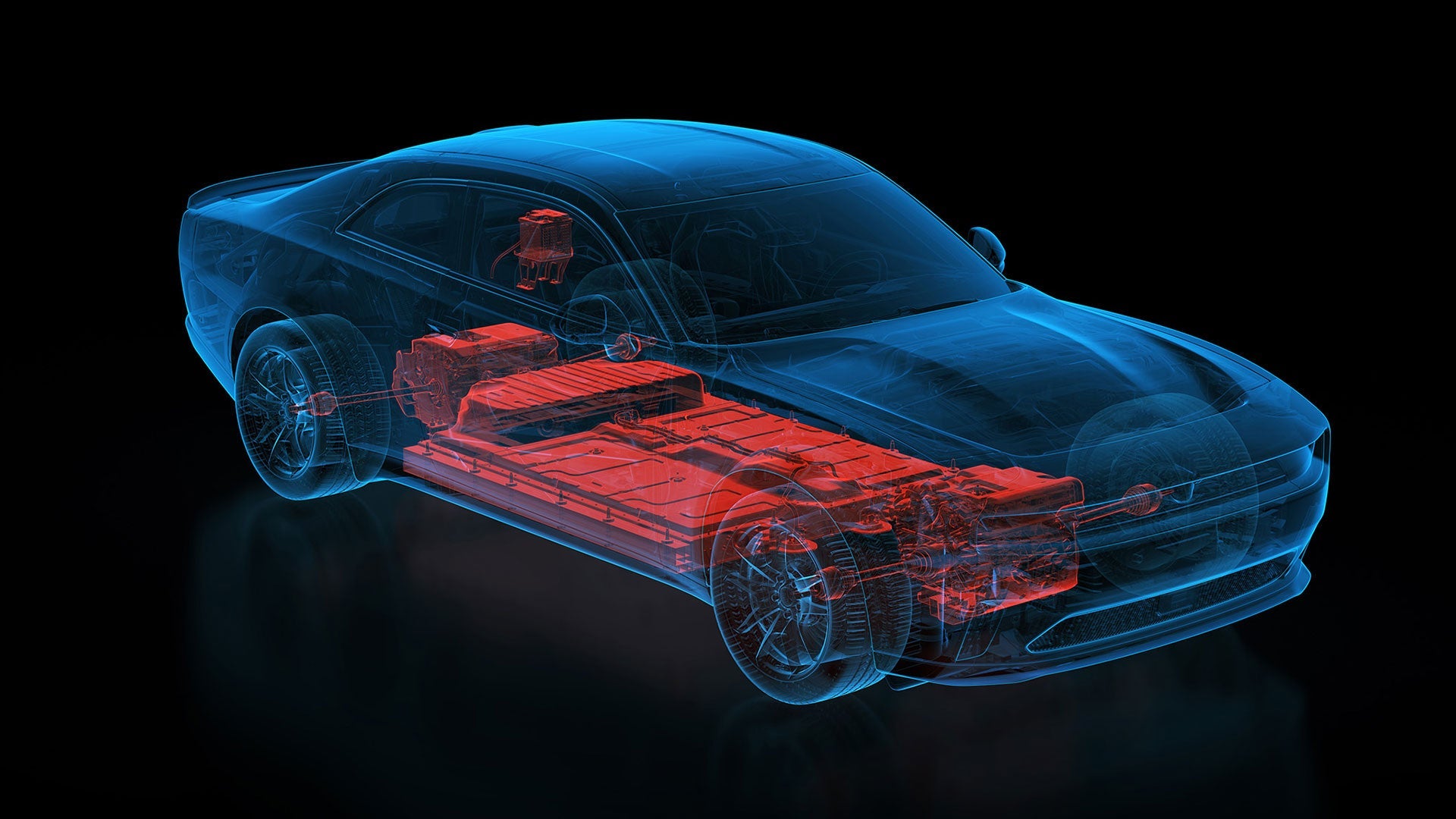
Semi-solid-state battery technology has moved beyond laboratory development and is now being evaluated on public roads. Stellantis has begun testing a Dodge Charger Daytona EV prototype equipped with an experimental battery from Factorial Energy, marking another step toward commercializing next-generation energy storage systems that promise higher efficiency and faster charging than today's lithium-ion packs.

Real-World Validation Begins
The primary takeaway is clear: Stellantis is actively testing semi-solid-state battery technology in a production-based electric vehicle, aiming to assess its performance under everyday driving and charging conditions. The project represents one of the latest efforts by a major automaker to accelerate the transition from conventional lithium-ion batteries to more advanced chemistries.
Unlike controlled laboratory experiments, road testing allows engineers to evaluate how a battery behaves in varying temperatures, charging environments, and driving scenarios. The company says the prototype will be used to gather data on durability, safety, charging performance, and long-term reliability before any broader deployment decisions are made.
Why Automakers Are Pursuing New Battery Chemistries
Battery technology remains one of the most important competitive areas in the EV industry. While lithium-ion cells continue to improve in cost, charging speed, and energy density, manufacturers are searching for alternatives that could deliver meaningful gains in vehicle range and efficiency.
Semi-solid-state batteries are viewed as a potential bridge between current lithium-ion designs and future fully solid-state systems. By modifying the electrolyte structure, developers aim to increase energy density while maintaining manufacturability at larger scales.
For automakers, the appeal is straightforward: more energy stored in a smaller and lighter battery pack can translate into longer driving distances, improved performance, and potentially lower overall costs over time.
What Is Inside the Charger Daytona Prototype?
The development vehicle uses Factorial Energy's FEST battery cells, which feature a semi-solid-state architecture. According to the companies involved, the cells achieve an energy density of approximately 375 Wh/kg.
That figure is notable because many current EV battery packs typically operate within a range of roughly 200–300 Wh/kg. Higher energy density means a battery can store more energy without requiring a proportional increase in weight.
Stellantis also claims the battery can charge from 15% to 90% in about 18 minutes under suitable conditions. Additionally, the system is designed to function across temperatures ranging from -22°F to 113°F (-30°C to 45°C), covering a broad spectrum of real-world environments.
These specifications suggest measurable improvements compared with many existing lithium-ion systems, although the ongoing testing program will determine how consistently those results can be achieved outside controlled settings.
Engineering Challenges Beyond the Battery Cells
Integrating a new battery chemistry into an existing vehicle platform involves more than swapping cells. Stellantis says it developed a specialized mechanical architecture to incorporate the technology into the Charger Daytona test vehicle.
Battery packs must manage thermal behavior, structural loads, safety requirements, and charging performance simultaneously. Even when a cell shows strong laboratory results, engineers still need to optimize packaging, software controls, cooling strategies, and vehicle integration.
The current testing phase is intended to identify potential issues before any future production plans are considered.
Factorial's Technology Continues Expanding
The Charger Daytona is not the first vehicle to evaluate Factorial's battery technology outside the laboratory. Previous demonstrations have included a prototype version of the Mercedes-Benz EQS, which used similar cell technology during testing activities in Europe.
Factorial describes its semi-solid-state approach as a transitional step toward its future all-solid-state Solstice battery platform. Information gathered from ongoing road tests is expected to contribute directly to the development of fully solid-state systems.
For battery developers, real-world deployment is often one of the most important stages in proving whether a technology can move from promising research to commercial viability.
What This Means for the EV Industry
The broader significance of this program extends beyond Stellantis. Several global automakers and battery suppliers are investing heavily in advanced battery technologies as they seek improvements in energy density, charging speed, and operational durability.
While fully solid-state batteries are often viewed as the long-term goal, many experts believe intermediate technologies such as semi-solid-state designs could reach commercial adoption sooner. If testing confirms the expected benefits, these batteries may help narrow some of the remaining performance gaps that consumers associate with electric vehicles.
For now, the Charger Daytona prototype serves as a rolling test platform, providing valuable data that could influence future EV development programs across the industry.

FAQ
What is a semi-solid-state battery?
A semi-solid-state battery uses a modified electrolyte design that differs from conventional lithium-ion systems. It is intended to improve energy density and charging performance while remaining easier to manufacture than fully solid-state batteries.
Why is Stellantis testing this technology in a Dodge Charger EV?
The company is using a production-based vehicle to evaluate safety, durability, charging behavior, and overall performance under real driving conditions. Road testing provides information that cannot be fully replicated in laboratory environments.
How much energy density do the new battery cells offer?
According to the project partners, the FEST cells deliver approximately 375 Wh/kg. This exceeds the energy density commonly associated with many current lithium-ion battery technologies.
How fast can the experimental battery charge?
Stellantis says the battery can recharge from 15% to 90% in about 18 minutes under suitable conditions. Actual charging performance will continue to be evaluated during testing.
Is this the same as a fully solid-state battery?
No. Semi-solid-state batteries are generally considered an intermediate technology. They share some characteristics with future solid-state systems but still differ in construction and materials.
When could this technology reach production vehicles?
No production timeline has been announced. The current testing program is focused on collecting real-world data before decisions are made about broader deployment.
Recommend Reading: A Little-Known Automaker Could Bring Solid-State Batteries to U.S. Roads First







Share:
GM Sodium-Ion Battery Plans Target U.S. Energy Storage
Rivian R2 Offers a Spare Tire Option Most EVs Skip