





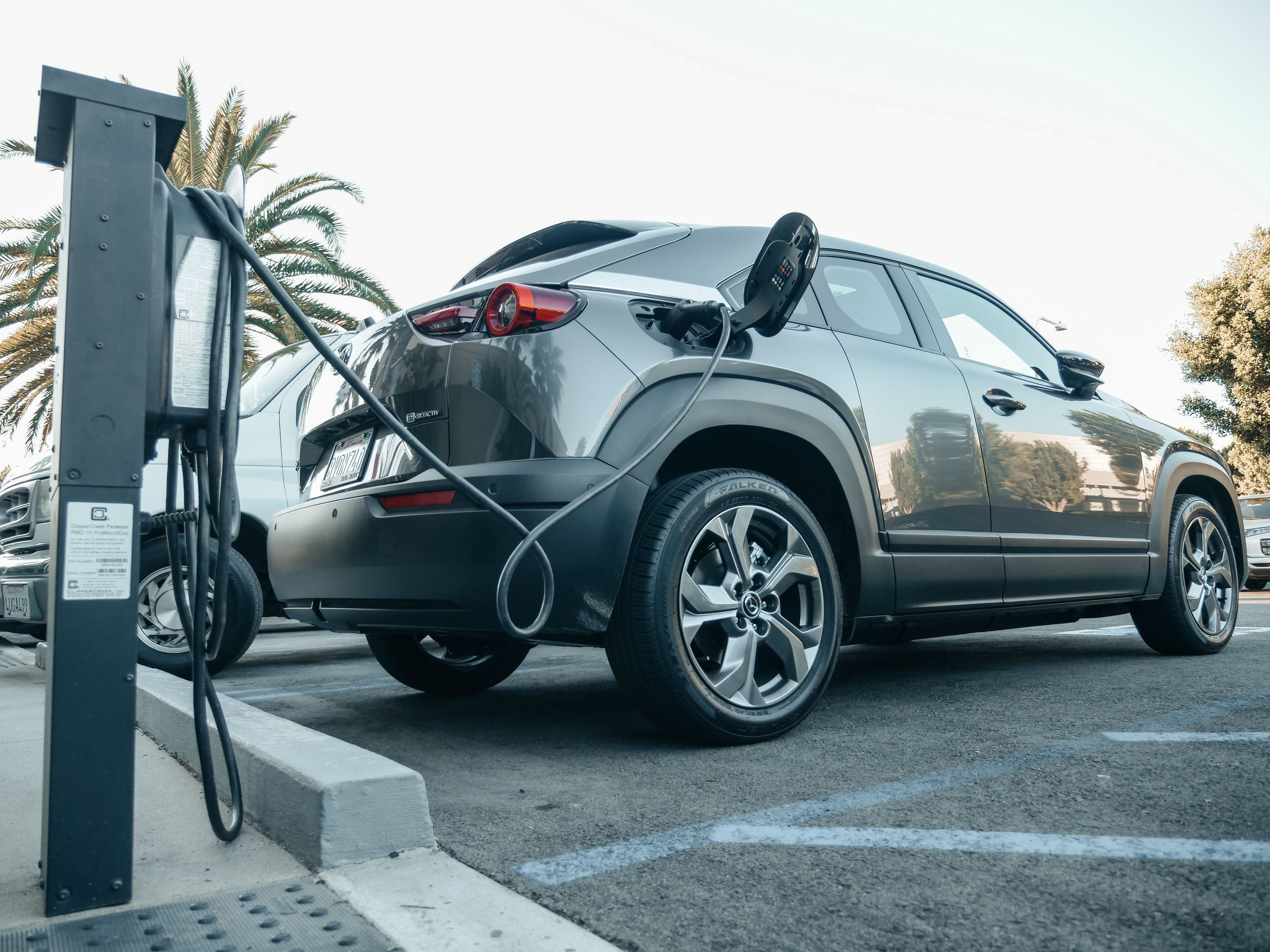
Florida is seeking to redirect nearly $200 million in federal EV charging funding toward infrastructure for future electric air taxis rather than additional public fast chargers. The proposal has sparked debate because commercial eVTOL passenger services have not yet received full FAA certification, while many EV advocates argue the funding was intended to close remaining charging gaps across the state.
Florida Proposes a Different Use for Federal EV Funding
Florida was originally awarded approximately $198 million through the federal National Electric Vehicle Infrastructure (NEVI) program, an initiative established to expand public DC fast-charging access across the United States.
Instead of using the remaining allocation to continue installing EV charging stations, the Florida Department of Transportation (FDOT) has proposed investing the funds in infrastructure for electric vertical takeoff and landing aircraft (eVTOLs). According to documents examined by the Miami Herald, the state envisions building an Aerial Highway Network designed to support future passenger air transportation.
State officials argue that advanced air mobility could eventually become another layer of Florida's transportation system, helping reduce congestion while improving travel between major destinations.
However, commercial passenger eVTOL operations remain largely in the testing phase across the United States, making the proposal significantly different from the original objectives of the NEVI program.
The Plan Focuses on Future Vertiports
According to the proposal, Florida would construct charging facilities at 32 vertiports, specialized locations where electric aircraft would take off, land, and recharge.
Planning documents estimate each site would require approximately $5.6 million in investment. Potential locations include airports, military installations, luxury residential developments, and golf resorts, reflecting an initial focus on areas expected to support early advanced air mobility services.
The transportation department argues that directing funding toward an emerging aviation network would create greater long-term value than expanding charging infrastructure for passenger electric vehicles.
The proposal also states that Florida does not intend to dedicate these federal funds to conventional EV charging because officials believe the private sector has already made substantial progress building public charging infrastructure throughout the state.
Existing Charging Growth Shapes the State's Position
Florida points to significant expansion in its charging network over recent years as part of its justification.
According to state documents, the number of public fast-charging ports has roughly doubled during the past four years, with approximately 452 fast-charging stations currently operating statewide.
Most of that growth has been driven by private charging providers, including companies such as Tesla, Electrify America, and ChargePoint, while newer operators continue adding additional locations.
Because private investment has accelerated deployment, Florida argues that federal resources could now be directed toward transportation technologies that currently lack comparable infrastructure.
Nevertheless, critics note that the purpose of the NEVI program extends beyond simply increasing charger numbers. The federal initiative was designed to encourage charging deployment in locations where commercial investment alone may not provide adequate coverage.
Rural Charging Needs Remain Part of the Debate
One of NEVI's primary objectives has been expanding charging access beyond major metropolitan areas and heavily traveled corridors.
Private companies generally prioritize locations with stronger utilization rates and faster financial returns. Rural highways and lower-population regions often receive less investment because expected charging demand is lower.
Federal funding helps address these gaps by supporting infrastructure that may not immediately attract private developers but remains important for long-distance travel and statewide EV accessibility.
Several states have already used NEVI funding to improve charging availability outside major cities. Programs in places such as New York have added reliable fast chargers throughout rural regions, making electric vehicle travel more practical in destinations that previously offered limited charging options.
While Florida has largely delayed spending much of its allocated NEVI funding, many other states have moved from planning into large-scale deployment as federal approval processes have gradually become more streamlined over the past two years.
Questions Remain About Program Priorities
Although Florida's proposal has generated attention, it comes at a time when many other states have already begun distributing their NEVI funding to charging companies and construction partners.
The federal program experienced a slow rollout after its launch because states had to complete extensive planning, satisfy strict reliability standards, and comply with domestic sourcing requirements before projects could move forward. As those administrative hurdles eased, charger installations accelerated across much of the country.
Florida took a different approach. According to the Miami Herald investigation, much of the state's NEVI allocation has remained unused. The Federal Highway Administration (FHWA) has reportedly determined that Florida has completed the required fast-charging coverage along designated highway corridors, allowing the state to consider alternative uses for any remaining funds under the program's rules.
That flexibility has opened the door to FDOT's proposal, although it remains uncertain whether federal officials will ultimately approve redirecting the money toward electric aviation infrastructure.
Political Debate Meets a Rapidly Growing EV Market
Florida has frequently challenged federal electric vehicle policies in recent years, with state leaders arguing that government incentives have placed excessive emphasis on EV adoption.
The state has also launched public campaigns criticizing certain federal clean transportation initiatives. At the same time, however, consumer demand has continued to expand.
According to the U.S. Department of Energy, Florida had more than 450,000 registered electric vehicles by 2025, making it the second-largest EV market in the United States, behind only California.
That growing ownership base means hundreds of thousands of drivers could benefit from additional fast-charging locations, particularly outside major metropolitan areas where charging coverage remains less consistent.
Supporters of FDOT's proposal argue that private investment has already addressed much of Florida's charging demand and that emerging transportation technologies deserve early infrastructure planning. Critics counter that federally funded charging programs were designed specifically to improve accessibility for today's EV owners rather than technologies that have not yet entered commercial passenger service.
With companies such as Joby Aviation still conducting demonstration flights and awaiting broader regulatory approval, the debate highlights a broader policy question: should public infrastructure funding prioritize transportation systems already serving large numbers of consumers, or invest earlier in technologies that may become significant years from now?
The answer could influence not only Florida's transportation strategy but also how future federal infrastructure programs balance immediate public needs against long-term technological innovation.
FAQ
Why does Florida want to use EV charging funds for air taxis?
Florida officials argue that the state's public charging network has expanded substantially through private investment. They believe remaining federal funds could instead help develop infrastructure for future eVTOL passenger aircraft.
What are eVTOL aircraft?
Electric vertical takeoff and landing (eVTOL) aircraft are battery-powered vehicles designed to transport passengers by air over short distances. Commercial passenger operations have not yet received widespread FAA certification in the United States.
How much NEVI funding did Florida receive?
Florida was allocated approximately $198 million through the federal National Electric Vehicle Infrastructure (NEVI) program to support public EV charging infrastructure.
Why do some groups oppose the proposal?
Critics argue that NEVI funding was intended to close charging gaps, particularly in rural and underserved areas where private companies may have limited incentive to build fast chargers.
Is Florida still an important EV market?
Yes. With more than 450,000 registered electric vehicles, Florida ranks second in the United States for EV ownership, behind only California.
Recommend Reading:New ultra fast EV chargers coming to the US








Share:
Future Mazda MX-5 Electric Plans