





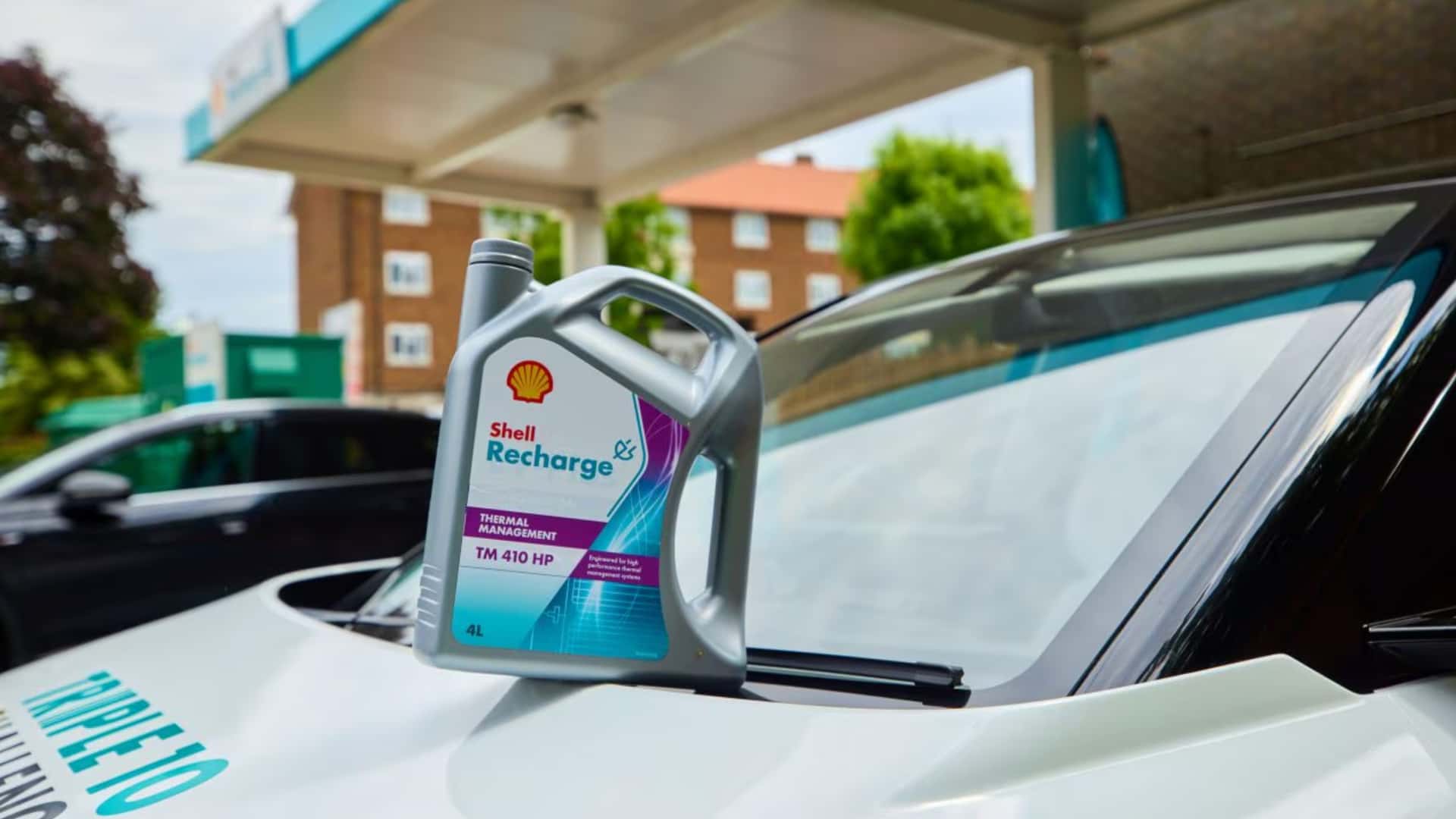
Shell's latest electric vehicle concept is less about introducing a production car and more about demonstrating a new battery cooling system. By using a dielectric immersion cooling fluid, the company claims the prototype can achieve 10% to 80% charging in under 10 minutes, improve vehicle efficiency, and lower overall system complexity compared with conventional EV designs.

A Technology Demonstrator Rather Than a Production Vehicle
Although Shell has unveiled a compact electric concept car, the company is not entering the automotive manufacturing business. Instead, the vehicle serves as a platform for testing and promoting a new thermal management solution designed for future battery-electric vehicles.
The prototype, known as the Triple 10 Challenge Concept, combines rapid charging, high energy efficiency, and lightweight engineering. While the vehicle itself is unlikely to reach consumers, the technologies developed for it could eventually be adopted by established automakers.
The primary objective is to demonstrate how improved battery temperature control can enhance charging performance and overall vehicle efficiency.
Direct Battery Cooling Changes the Traditional Design
Most electric vehicles rely on liquid cooling systems that circulate coolant through plates or channels positioned alongside battery cells. Heat must first travel through several layers before reaching the coolant, limiting how quickly temperatures can be reduced during demanding conditions.
Shell's concept uses a different approach. The battery cells are directly immersed in a non-conductive dielectric fluid, allowing heat to transfer immediately from the cells into the cooling liquid.
Because the fluid does not conduct electricity, it can safely contact high-voltage battery components without creating electrical hazards. This enables significantly faster heat removal compared with conventional indirect cooling methods.
Maintaining more stable battery temperatures becomes especially important during high-power charging sessions, when excess heat often forces vehicles to reduce charging speed to protect battery health.
Faster Charging Through Better Thermal Management
According to Shell, the concept vehicle can recharge its battery from 10% to 80% in less than 10 minutes when connected to a 175 kW DC fast charger.
The company estimates the vehicle can recover approximately 15 miles (25 kilometers) of driving range per minute during charging. For comparison, Shell states that many current EVs connected to chargers of similar power typically add about 8 miles (13 kilometers) per minute.
Although Shell has not disclosed the battery's chemistry or total capacity, the charging figures suggest that improved thermal control allows the battery to sustain higher charging power for longer periods without excessive heat buildup.
Simpler Cooling System May Improve Efficiency
Another advantage of the new design is its simplified thermal architecture.
Instead of maintaining separate cooling loops for the battery, electric motor, and power electronics, the concept uses a single cooling circuit to manage all major components.
Reducing the number of pumps, hoses, and heat exchangers lowers system complexity while also decreasing overall vehicle weight. Fewer components can translate into lower manufacturing costs and improved reliability over the vehicle's lifetime.
Shell also claims the prototype achieves an energy efficiency of approximately 6.2 miles per kilowatt-hour (10 km/kWh), representing an estimated 30% improvement over many current-generation electric vehicles. However, the company has not identified whether these figures were measured under EPA, WLTP, or another standardized testing procedure.
Shell Sees Opportunity Beyond Fuel Sales
Rather than selling complete vehicles, Shell's long-term business objective is supplying the cooling technology itself.
The company intends to offer both the immersion cooling system and its proprietary Shell Recharge thermal fluid to automotive manufacturers. By supplying specialized battery cooling products, Shell could establish a new business segment as the transportation industry shifts away from traditional fuels.
The dielectric cooling fluid is derived from a highly refined base oil produced from natural gas. Because it is electrically insulating, it enables direct immersion cooling while maintaining safety around high-voltage battery systems.
This creates a potential commercial opportunity for Shell to remain involved in vehicle energy infrastructure even as internal combustion engines become less dominant.
Why Dielectric Fluid Differs From Conventional Coolants
Traditional electric vehicles typically use water-glycol coolant mixtures that circulate through sealed channels surrounding the battery pack. While these fluids transfer heat effectively, they cannot come into direct contact with energized battery components because they conduct electricity. Any leak into the battery's electrical system could cause severe damage or even create a fire risk.
Shell's dielectric fluid is designed to avoid that limitation. Since it is electrically non-conductive, battery cells can be immersed directly in the liquid while the cooling system continuously removes heat from their surfaces. This approach shortens the thermal path between the battery and coolant, allowing temperatures to be managed more efficiently.
Water-free coolants are not entirely new. Similar fluids have long been used in specialized applications such as motorsports and classic vehicles because they resist boiling, minimize corrosion, and reduce localized hot spots. However, their higher cost has limited widespread adoption in passenger vehicles. Shell believes advances in immersion cooling could make these fluids more practical for future electric cars, particularly as charging speeds continue to increase.
Whether automakers embrace this technology remains to be seen, but the concept highlights an area of EV engineering receiving growing attention. As batteries become larger and charging power continues to rise, thermal management is increasingly becoming a critical factor in improving performance, durability, and charging convenience.

FAQ
Why did Shell build this electric vehicle concept?
The prototype was created to demonstrate a new battery cooling technology rather than preview a production vehicle. Shell intends to promote its immersion cooling system and thermal fluid to automotive manufacturers.
How does immersion battery cooling work?
Instead of cooling battery cells indirectly through cooling plates, immersion cooling places the cells directly into a non-conductive dielectric fluid. This allows heat to be removed more efficiently while remaining electrically safe.
How fast can the Shell concept charge?
Shell says the concept can recharge from 10% to 80% in under 10 minutes using a 175 kW DC fast charger. The company also estimates it can recover about 15 miles (25 km) of driving range per minute under those conditions.
Why is battery cooling important for fast charging?
Rapid charging generates significant heat inside battery cells. Better temperature control helps maintain higher charging power for longer periods, reducing charging time while protecting battery performance and longevity.
Will Shell manufacture electric vehicles?
No. Shell has stated that it does not plan to produce or sell this concept vehicle. Instead, the company aims to license its battery cooling technology and supply the specialized dielectric fluid required for the system.
Recommend Reading: Silicon-Anode EV Batteries May Arrive Before Solid-State


Share:
Slate EV Pickup Accessories Can Quickly Raise the Price
New Car Screen Complaints Continue to Frustrate Drivers