





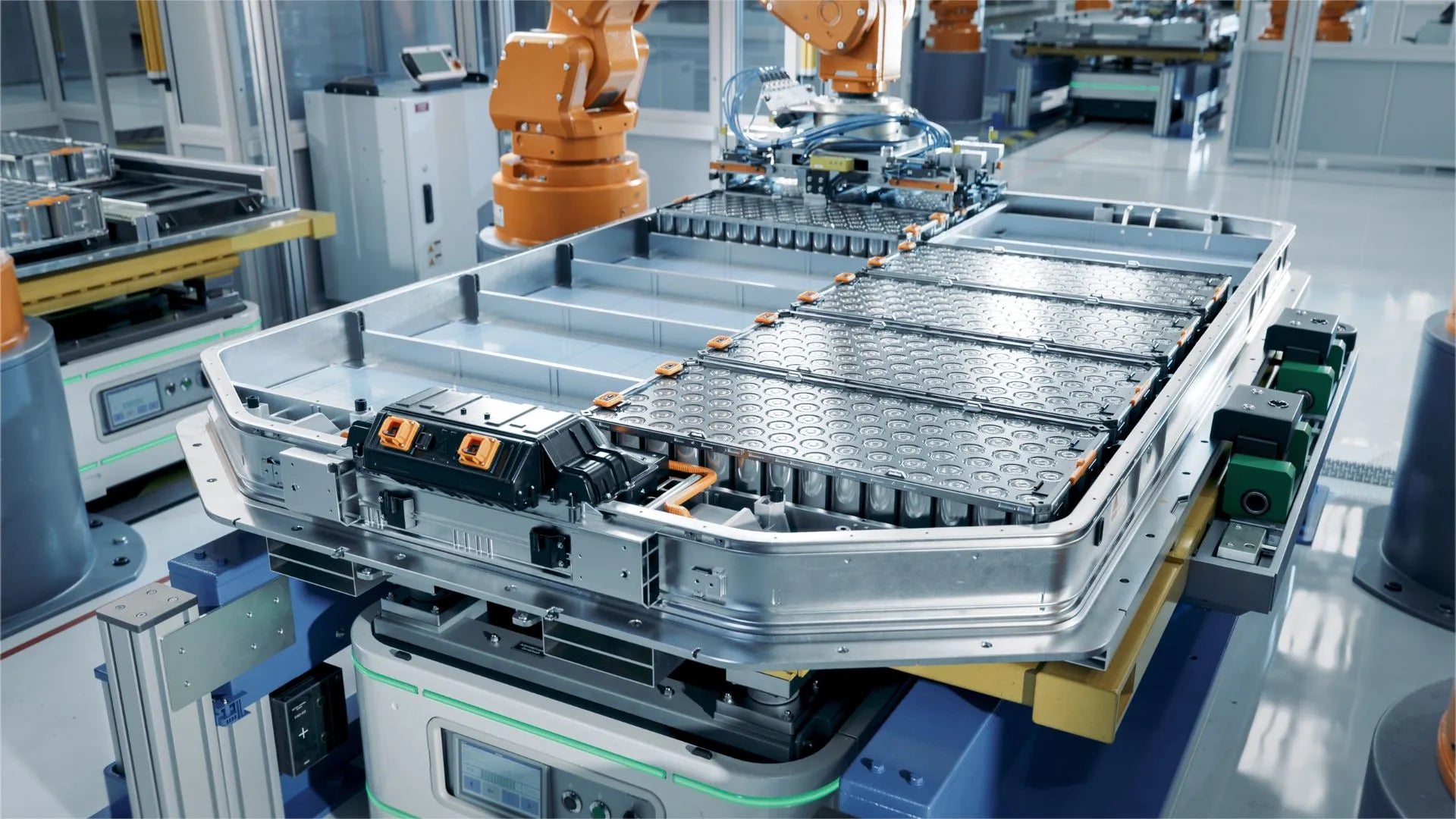
Silicon-anode batteries are emerging as one of the most promising near-term advances in electric vehicle technology. While solid-state batteries continue to attract attention, several manufacturers and battery developers believe silicon-enhanced lithium-ion cells will reach large-scale deployment much sooner and deliver meaningful gains in driving range and charging performance.
As a result, the next major improvement in EV batteries may not come from fully solid-state designs, but from advanced lithium-ion batteries that replace part of the traditional graphite anode with silicon.

Why Silicon Is Becoming A Key Battery Material
For years, most lithium-ion batteries have relied on graphite-based anodes. Graphite remains popular because it offers stability, durability, and established manufacturing processes. However, the material also comes with supply chain challenges, including heavy dependence on processing facilities located in China.
Battery researchers have increasingly focused on silicon because it can store significantly more lithium than graphite. By incorporating higher levels of silicon into the anode, manufacturers can improve energy density without completely redesigning the battery architecture.
According to Kurt Kelty, Vice President of Battery and Sustainability at General Motors, silicon is expected to play an important role in the next generation of EV batteries. Industry efforts are currently centered on increasing silicon content while maintaining battery stability and longevity.
The approach allows manufacturers to improve existing lithium-ion technology rather than waiting for entirely new battery chemistries to become commercially viable.
Silicon-Anode Technology Is Already Moving Beyond The Lab
Unlike many solid-state battery projects that remain in development stages, silicon-anode batteries have already entered commercial applications.
The technology is currently used in premium consumer electronics and is now being adapted for automotive use. This transition is significant because automotive batteries face far stricter durability, safety, and lifespan requirements than smartphones or laptops.
Several battery startups have reported substantial performance improvements from silicon-rich anodes.
Amprius Technologies claims that replacing conventional battery designs with its silicon-based technology could dramatically increase vehicle range. The company estimates that an EV capable of approximately 310 miles today could theoretically exceed 570 miles under similar conditions using its advanced battery design.
Meanwhile, Sila says its high-silicon battery materials can increase driving range by roughly 20% without enlarging the battery pack itself.
These figures suggest that silicon may offer practical performance improvements while utilizing much of the existing lithium-ion manufacturing ecosystem.
High-Performance Vehicles Are Already Demonstrating The Benefits
Some of the earliest automotive applications of silicon-anode batteries are appearing in performance-focused vehicles.
The McMurtry Spéirling, known for its record-setting acceleration and aerodynamic design, uses battery technology incorporating silicon-anode materials supplied by Group14 Technologies. The vehicle can accelerate from 0 to 60 mph in approximately 1.55 seconds, highlighting the exceptional power delivery possible with advanced battery chemistry.
Luxury automakers are also experimenting with similar technologies. Mercedes-Benz has integrated silicon-containing battery components into certain high-performance EV programs. The company reports charging capabilities that allow battery levels to increase from 10% to 80% in about 11 minutes under ideal charging conditions, supported by charging rates reaching 600 kilowatts.
These examples indicate that silicon-enhanced batteries are no longer theoretical concepts but technologies already proving themselves in demanding applications.
Manufacturing Capacity Is Expanding
One of the biggest questions surrounding any new battery technology is whether it can be produced at scale. Several companies are already investing heavily in manufacturing infrastructure.
Sila has launched production operations in Moses Lake, Washington, with an initial output capable of supplying materials for approximately 50,000 electric vehicles annually. The facility also has room for future expansion that could support materials for millions of vehicles.
At the same time, Group14 Technologies has increased production through its South Korean manufacturing operations. The company expects output sufficient for roughly 100,000 EVs per year based on current production targets.
These investments suggest that silicon-anode technology is moving steadily toward broader commercial adoption.
Automakers Continue To Pursue Multiple Battery Strategies
Although silicon-anode batteries appear well positioned for near-term deployment, automakers are not abandoning other battery technologies.
General Motors continues developing several battery chemistries simultaneously. These include lithium iron phosphate (LFP) batteries for cost-focused vehicles, high-nickel batteries for performance applications, and lithium-manganese-rich batteries intended for larger trucks and SUVs later in the decade.
The company has also recently expanded its research into sodium-ion batteries for stationary energy storage projects.
Meanwhile, development of solid-state batteries continues across the industry. Many researchers still view solid-state technology as a long-term goal because of its potential to improve safety, increase energy density, and reduce charging times even further.
For now, however, silicon-enhanced lithium-ion batteries appear much closer to widespread deployment.
The EV Battery Race Is Expanding, Not Ending
The future of electric vehicle batteries is unlikely to be defined by a single chemistry. Instead, different technologies are increasingly being developed for different use cases, ranging from affordable commuter cars to high-performance vehicles and grid-scale storage systems.
Silicon-anode batteries stand out because they offer a relatively practical path toward better range and faster charging without requiring a complete overhaul of current manufacturing methods. As production scales up, they could become one of the most important battery upgrades introduced before solid-state technology reaches mass-market adoption.

FAQ
Why are silicon-anode batteries gaining attention in the EV industry?
Silicon can store more lithium than graphite, allowing batteries to achieve higher energy density. This can lead to longer driving range and potentially faster charging without significantly increasing battery size.
Are silicon-anode batteries already being used today?
Yes. Silicon-based battery materials are already found in some consumer electronics and have begun appearing in automotive applications, including high-performance electric vehicles.
How do silicon-anode batteries compare with solid-state batteries?
Silicon-anode batteries are closer to commercial deployment. Solid-state batteries remain under development and are generally expected to reach large-scale production later in the decade.
Which companies are developing silicon-anode battery technology?
Several companies are active in this area, including Amprius Technologies, Sila, and Group14 Technologies. Major automakers are also evaluating and integrating silicon-based battery materials.
Can silicon-anode batteries improve EV charging speed?
Yes. Higher-performance battery designs using silicon can support faster energy transfer rates. Some vehicles utilizing silicon-enhanced battery technology have demonstrated extremely rapid charging capabilities.
Is General Motors investing only in silicon-anode batteries?
No. GM is pursuing multiple battery technologies simultaneously, including LFP, high-nickel, lithium-manganese-rich, sodium-ion, and solid-state battery research programs.
Recommend Reading: How to Check Used EV Battery Health—and Why It’s Still Hard


Share:
2027 Porsche Taycan Adds Virtual Shifting System
Lucid Cuts Jobs and Restructures as EV Competition Intensifies