





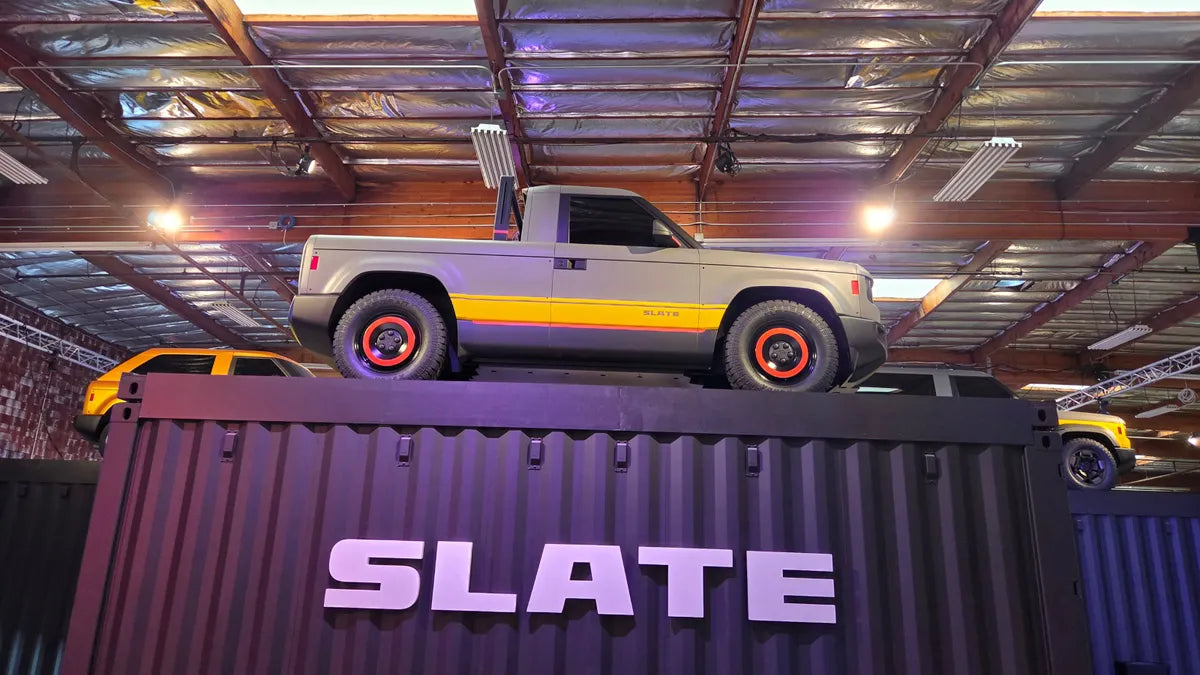
The Slate electric pickup starts at $24,950, making it one of the most affordable new EVs in the U.S. However, buyers can easily push the final cost well beyond $40,000 by adding optional accessories, highlighting both the flexibility and the potential expense of the company's modular ownership approach.

A Low Entry Price With Maximum Flexibility
Slate has positioned its first electric pickup around a simple concept: start with only the essentials and let owners decide what to add later. Instead of selling multiple trim levels packed with pre-selected equipment, the company offers a single basic vehicle supported by an extensive catalog of individual upgrades.
This strategy gives customers more control over how they configure their vehicles. Rather than paying for bundled luxury packages, owners can purchase only the features they actually want, either during the initial purchase or months—or even years—later.
The approach differs sharply from the pricing strategies used by most established automakers, where desirable technology or comfort features often require moving to significantly more expensive trim levels.
Entry-Level Model Keeps Costs Low
The standard truck intentionally includes only core equipment. Buyers receive a compact electric pickup with manual windows, steel wheels, and a minimalist interior that prioritizes practicality over premium materials.
By reducing standard equipment, Slate has been able to introduce one of the lowest-priced battery-electric vehicles currently planned for the U.S. market. The simplified design also creates a blank canvas for future customization.
Instead of paying for features that may never be used, customers can gradually build the vehicle according to changing needs and budgets.
Many Affordable Upgrades Encourage Personalization
Not every accessory carries a high price tag. Several cosmetic options are relatively inexpensive compared with aftermarket automotive parts.
Exterior styling pieces, including replacement front grilles, lamp covers, and decorative trim components, generally cost less than $60 each. Fender flares are priced at approximately $150, while upgraded front and rear bumpers together total roughly $1,100.
Inside the cabin, buyers can choose from multiple colored trim panels priced between $50 and $105, allowing owners to personalize the interior without making major modifications.
Slate also offers vinyl graphics and full-body wraps. Smaller accent decals start at modest prices, while complete vehicle wraps begin around $500, giving customers numerous appearance options without repainting the truck.
Technology Can Be Added Piece by Piece
Unlike many modern vehicles that include large infotainment systems as standard equipment, Slate allows owners to decide how much technology they actually want.
Fleet operators can purchase a cellular connectivity module for approximately $275 to enable telematics functions. Drivers who primarily use smartphones for entertainment can install a Bluetooth audio controller that integrates steering wheel controls without requiring a traditional infotainment system.
The company also offers a dedicated tablet mounting solution, allowing customers to supply their own display instead of paying for an integrated touchscreen. Additional options include animated rear lighting, upgraded speakers, and various electronic accessories that can be installed individually.
This modular philosophy extends beyond technology, giving owners the freedom to upgrade their trucks gradually instead of making every purchasing decision on day one.
Larger Options Change the Price Equation
While many accessories are relatively affordable, several major upgrades substantially increase the overall vehicle price.
The most significant example is Slate's optional SUV conversion package. Customers can transform the pickup into a fully enclosed SUV using either a box-shaped conversion kit priced at about $5,000 or a fastback version costing roughly $7,000.
Other premium accessories include 17-inch wheels, roof platforms, cargo systems, solar tonneau covers, and additional off-road equipment. Individually, these upgrades may seem reasonable, but together they can add thousands of dollars to the purchase price.
Even some convenience features that many drivers consider standard—such as a center console, glovebox lock, or upgraded audio system—are optional purchases.
Buyers Will Decide Whether the Concept Works
One fully equipped demonstration build exceeded $41,000 after adding numerous exterior upgrades, lighting packages, off-road accessories, premium wheels, cargo equipment, and SUV conversion components. That example illustrates how quickly customization choices can transform an entry-level EV into a much more expensive purchase.
Importantly, Slate is transparent about every option and its corresponding price. Unlike traditional manufacturers that often bundle equipment into expensive trims, the company clearly separates each upgrade so buyers understand exactly where their money is going.
Whether consumers embrace this philosophy remains an open question. Some buyers may appreciate paying only for the features they truly value, while others may prefer vehicles that include more equipment as standard. As affordable electric vehicles become increasingly competitive, Slate's modular business model could either become a meaningful differentiator or a pricing challenge, depending on how customers respond once production begins.

FAQ
Why does the Slate EV pickup have such a low starting price?
Slate keeps the base price low by including only essential features as standard equipment. Many convenience, technology, and styling upgrades are offered separately, allowing buyers to customize the truck over time instead of paying for bundled packages upfront.
How much can the Slate pickup cost with accessories?
The final price depends on the selected options. While the truck starts at $24,950, heavily customized builds with SUV conversion kits, upgraded wheels, cargo accessories, lighting packages, and interior upgrades can exceed $40,000.
What is the most expensive optional upgrade?
The SUV conversion kit is among the highest-priced accessories. Buyers can choose a boxy version for about $5,000 or a fastback design for approximately $7,000, significantly increasing the vehicle's overall cost.
Are important features optional on the Slate truck?
Yes. Some features that many buyers expect to be standard—including a center console, upgraded audio equipment, and certain storage accessories—must be purchased separately. This reflects Slate's strategy of letting customers pay only for the equipment they actually want.
Why is Slate using a modular accessory system?
The company aims to give owners greater flexibility by allowing upgrades to be installed whenever needed rather than forcing buyers into higher trim levels. This approach also enables the truck to evolve over time as owners' needs or budgets change.
Recommend Reading: Why Slate Switched to an LFP Battery for Its EV Truck


Share:
Tesla Camera System Improves Airbag Response
Shell EV Concept Showcases New Battery Cooling Technology