





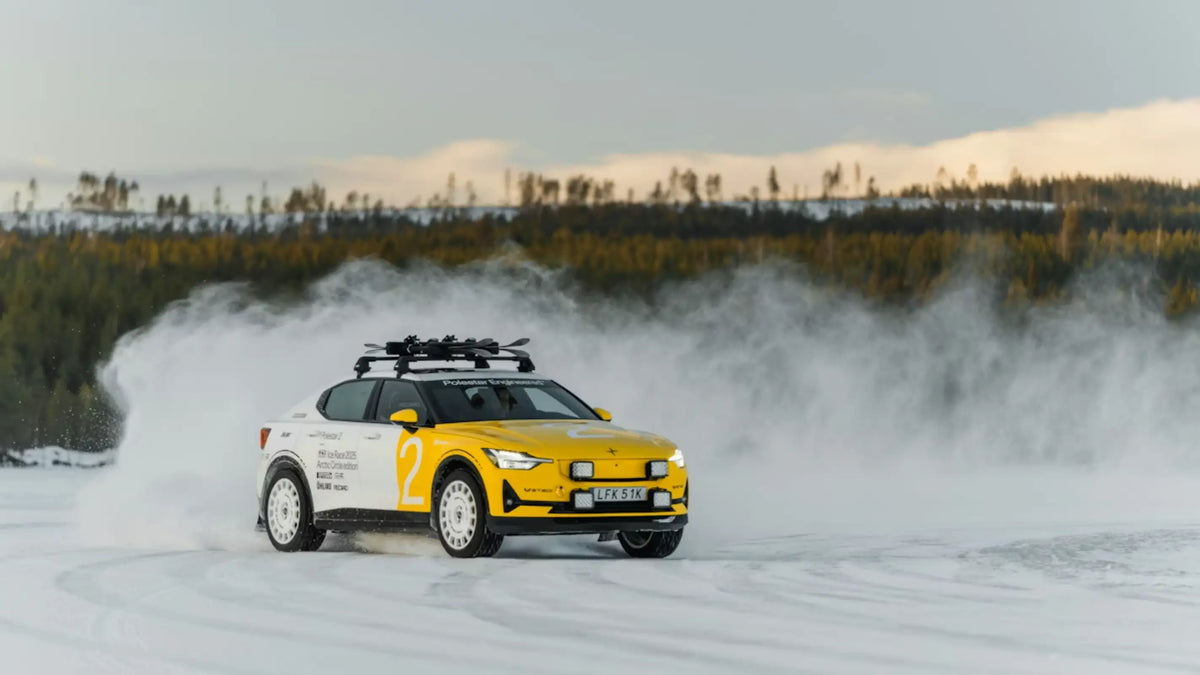
Polestar achieved the highest average cold-weather range retention in Recurrent's latest electric vehicle study, maintaining 88% of its optimal driving range at 32°F (0°C), compared with Tesla's 85%. Tesla nevertheless leads the individual vehicle rankings, with the Model S preserving 90% of its range at the freezing point.
Drawing on real-world information from more than 59,000 electric vehicles, the research highlights significant differences in winter efficiency across manufacturers and individual models.
 Photo by: Tesla
How Much Range Do Electric Cars Lose in Winter?
Across the 43 electric models examined by Recurrent, vehicles maintained an average of 78% of their optimal driving range at 32°F, equivalent to a 22% reduction.
Performance varied considerably between models. The strongest performer experienced a range reduction of approximately 10%, while the lowest-ranked vehicle lost 30% under the same temperature conditions.
Importantly, Recurrent does not calculate these percentages using official EPA ratings. Instead, the analysis compares cold-weather performance with the maximum driving distance observed for each vehicle under favorable conditions.
The company obtains operating information from participating EV owners who voluntarily connect their vehicles to its monitoring platform.
This methodology provides a practical comparison of seasonal efficiency rather than a direct measurement of how closely electric cars match their advertised range.
Polestar Ranks First Among EV Manufacturers
Polestar achieved the strongest average results at both temperatures included in the manufacturer comparison.
At 20°F (-7°C), its vehicles maintained 83% of their optimal range, compared with 77% for Tesla and 71% for Audi.
The following table highlights ten manufacturers from the published rankings, ordered by their range retention at freezing temperatures.
EV Winter Range Retention by Brand — Top 10
| Brand | At 32°F (0°C) | At 20°F (-7°C) |
|---|---|---|
| Polestar | 88% | 83% |
| Tesla | 85% | 77% |
| Audi | 79% | 71% |
| Jaguar | 79% | 69% |
| Nissan | 79% | 70% |
| Rivian | 78% | 70% |
| Hyundai | 78% | 70% |
| Porsche | 78% | 69% |
| Kia | 78% | 68% |
| Ford | 78% | 69% |
Source: Recurrent's winter EV range analysis, as reported in the original coverage. Selected manufacturers are shown, with tied results following the published order.
Polestar's advantage over Tesla increases from three percentage points at freezing temperatures to six percentage points at 20°F.
Several established manufacturers, including Rivian, Hyundai, Ford and Kia, recorded similar results at 32°F, although their performance diverged as temperatures fell further.
Among the 18 manufacturers listed in the published comparison, Toyota recorded the lowest retention rates, maintaining 70% at 32°F and just 59% at 20°F. Mercedes-Benz performed slightly better, retaining 72% and 62%, respectively.
Tesla Model S Leads Individual EV Rankings
Although Polestar achieved the strongest manufacturer average, Tesla occupied four of the five highest positions in the individual model comparison at 32°F.
The heat pump-equipped Tesla Model S recorded the highest retention rate, followed by the Cybertruck and Polestar 2.
EV Winter Range Retention by Model — Top 10
| Model | At 32°F (0°C) | At 20°F (-7°C) |
|---|---|---|
| Tesla Model S | 90% | 82% |
| Tesla Cybertruck | 89% | 83% |
| Polestar 2 | 88% | 83% |
| Tesla Model X | 87% | 78% |
| Tesla Model 3 | 85% | 76% |
| Chevrolet Silverado EV | 84% | 76% |
| Tesla Model Y | 84% | 75% |
| Audi e-tron GT | 84% | 77% |
| Hyundai Ioniq 6 | 82% | 75% |
| Hyundai Ioniq 5 | 81% | 74% |
Source: Recurrent's winter EV range analysis, as reported in the original coverage. Selected models are shown, with tied results following the published order.
Other popular electric vehicles also demonstrated relatively consistent winter performance. The Rivian R1S, Nissan Ariya, Volkswagen ID.4 and Kia EV6 each preserved 80% of their optimal range at freezing temperatures.
At the opposite end of the comparison, the earlier Toyota bZ4X configuration retained 70%, while the Mercedes-Benz EQS Sedan and Chevrolet Blazer EV each recorded 71%.
The results also demonstrate that relative performance can change with temperature. At 20°F, both the Cybertruck and Polestar 2 slightly outperform the Model S in percentage terms.
Why Heat Pumps Improve Cold-Weather EV Efficiency
Cabin heating and battery temperature management can increase electricity consumption during winter driving, leaving less stored energy available for propulsion.
Heat pumps help address this problem by transferring thermal energy more efficiently than conventional resistance-based heating systems.
Recurrent's reported findings suggest that electric vehicles equipped with heat pumps achieve approximately 8% more winter driving range than vehicles relying on traditional resistive heating.
Tesla's relatively strong historical performance has been associated with its adoption of heat pump technology and other measures designed to improve cold-weather efficiency.
However, heating technology alone does not determine winter range. Vehicle efficiency, thermal management and operating conditions also influence how much driving distance remains available as temperatures decline.
How Home Charging Helps Preserve Winter EV Range
Drivers can reduce some of the energy consumed during cold-weather journeys by preparing their vehicles before departure.
Preheating the cabin while the vehicle remains connected to a home EV charger allows some or all of the heating demand to be supplied by the electrical grid, depending on the vehicle and available charging power.
This approach can preserve additional driving range, particularly when vehicles are parked outdoors overnight.
Scheduled charging and departure-time preconditioning, where supported by the vehicle, can also help owners coordinate charging and cabin preparation.
Although winter range reductions cannot be eliminated completely, combining efficient vehicle heating with suitable home charging practices can reduce their practical impact on everyday driving.

FAQ
Which EV brand performs best in cold weather?
Polestar achieved the highest manufacturer average in Recurrent's latest comparison. Its vehicles preserved 88% of their optimal range at 32°F and 83% at 20°F.
Which electric car retains the most range in winter?
The heat pump-equipped Tesla Model S ranked first at 32°F, maintaining 90% of its optimal driving range. At 20°F, the Tesla Cybertruck and Polestar 2 recorded slightly higher retention rates of 83%.
How much driving range do EVs lose at freezing temperatures?
The 43 electric models included in Recurrent's analysis experienced an average range reduction of 22% at 32°F. Individual losses ranged from approximately 10% to 30%, depending on the vehicle.
Does a heat pump improve EV winter range?
Yes. Recurrent's reported findings suggest that vehicles using heat pump technology achieve approximately 8% more winter range than those equipped with conventional resistive heating. The actual improvement varies with vehicle design and operating conditions.
Can home charging help reduce winter range loss?
Preconditioning an electric vehicle while it is connected to charging equipment can reduce the amount of battery energy required for initial cabin heating. This helps preserve driving range after departure, although it does not eliminate temperature-related efficiency losses.
Are winter range retention figures based on EPA ratings?
No. Recurrent calculates retention percentages using the maximum real-world driving range observed under favorable conditions. These percentages should not be interpreted as the proportion of a vehicle's official EPA-rated range available during winter.
Recommend Reading: What Happens to an EV Battery When Parked Unplugged in Freezing Weather?


Share:
BMW iX4 Production Begins as iX3 Demand Grows