





A New Partnership Focused on Infrastructure Growth
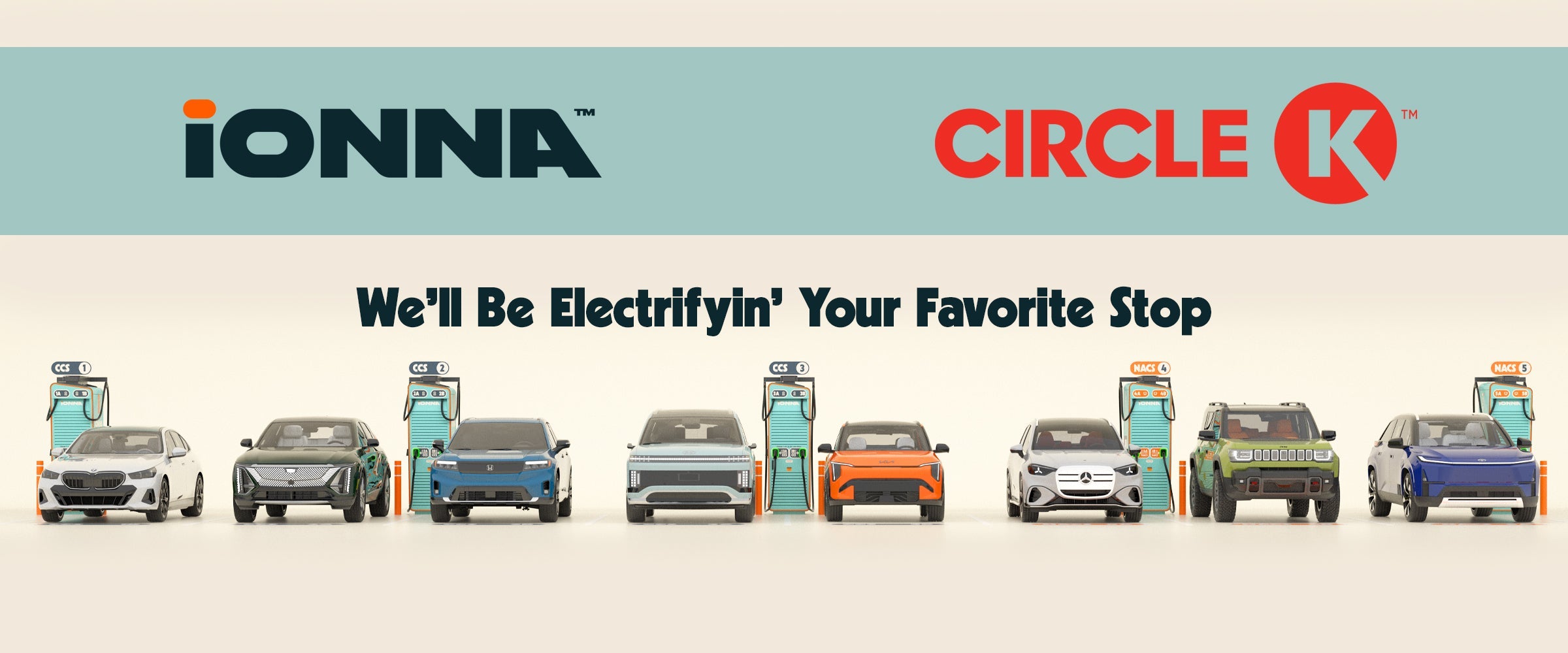
A major collaboration between Circle K and Ionna aims to significantly expand public fast-charging access across the United States. The two companies confirmed plans to install high-speed charging stations at hundreds of retail locations, marking another step in the ongoing effort to strengthen EV infrastructure nationwide.

Scaling Up a Rapidly Growing Network
Ionna, a charging venture backed by eight major automakers, including General Motors, Stellantis, and Toyota, has been accelerating its rollout of so-called “Rechargeries.” Under the new agreement, the company intends to deploy its charging technology at more than 350 Circle K sites across the country.
Each location will feature high-output charging equipment rated at up to 400 kilowatts, compatible with both CCS and NACS connectors. This dual-standard approach is designed to accommodate a broad range of electric vehicles, reducing compatibility concerns for drivers.
The partnership aligns with Ionna’s long-term objective of building 30,000 charging bays by 2030, positioning it as a major player in the evolving U.S. charging landscape.
Integration of Existing Charging Assets
Beyond new installations, the agreement also includes the transfer of Circle K’s current EV charging infrastructure into Ionna’s network. According to federal data, the retailer already operates 378 charging ports across 93 locations.
Ionna plans to upgrade approximately 85 of these existing sites, enhancing both performance and usability. This process will likely involve hardware improvements and software integration, ensuring a more consistent experience across the network.
By absorbing these assets, Ionna can expand its footprint more quickly than through new construction alone, while modernizing older installations that may not meet current performance expectations.
Retail Locations as Charging Hubs
The collaboration reflects a broader industry trend: integrating EV charging into familiar roadside destinations. Convenience stores and fuel stations are increasingly seen as ideal locations for fast chargers due to their accessibility and existing amenities.
For drivers, these sites offer practical benefits such as restrooms, food options, and seating areas, making longer charging sessions more manageable. Unlike traditional refueling, EV charging often requires 20 to 30 minutes, creating demand for comfortable waiting environments.
Ionna’s approach builds on this concept by designing charging sites that resemble upgraded rest stops, sometimes including enhanced facilities beyond basic retail offerings.
Competitive Momentum Across the Industry
This partnership is part of a wider wave of collaborations between charging providers and retail chains. Over the past year, Ionna has also worked with brands like Sheetz and Wawa to expand its network.
Other automakers and infrastructure companies are pursuing similar strategies. For example, General Motors and EVgo have been deploying chargers at Pilot and Flying J travel centers, while Mercedes-Benz High Power Charging is partnering with Buc-ee’s to bring fast charging to its large-format roadside locations.
These initiatives highlight a shared industry belief that charging accessibility and convenience are critical to supporting future EV adoption.
Addressing Key Barriers to EV Adoption
Reliable public charging remains one of the most cited concerns among potential EV buyers. Although overall EV sales growth has slowed following policy changes—such as the expiration of certain federal incentives—the build-out of fast-charging infrastructure has continued at a strong pace.
By placing chargers at widely recognized retail destinations, companies hope to reduce range anxiety and make EV ownership more practical for drivers without home charging options.
At the same time, retailers benefit from increased customer dwell time. While traditional fuel stops are brief, EV charging sessions encourage drivers to spend more time—and potentially more money—on-site.

Looking Ahead
The partnership between Ionna and Circle K illustrates how infrastructure development is evolving beyond standalone charging stations toward integrated, service-oriented locations. As networks expand and technology improves, the focus is shifting toward speed, convenience, and user experience.
If execution matches ambition, this rollout could play a meaningful role in closing infrastructure gaps and supporting the next phase of electric vehicle adoption in the United States.
Recommend Reading: Megawatt EV Chargers Arrive in the U.S.—Are Cars Ready?


Share:
Affordable Honda Super-N EV Launches With Manual-Style Driving
BMW iX Discontinued in U.S. as New iX3 EV Arrives Soon