





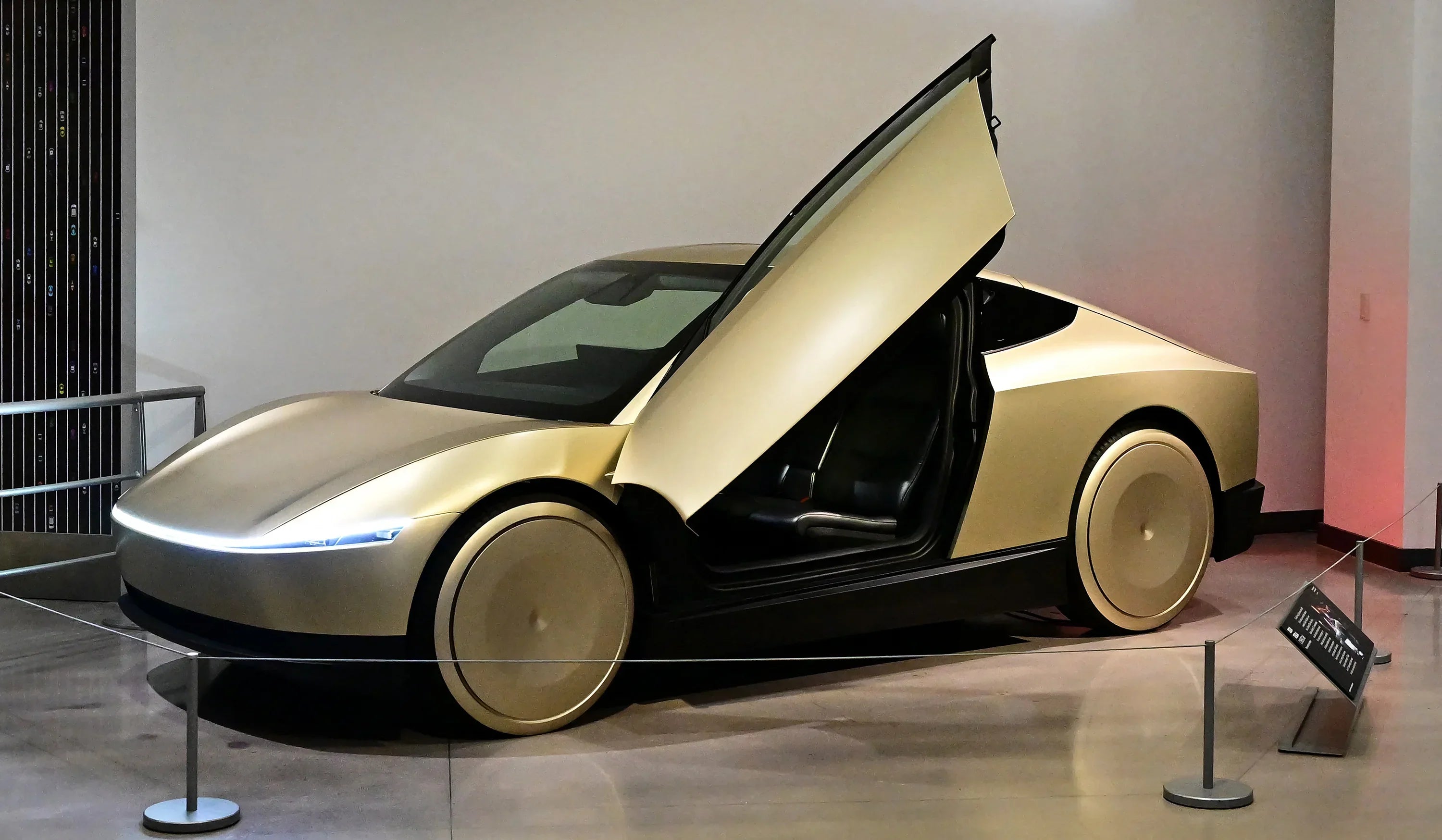
Tesla's Cybercab has moved closer to production after new regulatory filings disclosed several core specifications. The documents reveal the vehicle's battery capacity, weight, powertrain details, and preliminary test-cycle driving range, offering the clearest picture yet of Tesla's upcoming autonomous-focused EV.

EPA Documents Provide New Technical Details
Recent filings submitted to U.S. regulators have shed light on several previously unknown aspects of the Cybercab program. While Tesla has already showcased the vehicle publicly, many technical specifications remained undisclosed until now.
According to the submitted documents, the two-seat electric vehicle carries a curb weight of approximately 3,113 pounds. That figure is notable because it places the Cybercab significantly below the weight of many modern electric vehicles currently on sale.
For comparison, numerous compact EVs approach or exceed 3,800 pounds, while even Tesla's own entry-level passenger vehicles weigh considerably more. Achieving a relatively low vehicle mass could help improve efficiency, reduce energy consumption, and lower manufacturing costs.
The latest filing suggests Tesla has prioritized lightweight engineering as part of the Cybercab's overall design strategy.
Battery Capacity Appears Smaller Than Many EVs
The regulatory documents also provide insight into the vehicle's battery system.
The battery is listed at 146 amp-hours operating at 326 volts, which translates to approximately 47.6 kilowatt-hours of usable energy. Rounded figures place the pack at roughly 48 kWh.
Compared with many mainstream electric vehicles that now carry batteries ranging from 60 kWh to well above 100 kWh, the Cybercab's energy storage system is relatively modest in size.
However, battery capacity alone does not determine driving range. Vehicle weight, aerodynamic efficiency, drivetrain design, and software optimization all play major roles in overall energy consumption.
Tesla appears to be relying on efficiency improvements rather than simply installing a larger battery pack.
What the Preliminary Range Numbers Suggest
One of the most discussed figures in the filing concerns driving range.
Testing data included in the documentation shows a calculated combined driving distance of approximately 418 miles under EPA laboratory procedures. However, that number should not be interpreted as the final range consumers will see on official vehicle labels.
EPA certification procedures generally require manufacturers to apply adjustment factors that bring laboratory results closer to expected real-world performance. In many cases, a reduction factor of roughly 70% is applied to raw test results.
Using that commonly referenced methodology, the Cybercab's projected official range would land near 293 miles.
That estimate aligns closely with previous comments from Tesla representatives who suggested the vehicle would offer nearly 300 miles of driving range.
While the final certified figure has not yet been published, the available data indicates that Tesla's efficiency targets may be achievable despite the vehicle's relatively small battery pack.
Lightweight Design Could Be Central to the Strategy
The relationship between the Cybercab's weight and battery size is perhaps the most important takeaway from the filing.
Many automakers have increased battery capacity to extend driving range, but doing so often adds substantial mass. Additional weight can reduce efficiency and increase production costs.
Tesla appears to be pursuing a different approach. By keeping the vehicle relatively light while maintaining aerodynamic efficiency, the company may be able to achieve competitive range figures without relying on an oversized battery.
This strategy could become especially important if Tesla intends to deploy the Cybercab in large autonomous ride-hailing fleets, where operating costs and charging efficiency directly impact profitability.
Major Questions Still Remain
Although the EPA filing answers several technical questions, critical uncertainties remain unresolved.
Tesla has not announced a confirmed production start date, nor has it provided final pricing details. Previous statements suggested a target price below $30,000, with availability expected before 2027.
The larger challenge may involve software rather than hardware. The Cybercab concept depends heavily on autonomous driving technology, and Tesla continues to develop and expand its self-driving systems.
While testing programs are underway in selected locations, a broad deployment capable of supporting fully autonomous ride-hailing operations has yet to occur.
The newly released filings indicate meaningful progress toward production readiness. However, the vehicle's commercial success will ultimately depend not only on battery specifications and efficiency figures, but also on Tesla's ability to deliver the autonomous capabilities that form the foundation of the Cybercab project.

FAQ
What battery size does the Tesla Cybercab use?
EPA-related documents indicate the Cybercab uses a battery pack with approximately 48 kWh of capacity. The system is listed at 146 amp-hours and 326 volts.
How much does the Tesla Cybercab weigh?
The filing lists the vehicle at approximately 3,113 pounds. This makes it lighter than many current electric vehicles on the market.
What range could the Tesla Cybercab achieve?
Laboratory testing produced a calculated result of roughly 418 miles. After applying common EPA adjustment methods, the expected certified range could be close to 293 miles.
Why is the Cybercab's weight important?
Lower vehicle weight improves efficiency and allows manufacturers to achieve competitive range with smaller battery packs. It can also reduce production costs and energy consumption.
Has Tesla announced the Cybercab price?
Tesla has not confirmed final pricing. Previous company statements indicated a target starting price below $30,000.
When will the Tesla Cybercab go on sale?
An exact launch date has not been announced. Tesla has previously indicated that production could begin before 2027, but no official timeline has been finalized.
Recommend Reading: Tesla’s Cybercab Could Get Regulatory Boost From Congress









Share:
Rivian R2 Offers a Spare Tire Option Most EVs Skip