





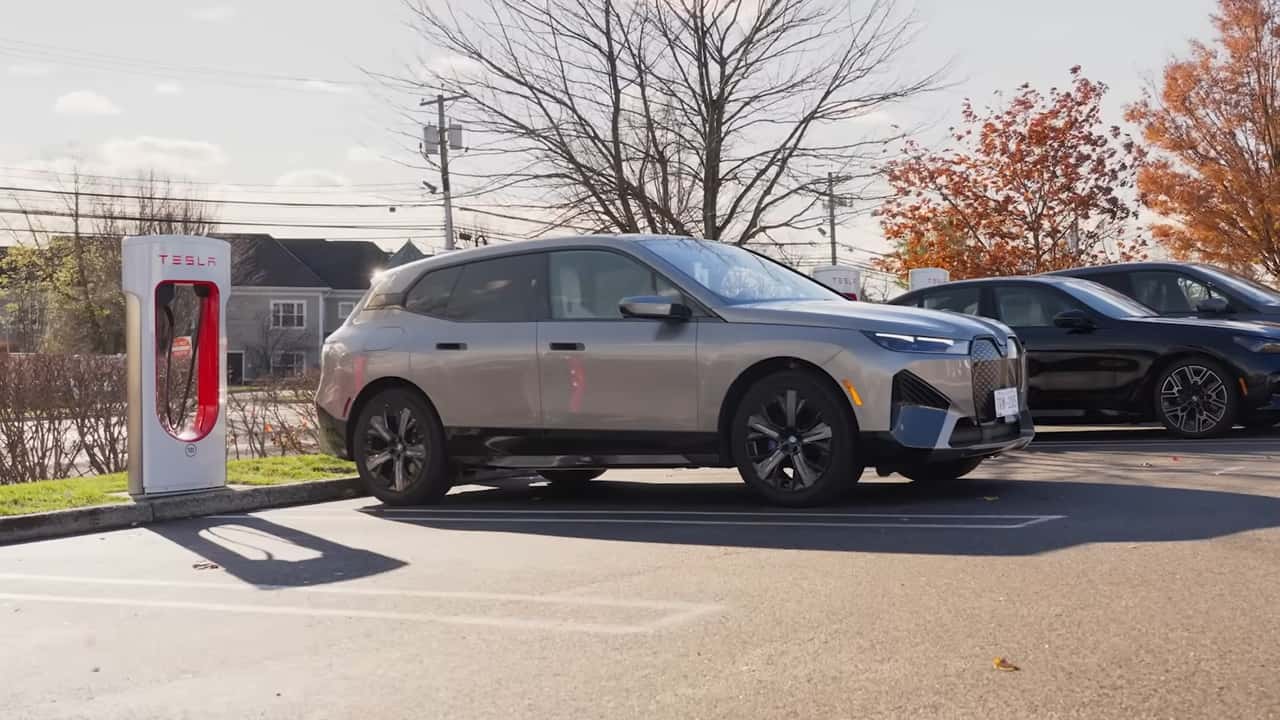
The expansion of public EV fast-charging stations in the United States slowed during the second quarter, but the decline reflects a change in industry priorities rather than weakening investment. Charging operators are focusing more on reliability, profitability, and larger, higher-quality sites instead of opening as many locations as possible.
Although fewer stations were built compared with a year earlier, infrastructure deployment remained strong overall, and utilization rates suggest demand is keeping pace with new capacity.

Fewer New Fast-Charging Sites Opened in Q2
New figures released by Paren, a charging infrastructure data platform, show that U.S. charging providers installed 4,382 DC fast-charging ports across 806 new stations during the second quarter.
Compared with the same period last year, when operators added 4,865 charging ports at 891 locations, installations declined by roughly 10%. The latest results also fell below the record set in the fourth quarter, when nearly 6,000 new fast-charging ports entered service nationwide.
Despite the year-over-year slowdown, activity improved significantly compared with the first quarter of the year. Installations increased from 3,521 ports in Q1, representing approximately 24% quarter-over-quarter growth, indicating that network expansion continues even as companies adjust their investment strategies.
Charging Companies Are Prioritizing Better Service
The slower pace reflects a broader shift in how charging operators measure success.
Rather than expanding as quickly as possible, many companies are now concentrating on building locations that generate stronger financial returns while providing a better experience for drivers. Industry analysts say operators have become increasingly focused on improving station uptime, reducing maintenance issues, and increasing customer satisfaction.
This strategy also follows recent cost-cutting measures across the charging industry, including workforce reductions and project reviews by several charging network operators.
Instead of simply increasing the number of locations, companies are investing in stations designed to remain reliable over the long term while supporting growing EV traffic.
Larger Charging Sites Are Becoming the New Standard
Another noticeable trend is the growing size and capability of newly constructed charging stations.
Rather than opening numerous small locations, developers are increasingly building facilities with more high-power charging ports at each site. This allows operators to serve more vehicles while reducing wait times during busy travel periods.
Many new charging hubs also include amenities that were uncommon only a few years ago. Drivers can now find locations offering restrooms, cafés, Wi-Fi, convenience stores, and covered seating areas. Some networks have gone even further by introducing climate-controlled lounges where customers can work or relax while their vehicles recharge.
These improvements reflect growing competition among charging providers, which increasingly view customer experience as a competitive advantage.
Tesla Remains the Largest Builder, but Competition Is Growing
Tesla continued to install more public fast chargers than any other network during the second quarter.
The company added 1,185 new charging ports, accounting for approximately 27% of all new deployments during the quarter. However, Tesla's overall share of the nation's fast-charging infrastructure has now fallen below 50% for the first time, highlighting faster expansion by competing providers.
Several other operators also expanded aggressively. Walmart, ChargePoint, Red E, and Electrify America ranked among the leading contributors to new installations, demonstrating that the U.S. charging market is becoming increasingly diversified.
Greater competition could ultimately benefit EV owners by providing more charging choices and encouraging continued improvements in network quality.
Most New Chargers Were Installed in High-Demand States
Infrastructure growth remained heavily concentrated in regions where electric vehicle ownership is already highest.
Approximately 40% of all new fast-charging ports installed during the second quarter were located in just five states. California led the nation by a wide margin with 120 new charging stations, followed by Texas, Florida, Illinois, and New York.
This geographic pattern closely mirrors current EV adoption across the United States. Large metropolitan areas and coastal markets continue attracting the majority of new charging investments because they generate higher utilization and stronger financial returns.
Meanwhile, several rural states saw little or no expansion. North Dakota added no new public fast-charging ports during the quarter, while Montana, Wyoming, and South Dakota each received only one additional station.
If this pattern continues, differences in charging availability between major urban markets and rural regions could become even more pronounced.
Demand Continues to Support Infrastructure Investment
Although U.S. EV sales have experienced fluctuations following policy changes, charging providers have largely maintained their long-term investment plans.
Average charger utilization remained steady at 15.8%, indicating that new infrastructure is being used at roughly the same pace it is being added. This suggests supply and demand are currently expanding in balance rather than creating widespread overcapacity.
Recent improvements in EV sales also reinforce industry confidence. Following a slowdown after the expiration of the federal EV tax credit, second-quarter electric vehicle sales rebounded, supported in part by higher gasoline prices and continued consumer interest in lower operating costs.
For charging companies, the current strategy appears clear: build fewer but higher-quality stations today while preparing for stronger EV adoption in the years ahead.

FAQ
Why did U.S. fast-charging construction slow in the second quarter?
The decline was mainly driven by charging companies focusing on profitability, reliability, and customer experience instead of expanding as quickly as possible.
Did charging infrastructure stop growing?
No. Although year-over-year growth slowed, charging operators still installed 4,382 new fast-charging ports, and deployments increased significantly compared with the first quarter.
Which company added the most new fast chargers?
Tesla remained the largest contributor, installing 1,185 new charging ports during the second quarter, although competing networks continued expanding their market share.
Where are most new EV charging stations being built?
Most new stations are concentrated in states with high EV adoption, including California, Texas, Florida, Illinois, and New York.
Is charging demand keeping up with new infrastructure?
Yes. Average charger utilization remained stable at 15.8%, suggesting that drivers are using newly installed charging capacity at a healthy and consistent rate.
Recommend Reading: Walmart EV Charging Network Expands Across the U.S.







Share:
Tesla Sales Recovery Faces Its Next Big Test