





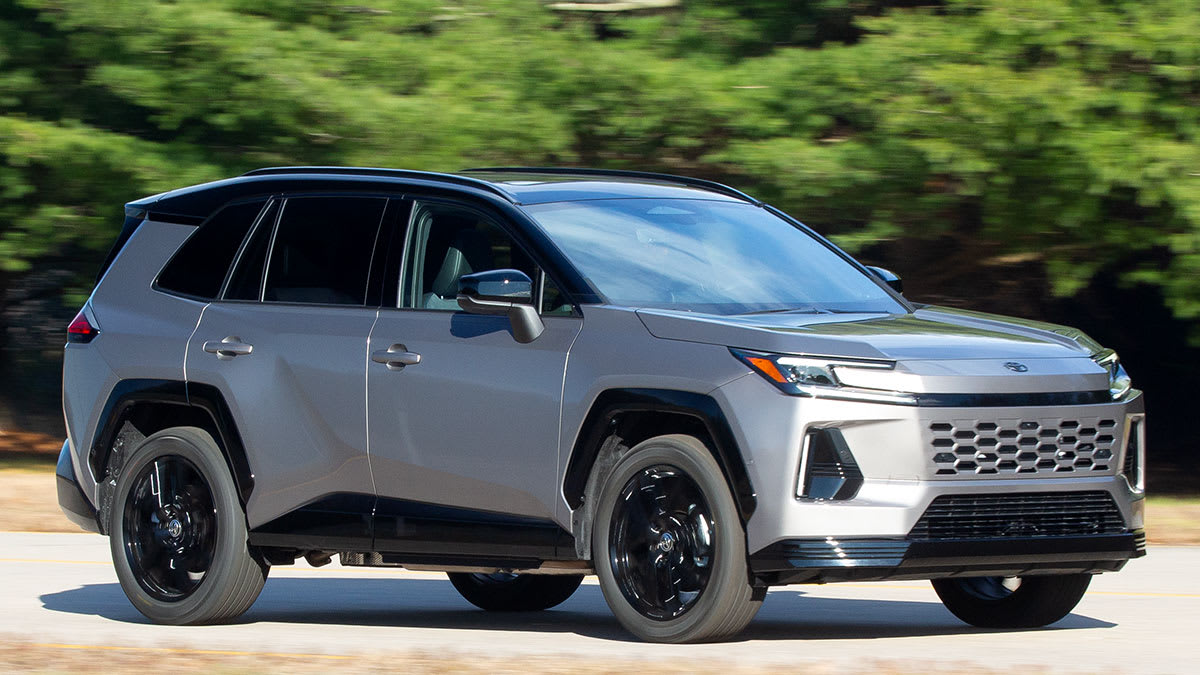
U.S. electric vehicle sales posted their strongest quarterly performance since the federal EV tax credit ended, signaling that the market may be stabilizing after a sharp policy-driven slowdown. Although sales remain below last year's levels, rising demand, new vehicle launches, and state-level incentives are helping the industry regain momentum.
New figures released by Cox Automotive show that 247,226 battery-electric vehicles were sold in the United States during the second quarter of 2026, representing a 14.2% increase from the first quarter. While that total was still 20.5% lower than the same period in 2025, the improvement suggests consumer demand is gradually recovering after last year's abrupt policy changes.

Quarterly Growth Suggests the Market Is Finding a New Balance
The elimination of the federal EV tax incentive last September created one of the biggest disruptions the U.S. electric vehicle market has experienced in recent years. Many buyers accelerated purchases before the incentive expired, creating an artificial sales spike followed by several weak quarters.
According to Cox Automotive, the latest quarterly results indicate that this correction may now be easing. Researchers noted that expanding model availability, regional incentive programs, and continued consumer interest are supporting demand despite the absence of nationwide purchase subsidies.
At the same time, elevated gasoline prices continue to encourage sales of both hybrids and battery-electric vehicles, helping manufacturers maintain momentum as the market adjusts to new conditions.
Tesla Remains the Market Leader While Several Brands Gain Ground
Although Tesla continues to dominate the U.S. EV market, several traditional automakers posted meaningful quarterly improvements.
Tesla delivered 124,800 vehicles during the second quarter, up 6.4% from the previous quarter. However, deliveries remained 9.6% below the company's strong fourth quarter of 2025, when aggressive pricing incentives helped boost sales.
Meanwhile, manufacturers including Toyota, Chevrolet, Hyundai, Cadillac, Rivian, Ford, Kia, Subaru, and BMW all recorded quarter-over-quarter growth, reflecting broader improvement across the industry.
Top 10 EV Brands in the U.S. (Cox Automotive)
| Brand | Q4 2025 | Q1 2026 | Q2 2026 | YTD 2026 | Q1→Q2 % Change | Q4→Q2 % Change |
|---|---|---|---|---|---|---|
| Tesla | 138,000 | 117,300 | 124,800 | 242,100 | +6.4% | -9.6% |
| Chevrolet | 9,814 | 13,359 | 14,908 | 28,267 | +11.6% | +51.9% |
| Hyundai | 8,478 | 12,662 | 14,274 | 26,936 | +12.7% | +68.4% |
| Cadillac | 11,001 | 9,551 | 12,216 | 21,767 | +27.9% | +11.0% |
| Toyota | 3,345 | 10,042 | 11,826 | 21,855 | +17.8% | +253.5% |
| Rivian | 9,745 | 10,365 | 11,405 | 21,770 | +10.0% | +17.0% |
| Ford | 14,513 | 6,860 | 9,746 | 16,606 | +42.1% | -32.9% |
| Kia | 5,308 | 5,279 | 7,348 | 12,627 | +39.2% | +38.4% |
| Subaru | 743 | 3,041 | 7,023 | 10,064 | +130.9% | +845.2% |
| BMW | 7,557 | 4,963 | 6,547 | 10,790 | +31.9% | -13.4% |
Model Y Continues to Lead Individual Vehicle Sales
Tesla maintained its dominance at the model level as well.
The Model Y remained America's best-selling electric vehicle, reaching 84,863 deliveries during the quarter, an 8.0% increase over Q1. The Model 3 ranked second with 34,944 units, posting a 10.3% quarterly gain.
Outside Tesla, the Hyundai Ioniq 5, Toyota bZ, and Ford Mustang Mach-E rounded out the five highest-selling EVs in the country.
Top 10 EV Models in the U.S. (Cox Automotive)
| Model | Q2 2026 | YTD 2026 | Q1→Q2 % Change |
|---|---|---|---|
| Tesla Model Y | 84,863 | 163,454 | +8.0% |
| Tesla Model 3 | 34,944 | 66,616 | +10.3% |
| Hyundai Ioniq 5 | 10,940 | 20,730 | +11.7% |
| Toyota bZ | 7,524 | 17,553 | -25.0% |
| Ford Mustang Mach-E | 7,032 | 11,632 | +52.9% |
| Chevrolet Equinox EV | 6,660 | 16,249 | -30.5% |
| Rivian R1S | 6,183 | 11,677 | +12.5% |
| Honda Prologue | 5,088 | 8,407 | +53.3% |
| Kia EV9 | 4,295 | 7,035 | +56.8% |
| Cadillac Optiq | 4,236 | 7,083 | +48.8% |
Toyota Emerges as One of the Fastest-Growing EV Brands
Toyota recorded one of the strongest performances of the quarter.
The automaker sold 11,826 electric vehicles during Q2, representing approximately 225% year-over-year growth. Much of that increase came from an expanded battery-electric lineup that now includes the Toyota bZ, C-HR, and bZ Woodland.
Through the first six months of 2026, Toyota accumulated 21,855 EV sales, surpassing Cadillac in cumulative deliveries and moving into the fourth position behind Tesla, Chevrolet, and Hyundai.
The results illustrate how broader product availability can quickly influence market performance when buyers have more competitive options.
Federal Policy Changes Continue to Shape the Market
Despite improving quarterly numbers, government policy remains a major influence on EV adoption.
Before the federal tax credit ended, automakers recorded a historic 437,487 EV sales during the final eligible quarter as consumers rushed to secure incentives. Sales then dropped to 234,171 vehicles in the following quarter before falling further to 216,399 units in Q1 2026.
The weaker demand prompted several manufacturers to postpone product launches, reduce investment plans, and reassess portions of their electrification strategies.
Meanwhile, other major automotive markets continue expanding financial support for electric vehicles, creating a different competitive environment from that in the United States.
Recovery May Signal the Next Phase of EV Growth
Recent sales data suggests the industry's steep correction could be approaching its end.
Automakers are increasingly introducing lower-priced electric models while public charging infrastructure continues expanding across the country. Combined with growing state-level incentive programs, these developments may help offset some of the impact from the loss of federal purchase subsidies.
Although the market remains smaller than it was before the policy change, the latest quarter indicates that consumer demand remains resilient. If manufacturers continue improving affordability and charging accessibility, the U.S. EV sector could gradually return to sustainable long-term growth.

FAQ
Why did U.S. EV sales increase in the second quarter of 2026?
Sales improved because more affordable EV models entered the market, several states continued offering incentives, and consumers gradually adjusted to the end of the federal tax credit. Cox Automotive also says the market appears to be stabilizing after last year's correction.
Is Tesla still the largest EV brand in the United States?
Yes. Tesla remained the market leader with 124,800 vehicles sold in Q2 2026, maintaining a significant advantage over every other manufacturer despite lower sales than its late-2025 peak.
Which automaker showed the strongest growth?
Toyota recorded one of the largest gains, increasing EV sales to 11,826 units during the quarter. Its expanded battery-electric lineup helped push first-half sales above Cadillac.
What is the best-selling electric vehicle in America?
The Tesla Model Y remained the country's top-selling EV during Q2 2026 with 84,863 deliveries, followed by the Tesla Model 3.
Has the U.S. EV market fully recovered from the tax credit expiration?
Not yet. Quarterly sales have improved, but total deliveries remain below year-ago levels. Current data suggests the market is stabilizing rather than returning immediately to previous record highs.
Recommend Reading: Tesla Q2 Deliveries Beat Expectations Worldwide










Share:
GM Optiq to Adopt New China-Built EV Platform