





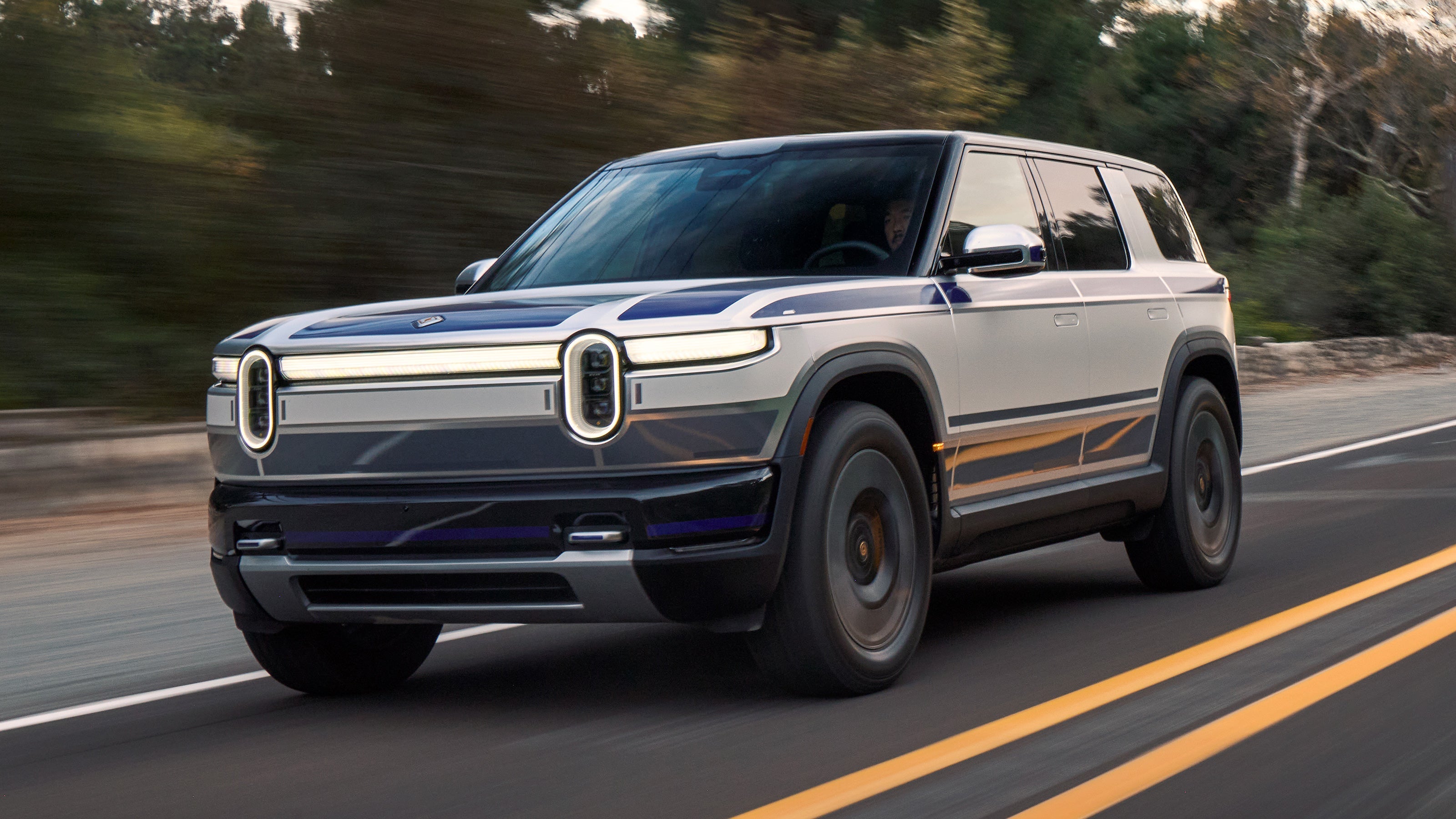
A recent independent test suggests the Rivian R2 delivers exceptionally fast DC charging despite using a 400-volt battery architecture. While its highway efficiency is average rather than class-leading, the combination of high charging speeds and solid real-world range makes it well suited for long-distance travel.

Rivian's 400V Platform Delivers Strong Charging Performance
When Rivian confirmed that the R2 would continue using a 400V electrical architecture, some industry observers questioned whether it would fall behind newer EVs built on 800V systems.
However, recent real-world testing indicates that charging performance depends on more than battery voltage alone.
During an evaluation conducted by Kyle Conner of Out of Spec Studios, the Rivian R2 demonstrated charging speeds that rival many higher-voltage competitors. The vehicle immediately exceeded 220 kW, reached a peak of 229 kW, and maintained strong charging power throughout the early portion of the session.
The results suggest Rivian has optimized charging performance through battery and power management rather than relying solely on a higher-voltage platform.
Independent Road-Trip Test Measures Real-World Capability
The evaluation was based on Out of Spec Studios' "10% Challenge," a repeatable test designed to simulate a typical fast-charging stop during highway travel.
The process begins with the vehicle arriving at a DC fast charger at 10% state of charge (SOC). After charging for 15 minutes, the vehicle is driven on the highway until the battery returns to 10% SOC, allowing both charging performance and highway efficiency to be evaluated under identical conditions.
The tested Rivian R2 had accumulated approximately 1,000 miles, meaning it had already completed its initial break-in period. It was equipped with 21-inch wheels and Pirelli Scorpion road tires, replacing the owner's original all-terrain tire configuration to better reflect normal highway driving conditions.
Following the charging session, the vehicle was driven at an average highway speed of approximately 80 mph, representing typical traffic flow on many U.S. interstate highways rather than an optimized efficiency test.
High Current Helps Offset Lower Voltage
One of the most notable findings from the evaluation was the amount of electrical current accepted during charging.
Instead of depending on higher system voltage, Rivian increased the maximum charging current to more than 600 amps. During the test, the R2 maintained approximately 600 amps until the battery reached roughly 32% SOC, allowing charging power to remain exceptionally high despite the vehicle's 400V platform.
Over the 15-minute charging session, the battery accepted 48.3 kWh of energy while averaging approximately 193 kW. By the end of the session, battery charge had increased from 10% to approximately 60%, providing a substantial amount of usable energy in a relatively short stop.
The results led the tester to describe the R2 as one of the strongest-performing 400V electric vehicles currently available for DC fast charging.
Highway Efficiency Is Competitive Rather Than Class-Leading
After completing the charging session, the Rivian R2 continued with the highway portion of the evaluation.
At an average speed of 80 mph, the vehicle recorded an efficiency of approximately 2.2 miles per kWh before returning to 10% SOC. Under those conditions, the R2 traveled 92.8 miles.
Although this result was slightly behind the Tesla Model Y Performance, which traveled roughly 10 miles farther in the same test thanks to efficiency exceeding 3 miles per kWh, the difference reflects contrasting vehicle priorities. The Rivian's larger body and more upright SUV design naturally create greater aerodynamic drag than Tesla's lower, more streamlined crossover.
Even so, the R2's combination of respectable highway efficiency and exceptionally fast charging suggests that drivers may spend less overall time stopped during longer trips, partially offsetting its higher energy consumption.
Longer Charging Stops Improve Trip Flexibility
The highway test shows that the Rivian R2 delivers balanced long-distance performance, even if it is not the most energy-efficient EV in its class.
After the 15-minute charging session, the vehicle was able to travel 92.8 miles at an average speed of 80 mph before returning to 10% battery charge. The tester described the result as "acceptable" for road trips, noting that the R2's charging speed helps compensate for its moderate highway efficiency.
For drivers who are not trying to minimize every charging stop, extending the session beyond 15 minutes could further improve travel flexibility. Since the charging curve remains relatively strong through the middle of the battery range, reaching 80% state of charge would require only a modest increase in charging time while providing substantially more driving distance before the next stop.
Aerodynamics Influence Highway Efficiency
The comparison with the Tesla Model Y Performance highlights the different design priorities of the two vehicles.
During the same evaluation, the Model Y traveled roughly 10 miles farther thanks to efficiency exceeding 3 miles per kWh, compared with the Rivian R2's 2.2 miles per kWh. The difference is largely attributed to vehicle shape rather than charging capability.
The R2 features a taller, more upright SUV profile that naturally generates greater aerodynamic drag at highway speeds. Vehicles with lower rooflines and smoother body designs generally consume less energy during sustained high-speed driving.
The tester also noted that driving at 80 mph represents a demanding scenario. At lower cruising speeds, such as 70 mph, the Rivian R2 would likely achieve noticeably better efficiency and extend its driving range between charging stops.
Fast Charging May Offset Lower Efficiency
Although the R2 consumes more energy than some competing crossovers on the highway, its charging performance may reduce overall travel time.
The vehicle maintained exceptionally high charging power throughout much of the session, remaining above 165 kW even after reaching 50% battery charge. At that point, many competing EVs have already reduced charging speeds significantly. Maintaining stronger power deeper into the charging session allows the R2 to recover usable range quickly during routine highway stops.
However, achieving maximum charging performance depends on using compatible infrastructure. To reach charging currents above 600 amps, drivers need a DC fast charger capable of delivering that level of current. Chargers with lower current limits will still charge the vehicle but cannot fully utilize the R2's peak charging capability.
Overall, the test suggests Rivian has prioritized minimizing charging downtime rather than maximizing efficiency alone. While the R2 may not lead its segment in miles per kilowatt-hour, its combination of sustained high charging power and practical highway range makes it a competitive option for long-distance EV travel.

FAQ
Does the Rivian R2 use an 800V battery system?
No. The Rivian R2 is built on a 400V battery architecture. Despite using a lower-voltage system than many premium EVs, it demonstrated charging speeds exceeding 220 kW during independent testing.
How fast can the Rivian R2 charge?
In the test, the R2 reached a peak charging rate of 229 kW and averaged approximately 193 kW over a 15-minute charging session. It added 48.3 kWh of energy while increasing battery charge from 10% to 60%.
How efficient is the Rivian R2 on the highway?
At an average speed of 80 mph, the tested vehicle achieved approximately 2.2 miles per kWh and traveled 92.8 miles after a 15-minute charging stop before returning to 10% battery charge.
Why does the Rivian R2 consume more energy than the Tesla Model Y?
The R2's larger and more upright SUV design creates greater aerodynamic drag at highway speeds. In comparison, the lower-profile Model Y is more aerodynamically efficient, allowing it to travel farther using the same amount of energy.
Do drivers need a special charger to achieve maximum charging speed?
Yes. The R2's highest charging performance requires a DC fast charger capable of supplying more than 600 amps. Chargers with lower current capacity can still recharge the vehicle but may not deliver its full charging potential.







Share:
EV Owners Report Highest Satisfaction Levels