






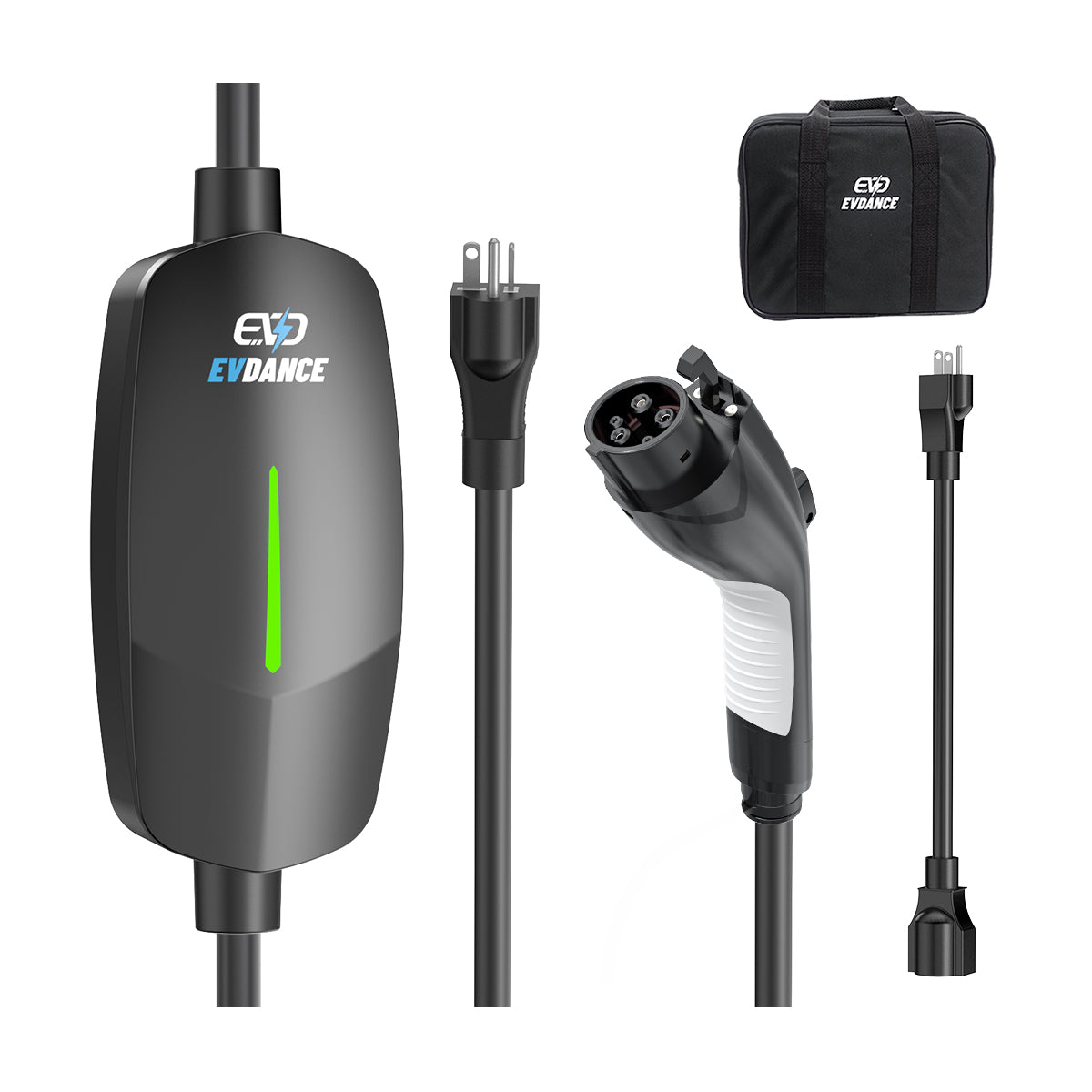

Connector

Socket

Certified

Cable

Socket
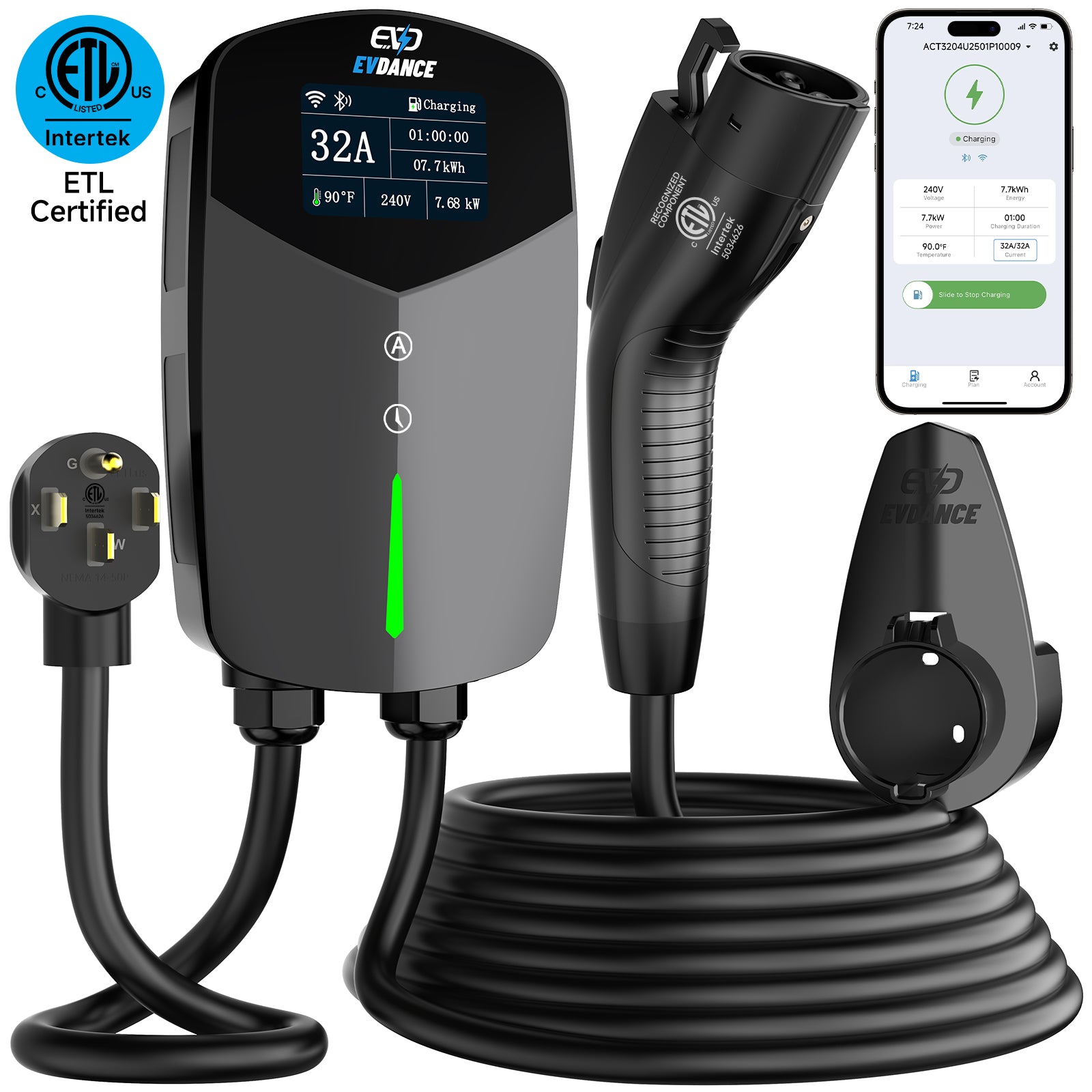
EVDANCE Home Level 2 EV Charger NEMA 14-50 J1772 Wall-mounted Plug In-32A | ETL Certification
Connector

Socket
Cable

Circuit
Certified

EVDANCE 240V 40A Tragbares 2-in-1-EV-Ladegerät für Tesla
Connector
Socket
Cable
Circuit
Certified
Level 2 EV Chargers
Level 2 EV chargers are available in a range of amperage options, including 16A, 24A, 32A, 40A, and 48A configurations. The maximum amperage determines how much current the charger can deliver, which in turn affects the charging rate and speed. For instance, a 40-amp charger using a 240V outlet can deliver up to 9.6 kW of power. However, it's essential to match the charger's output with the EV's onboard charger capabilities and the home's electrical system to achieve maximum efficiency.
Choosing the best EV charger also means considering your home's electrical system and whether it can support the desired power level. Most chargers will require a dedicated circuit, often installed by a certified electrician, to ensure safety and compliance with local codes.
For EV owners looking to reduce range anxiety, improve convenience, and enjoy faster charging times, a Level 2 EV charger is a must-have. Whether you opt for a EVDANCE model with a NEMA 14 50 plug or a smart charger with app integration, you'll benefit from improved charging speed, lower costs, and greater control over your EV charging routine.
For EV owners looking to alleviate range anxiety, enhance convenience, and enjoy faster charging speeds, a Level 2 EV charger is an essential upgrade. Whether you choose an EVDANCE charger with a NEMA 14-50 plug or a smart charger with app integration, you will benefit from faster charging, lower costs, and greater control over the charging process.
From hardwired and outdoor installations to the ability to charge two EVs simultaneously, today’s Level 2 chargers are more powerful, intelligent, and versatile than ever. With options ranging from 12A portable chargers to rugged 50A hardwired units, there is a home charging solution to meet every EV owner's needs. Install one today to enjoy faster charging, reduced electricity costs, and the convenience of waking up to a fully charged vehicle every morning.
Shop for an EVDANCE Level 2 charger today—and power your drive with a reliable, affordable, and future-proof EV charging solution.
Electrical Safety and UL 2594 Certification
Because EV chargers handle high-voltage continuous power, stringent third-party testing is essential to prevent shock, overheating, and fire risks. Selecting hardware certified by a Nationally Recognized Testing Laboratory (NRTL) ensures the device meets strict national safety standards.
The Safety Benchmark: UL 2594
UL 2594is the definitive North American safety standard for Electric Vehicle Supply Equipment (EVSE) rated up to 1,000V AC. It regulates the construction, electrical design, and environmental durability of Level 2 AC chargers. Certified hardware guarantees critical built-in protections:
- De-Energized State Control: The charging cable pins remain completely dead until the connector achieves a verified physical lock and digital handshake with the vehicle.
- Ground-Fault Protection: In compliance with UL 2231 standards, units include an integrated safety loop that instantly cuts off power if a current leakage (shock hazard) is detected.
- Thermal Overload Defense: Internal temperature sensors continuously monitor circuits, automatically throttling or shutting down power if safe operating temperatures are breached.
- Rugged Durability: The hardware undergoes severe impact, crush, and weather-resistance testing (such as IP66 ratings) to ensure safe indoor and outdoor deployment over years of heavy use.
Installation and Safety Best Practices
A properly installed Level 2 EV charger offers years of safe and dependable service. To ensure a worry-free experience:
- Always have your charger installed on a dedicated 240V circuit with the correct amperage and breaker.
- Look for chargers certified by UL, ETL, or Energy Star to ensure safety and performance.
- Select a model with a weatherproof enclosure (NEMA 3R or better) if installing outdoors.
- Use built-in safety features and connected apps to monitor charging sessions and detect faults in real-time.
- Choose models with built-in holsters and cable organizers to prevent wear and trip hazards
FAQs
Find the answers about portable EV Charger questions.
Can I charge my EV at home with a J1772 charger?
Yes, you can install a Level 2 J1772 charging station at home for faster EV charging. An electrician can set up the charging station, providing a more efficient charging option than a standard household outlet.
Which AC input plug portable electric charger should I choose?
Choose based on the type of outlet you use most often, usually NEMA 5-15p is the most widely applicable, but NEMA 14-30p is also widely used in areas such as California.
Are there different types of J1772 connectors or plugs?
While the J1772 standard specifies the overall design and communication protocols, variations in the plug design might exist. However, the fundamental compatibility remains the same across EVs and charging stations adhering to the J1772 standard.
Can I use an adapter for charging my EV with a J1772 connector from a different charging station?
Adapters may be available to connect your EV to different types of charging stations, but compatibility and charging speeds might vary. It's important to ensure the adapter is suitable for your EV model and the charging station in use.
Are J1772 chargers compatible with fast charging or DC fast charging standards?
As electric vehicles (EVs) continue to gain popularity, the development of charging infrastructure becomes crucial. This article will introduce five main types of EV chargers:Level 1 chargers,Level 2 chargers, portable chargers, home chargers, and DC fast charging stations. Let's delve into the features and functions of each type of charger.
What is a Level 2 EV charger?
A Level 2 EV charger is a fast charging solution that uses a 240-volt outlet to significantly reduce charging time compared to standard Level 1 chargers. It is ideal for home EV charging and public stations, offering 3 to 10 times faster charging speeds.
How fast does a Level 2 charger charge my electric vehicle?
A Level 2 charger typically delivers 25–30 miles of range per hour of charging, depending on the vehicle and charger’s amperage. This makes it perfect for overnight home EV charging or quick top-ups during the day.
Do I need a professional to install a Level 2 charger?
It is highly recommended to have a licensed electrician install your Level 2 home EV charger to ensure proper wiring, grounding, and compliance with local electrical codes. Improper installation can be a safety risk.
What is the difference between a Level 1 and Level 2 EV charger?
Level 1 chargers use a standard 120V outlet and offer slow charging (around 3–5 miles per hour), while Level 2 chargers use 240V power for much faster EV charging (up to 30 miles per hour). Level 2 is best for daily use and home EV charging.
Are Level 2 chargers compatible with all EVs?
Yes, most Level 2 chargers use the universal J1772 connector, which is compatible with all electric vehicles in North America, including Tesla (with an adapter), Nissan Leaf, Chevy Bolt, Ford Mustang Mach-E, and more.
How much does it cost to charge an EV with a Level 2 charger?
Charging costs vary depending on local electricity rates, but charging at home with a Level 2 EV charger is typically much cheaper than using public chargers. On average, charging a full battery at home costs between $5 and $15.
Can I use a portable Level 2 EV charger?
Yes, portable Level 2 chargers are available and ideal for drivers who need flexibility while on the go. They plug into a 240V outlet (such as a NEMA 14-50) and offer the same fast charging performance as a stationary charger.
What features should I look for in a Level 2 EV charger?
Key features to consider include charging speed (amperage), plug type (NEMA 14-50 or hardwired), smart connectivity (Wi-Fi or Bluetooth), weather resistance, cable length, and safety certifications such as UL or Energy Star.
How do I maintain my Level 2 charger for long-term use?
To ensure durability, install your Level 2 EV charger in a sheltered or weather-resistant area, regularly inspect cables for wear, keep the connector clean, and follow the manufacturer’s maintenance guidelines. Many chargers are designed for 10+ years of service
How to Choose
Consider your daily driving distance and available outlet type. Level 1 (NEMA 5-15) adds 3-5 miles/hour, while Level 2 (NEMA 14-50) adds 25-30 miles/hour.